
Affiliate disclosure: some links are affiliate links — as an Amazon Associate we earn from qualifying purchases, at no extra cost to you. Full disclosure.
Coverage area is the single most useful number for choosing a patio heater, and it’s also the number manufacturers present most optimistically. Here’s what the published figures actually mean and what to expect in a real backyard rather than a manufacturer’s test conditions.
Top 3 Recommended
Typical Coverage by Heater Type
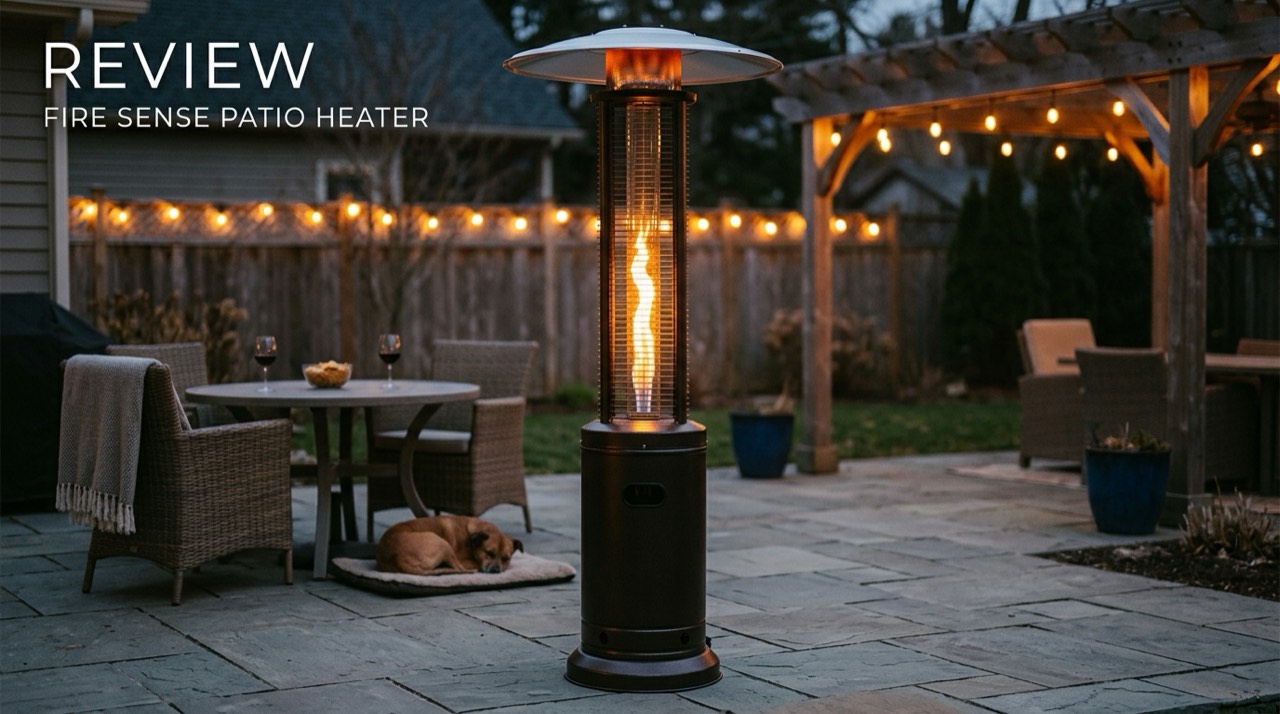
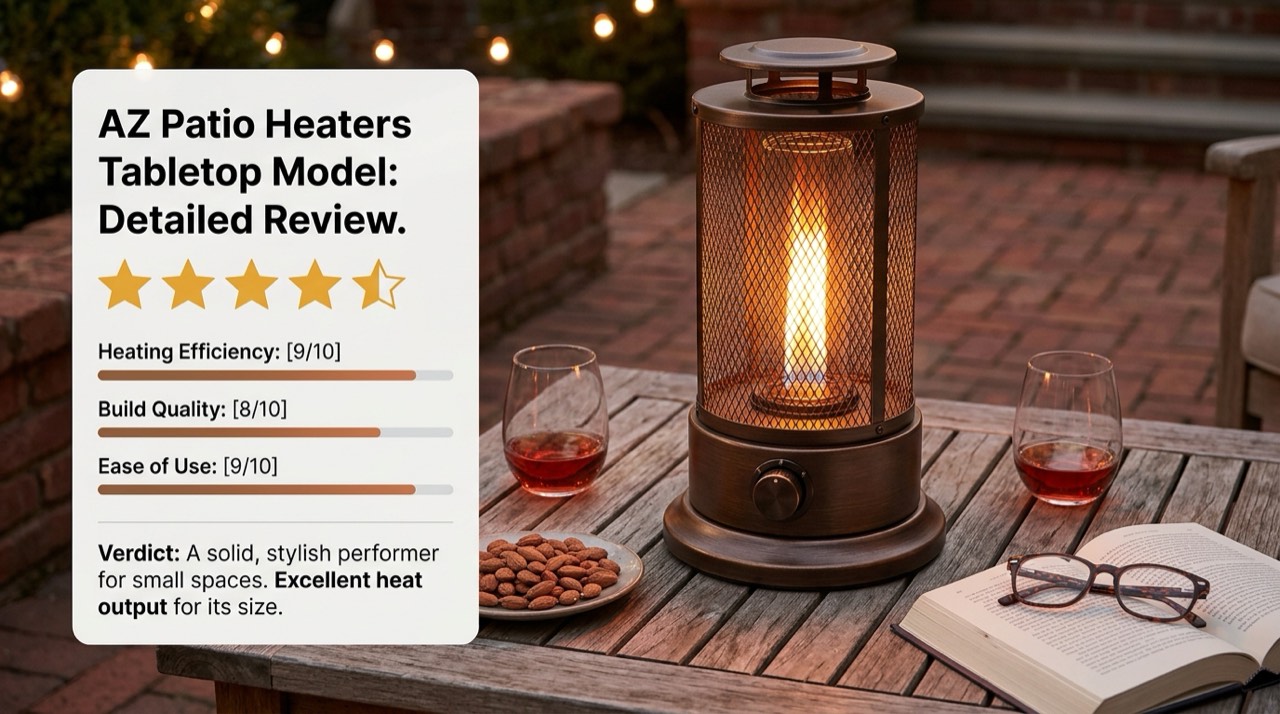
A standing heater in the 45,000–50,000 BTU range, like the BALI OUTDOORS Standing Heater or the Giantex 50,000 BTU Standing Heater, is generally rated for 150–200 sq ft of usable warmth in calm, mild conditions. A tank-top heater in a similar BTU class covers a comparable total area, but in a lower, wider pattern rather than a tall radius. A tabletop heater at 10,000–15,000 BTU covers meaningfully less — generally just the table and immediate seating, closer to 25–50 sq ft.
Why the Box Number Is a Best Case, Not a Guarantee
Manufacturers test coverage figures in controlled, low-wind conditions that don’t reflect most real backyards. Outdoor heat dissipates constantly to open air, and any air movement accelerates that loss. A heater rated for 200 sq ft in the manufacturer’s test conditions might deliver noticeably less usable warmth on a night with even a light, steady breeze. Treat the published coverage number as a ceiling you’ll approach on a still evening, not a figure you can count on consistently.
How Wind Cuts Effective Coverage
Wind doesn’t just make a patio feel colder on its own — it actively strips heat away from the radius a heater would otherwise cover, since radiant heat needs relatively still air to build up warmth around a person or object. A steady breeze can reduce a heater’s effective radius by a third or more compared to its rated coverage. If your patio is regularly exposed to wind, plan around the reduced real-world radius rather than the manufacturer’s ideal-conditions number, and consider a wind-resistant layout — positioning the heater to work with any natural windbreak like a fence or wall — rather than assuming the rated coverage will hold.
Coverage Shape: Radius vs. Directional Throw
Coverage isn’t just a single number — it’s a shape. A standing heater with a dome reflector typically throws heat in a roughly circular pattern around its base. A tank-top heater with a 360° swivel head does something similar from a lower point. Some patio heaters, particularly certain wall-mounted or directional models, throw heat in more of a fan pattern toward one side rather than a full circle. Knowing which shape your heater produces matters for furniture placement — a circular pattern suits a round table centered on the heater, while a directional pattern suits seating arranged to one side.
Multiple Heaters vs. One Bigger Heater
For a patio larger than roughly 200 sq ft, it’s tempting to look for a single heater rated for more coverage rather than buying two mid-size units. In practice, two heaters positioned at opposite ends of a larger seating area consistently deliver more even, usable warmth than one maximum-output heater in the center, because radiant heat drops off with distance from its source regardless of how much total BTU the single unit produces. A patio built for entertaining a larger group is usually better served by two 45,000 BTU heaters than one heater rated for double the coverage.
Ambient Temperature Also Changes Effective Coverage
Coverage figures assume a moderately cool evening, not a genuinely cold night. On a night well below the conditions a heater was tested in, the same radiant output has to work harder to bring the immediate area up to a comfortable temperature, which effectively shrinks the radius where people feel warm even though the heater’s actual BTU output hasn’t changed. This is separate from wind, and the two effects compound on a cold, windy night — exactly the conditions where you’re most likely to actually want the heater running at its best.
How Reflector and Head Design Affect Coverage
Not all standing heaters distribute heat identically even at the same BTU rating. A wider reflector dome spreads heat across a broader radius at somewhat lower intensity directly beneath it, while a narrower reflector concentrates more heat closer to the base at the cost of a smaller overall radius. Tank-top heaters with a 360° swivel head are designed specifically to maximize even distribution around the unit, which is part of why owners who switch from a standing heater to a tank-top model in a similar BTU class often report comparable or better perceived warmth in the immediate seating area, even though the total coverage number looks similar on paper.
Coverage Claims Across Brands Aren’t Always Measured the Same Way
Because there’s no single industry-mandated test protocol for patio heater coverage claims, one manufacturer’s "200 sq ft" and another’s can reflect somewhat different testing assumptions. Treat published coverage figures as directionally useful for comparing heaters within a similar BTU tier, rather than as a precisely interchangeable number across every brand. When two heaters have similar BTU output but noticeably different claimed coverage, owner reviews mentioning actual real-world warmth are often more reliable than the spec sheet alone.
Coverage Near a Wall or Corner vs. Open Space
A heater positioned near a house wall or in a patio corner can sometimes provide more perceived warmth on the sheltered side than the same heater would in fully open space, since a nearby surface can block some wind and reflect a small amount of heat back. This isn’t a reliable substitute for proper coverage sizing, but it partly explains why owner reports of a heater’s effective radius sometimes vary depending on exactly where it’s positioned relative to walls, fences or other windbreaks on the same patio.
Measuring Your Own Space Before Buying
Before comparing coverage specs across heaters, measure your actual seating or dining area in square feet — not the whole patio, just where people will actually be sitting. That number, compared against the coverage ranges above, narrows the field faster than comparing BTU ratings side by side. If your measured space falls between two coverage tiers, sizing up is generally the safer choice given how much real-world conditions (wind, ambient temperature) can shrink the effective radius below the rated number. Do this measurement before browsing specific models rather than after, so coverage — not a heater’s appearance or brand — actually drives the shortlist. It takes five minutes and saves a return shipment if the heater you liked online turns out to be the wrong size for your patio, or worse, leaves part of your seating area sitting noticeably colder than the rest.


Related Reading
For the BTU side of this calculation, see our patio heater BTU guide. For how coverage compares across standing, tank-top and tabletop formats specifically, see standing vs. tabletop patio heaters.