
Affiliate disclosure: some links are affiliate links — as an Amazon Associate we earn from qualifying purchases, at no extra cost to you. Full disclosure.
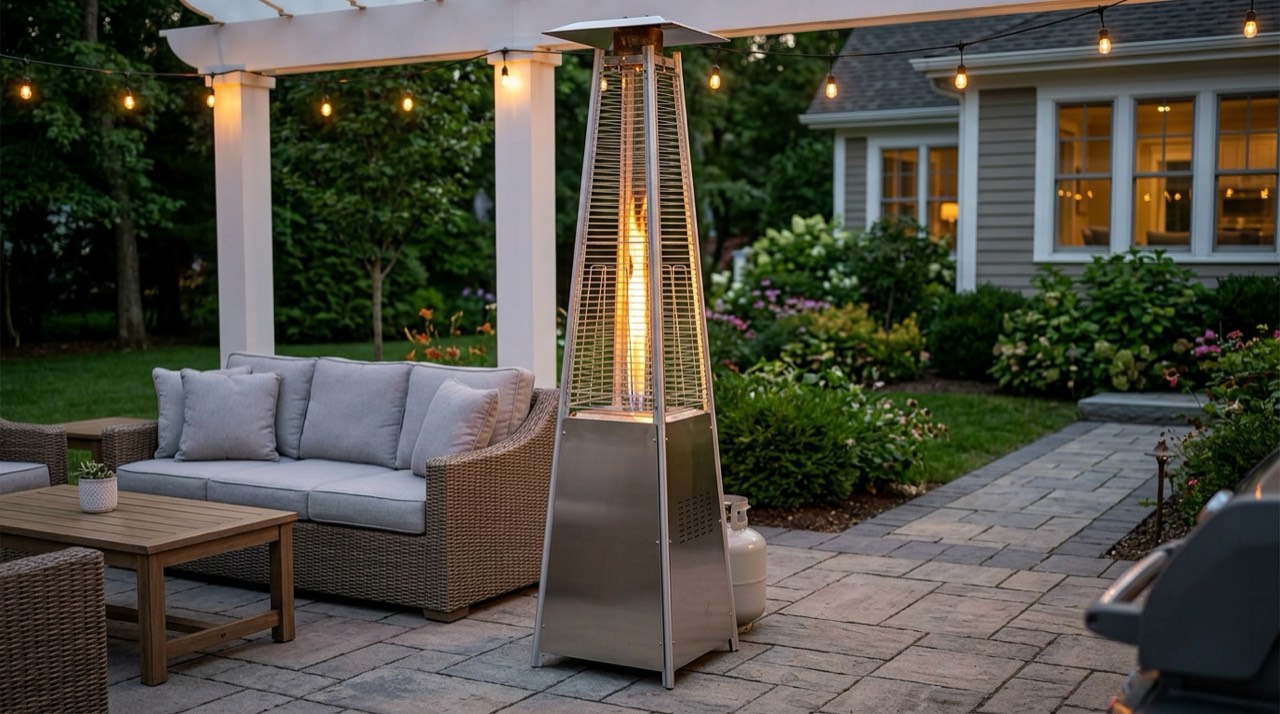
Yes. A standing or tabletop propane patio heater is designed to run under a covered patio, pergola, gazebo, or similar roofed structure, as long as at least two sides stay open to outside air. The roof itself is not the safety concern — what matters is whether air can still move freely around the heater.
Why a Roof Alone Doesn’t Count as "Enclosed"
Manufacturers rate patio heaters for "outdoor or well-ventilated use," and a roof over the top doesn’t change that classification on its own. Carbon monoxide risk comes from a space where combustion byproducts can build up faster than fresh air replaces them. A patio with open sides lets that exchange happen continuously, roof or no roof. The Consumer Product Safety Commission frames the risk around enclosure, not overhead cover.
How Much Open Airflow Is Enough
A good rule of thumb: at least two adjacent sides of the covered area should be substantially open, not just a cracked window-sized gap. A pergola with slatted or open roof framing and no walls is the easiest case. A patio with a solid roof and two or three open sides also qualifies. Once you start adding retractable clear vinyl panels or solid walls on most sides, the space starts to function more like an enclosed room, which changes the calculation. Our patio heater coverage guide covers how heat and airflow interact in different layouts.
Clearance From the Roof and Structure
Separately from ventilation, every patio heater has a manufacturer-specified clearance distance from the ceiling or roof overhead, and from any nearby wall. A low pergola beam or a tight gazebo roofline can put a tall standing heater closer to combustible material than the manual allows, even in an otherwise open structure. Our patio heater safe-distance guide has the exact clearance numbers by heater type.
When a "Covered Patio" Starts Being an Enclosed Room
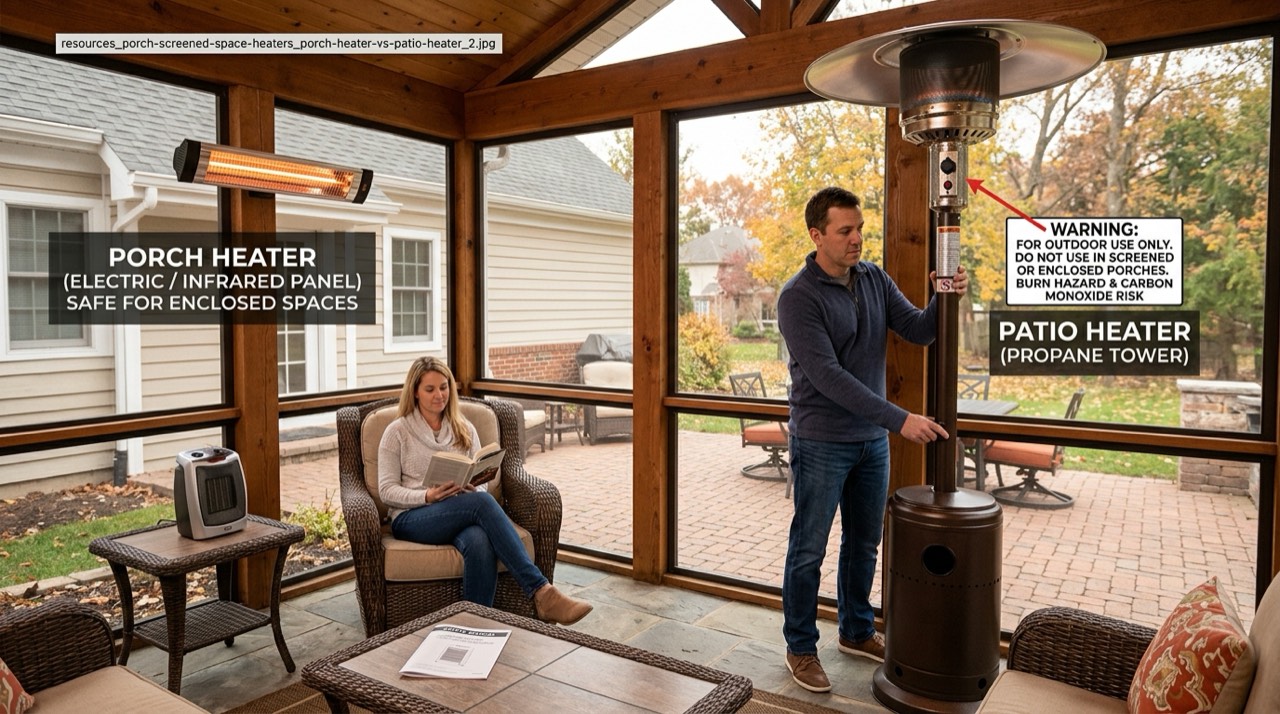
The line gets blurry with three-season rooms, patios enclosed on most sides with glass or vinyl, and sunrooms that started life as an open patio. If a space has a roof and walls on three or four sides with only a door for airflow, treat it like an enclosed room rather than an outdoor patio — that usually means a different heater category altogether, not just a bigger unit. A separately covered space with screen walls instead of solid ones is its own case; see our porch and screened-space heater guide for that setup specifically.
The Bottom Line
A covered patio is safe for a standard outdoor propane heater as long as the sides stay meaningfully open to fresh air. The roof matters for clearance distance, not for ventilation classification. Once solid walls or heavy vinyl panels close off most of the open sides, reassess the space as something closer to an enclosed room.