
Affiliate disclosure: some links are affiliate links — as an Amazon Associate we earn from qualifying purchases, at no extra cost to you. Full disclosure.
Before comparing specific heaters, a screened porch forces a decision most other outdoor spaces don’t: is it open enough to treat as outdoor space, or enclosed enough that it needs an indoor-safe heater with an oxygen depletion sensor? Getting this classification right matters more than any spec comparison on this page, because it determines which entire category of heater is even appropriate for your porch. Every recommendation reflects aggregated owner reviews and manufacturer safety certifications.
Step One: Classify Your Screened Porch Heater’s Enclosure Tier Before Anything Else
Manufacturers don’t publish a specific "screened porch" rating — heaters are certified either for enclosed indoor use or for open outdoor use, and your porch has to be judged against those two categories based on how enclosed it actually is. This guide splits porches into three practical tiers: fully open and screened on most sides, moderately enclosed three-season rooms, and mostly enclosed or winterized spaces. Work out which tier your porch falls into first, then use the matching section below rather than jumping straight to a product comparison.
Tier One: A Fully Open, Screened Porch With Consistent Airflow for an Outdoor-Rated Heater
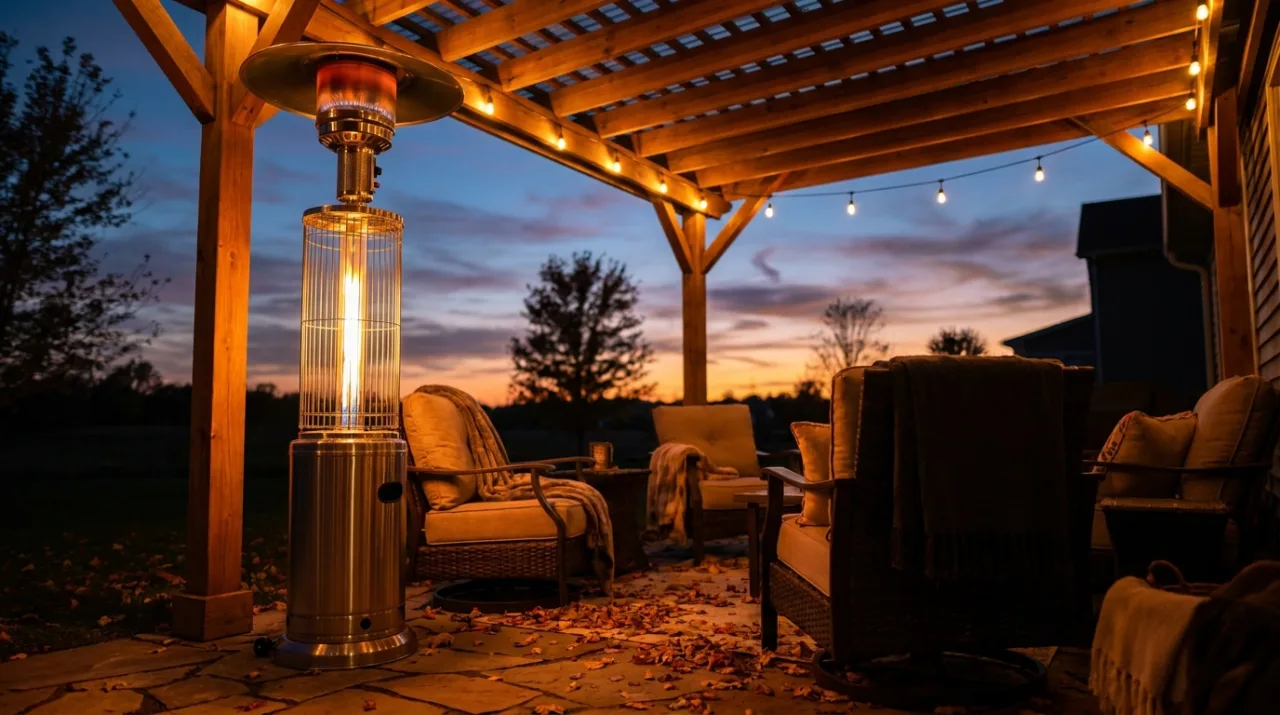
A fully open porch with screening on most sides and consistent airflow through, with no solid panels closing it in, behaves like outdoor space for heater-selection purposes. This is the tier where an outdoor-rated heater is appropriate, and the Mr. Heater 45,000 BTU Tank Top Heater is the pick most consistently mentioned for this scenario — its 360° swivel head suits a porch’s typically rectangular seating arrangement, and its outdoor rating fits a space with genuine airflow. Do not use an outdoor-only heater like this one if your porch has been sealed up for winter with plastic sheeting or storm windows — that changes the classification entirely, moving it to Tier Two or Three below.
Tier Two: A Moderately Enclosed Three-Season Porch and Its Radiant Heater Pick
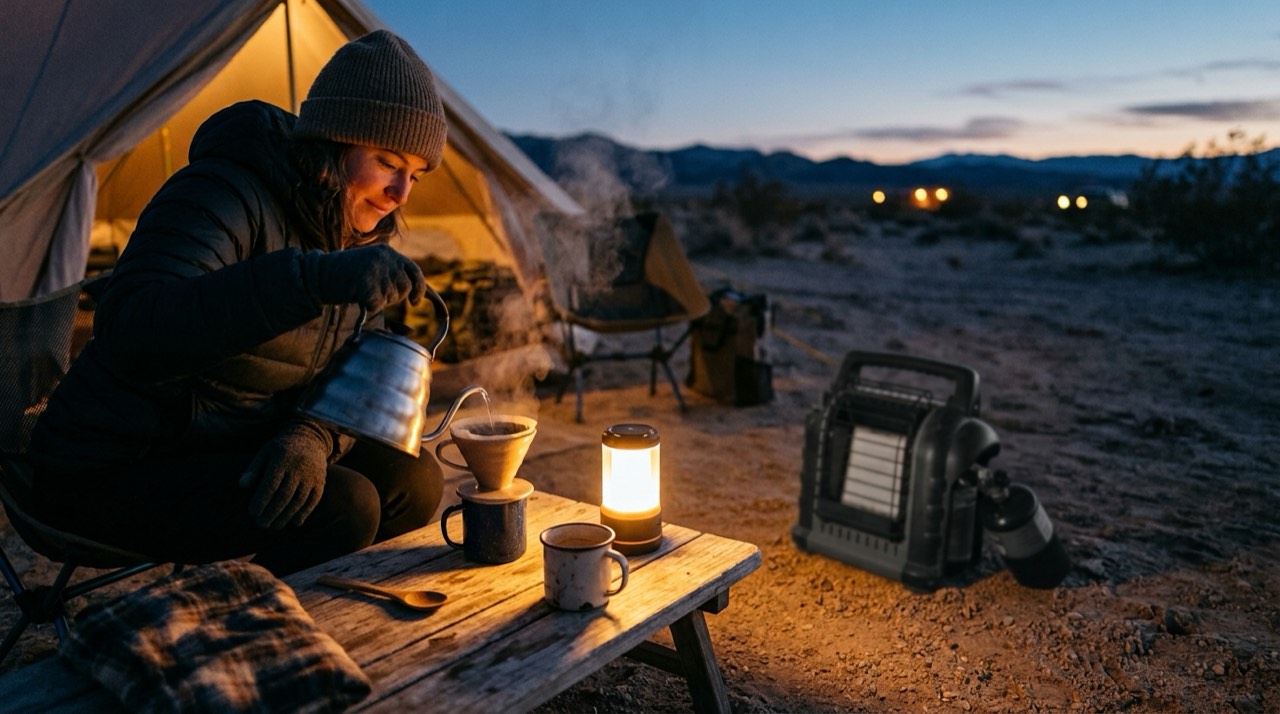
A three-season porch — one with real windows or removable panels that get installed for part of the year, but that still has meaningful gaps or isn’t airtight — sits in genuine ambiguity. The safer, more conservative approach for this tier is treating the space as indoor for heater selection, which means an ODS-equipped heater like the Mr. Heater Buddy Indoor-Safe Heater. It’s portable enough to remove when the season changes and the space opens back up, and its ODS certification covers the ambiguity of a space that isn’t fully sealed but also isn’t fully open either. Our three-season porch airflow guide covers this specific scenario in depth.
Tier Three: A Mostly Enclosed, Winterized Porch
If your porch has been substantially enclosed — permanent storm windows, vinyl panels installed for the whole cold season, insulation added to make it functionally a room — it needs to be treated as an indoor space, full stop. This is where a higher-output indoor-safe heater like the Mr. Heater 18,000 BTU Big Buddy becomes the appropriate pick rather than the smaller Buddy heater, since a winterized porch used regularly through a cold season benefits from more sustained output than a Tier Two space might need. Never use an outdoor-only tank-top or standing heater in a porch that’s reached this level of enclosure — the ventilation assumptions built into those products no longer apply.
When You Can’t Tell Which Tier Applies
Real porches don’t always fall cleanly into one tier, especially ones that change with the seasons — screened in summer, partially enclosed with storm panels in winter. When in doubt, default to the more conservative tier (treat it as more enclosed, not less) and choose an indoor-safe heater. The downside of over-classifying as indoor is a slightly lower BTU ceiling on some models; the downside of under-classifying is running an outdoor-only heater somewhere it isn’t rated for. That asymmetry is why the conservative default matters. Our full classification guide walks through specific edge cases in more detail.
A Compact Tank-Top Heater Alternative for a Narrow Porch in Any Tier
Regardless of enclosure tier, a narrower porch may not have room for a full-size tank-top or standing heater. The Dura Heat TT-360 is a smaller-footprint tank-top option worth considering for a Tier One porch that’s tight on space, since it delivers the same 360° pattern in a more compact package than the full-size 45,000 BTU unit.
Ventilation Still Matters, Even in Tier One
Even a fully open, screened porch benefits from being mindful of airflow around a running heater — a corner sheltered on multiple sides by house walls behaves differently than an open-air section of the same porch, even though both are technically "outdoor." This isn’t a strict requirement the way it is for an indoor-safe heater’s ventilation guidance, but it’s worth keeping in mind when positioning any heater on a porch that has more enclosure than a fully open patio, regardless of which tier applies.
Carbon Monoxide Risk Doesn’t Respect Your Tier Classification
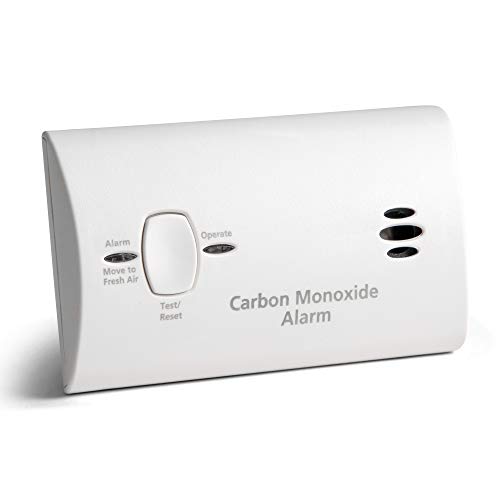
Whichever tier your porch falls into, a battery-backed carbon monoxide detector is worth having if you heat the space regularly. This is universal guidance across all three tiers, not something that only applies to the more enclosed end of the spectrum — a detector doesn’t rely on your tier classification being correct, which matters given how much judgment call is genuinely involved in classifying a real porch. A model like the Kidde Carbon Monoxide Detector runs on batteries, useful on a porch without a nearby outlet.

Clearance to Combustibles: Overhead Clearance and Wood Floor Clearance
Every heater discussed on this page needs its published clearance to combustibles respected, including overhead clearance from a porch roof or ceiling fan and wood floor clearance if your decking is untreated lumber.
CSA Certified, Low-Oxygen Shutoff and Tip-Over Shut-Off by Tier
Tier One's tank-top pick should be CSA certified at minimum; Tier Two and Three's indoor-safe picks — including the Mr. Heater Buddy, commonly sold on its own as the Portable Buddy in its standalone 9,000 BTU form — add a low-oxygen shutoff and a tip-over shut-off on top of that baseline.
Space Heating on a Covered Porch: What the CPSC Warns Against
The CPSC has published specific warnings about space heating on a covered porch with the wrong heater class, exactly the mismatch this guide's tier system exists to prevent.
Best Propane Heater for Screened Porch: Alternative Brands and Heat Radius
Dyna-Glo and Hiland both sell tank-top and standing outdoor heaters comparable to the Tier One pick above, worth cross-shopping if your preferred retailer doesn't stock Mr. Heater. Manufacturers typically publish a heat radius for outdoor-rated models rather than a strict square-footage number — the 45,000 BTU tank-top pick's heat radius covers a wider seating circle than its BTU rating alone suggests.
A Portable Heater on a 1-lb Cylinder Is the Best Overall Choice for Tier Two and Three
For Tier Two and Three, any indoor-safe portable heater running on a single 1-lb cylinder is easy to remove seasonally, and the best overall choice remains the one matched correctly to your porch's actual enclosure tier rather than the highest-BTU model on the shelf.
BTU Sizing Within Each Tier
Once you’ve settled on a tier, BTU sizing still matters within it. A Tier One porch under roughly 150 sq ft is well served by a compact tank-top unit rather than a full 45,000 BTU heater; a larger open porch benefits from the higher output. A Tier Two three-season porch generally sizes similarly to an equivalent indoor room, using roughly 20–30 BTU per square foot as a starting point, though leaning toward the higher end given the extra air infiltration these spaces typically have. A Tier Three winterized porch sizes more like a genuine indoor room, since it’s functioning as one for most of the heating season. Our BTU sizing and running-cost guide has an interactive calculator for your specific square footage.
Reviewing What Owners in Each Tier Actually Report
Owners running a tank-top heater on a genuinely open, Tier One porch consistently praise the 360° heat throw for a typical porch furniture layout, with the main complaint being tank placement taking up floor space on a narrower structure. Owners using an indoor-safe Buddy-style heater on a Tier Two three-season porch specifically mention appreciating the flexibility to remove it entirely once panels come out for summer, since it’s genuinely portable rather than a fixed installation. Owners running a higher-output indoor-safe heater on a Tier Three winterized porch report the most positive experience when they’ve confirmed the space meets the manufacturer’s minimum room-volume requirement before installing — those who skip that check are more likely to report the heater feeling underwhelming for the space’s actual size.
Clearance Requirements for an Enclosed Space on a Wood Porch, by Tier
A Tier One porch with outdoor-rated heaters needs the same clearance discipline as an open patio — distance from screens, cushioned furniture and any overhead structure. A Tier Two or Three porch running an indoor-safe heater needs the manufacturer’s indoor clearance and minimum room-volume figures instead, which are often more specific than general outdoor guidance since the heater is designed to run in a defined enclosed space. Check the specific model’s manual for the figures that apply to your tier rather than assuming outdoor and indoor clearance guidance are interchangeable. Our porch clearance guide covers the wood-construction specifics that apply across all three tiers.
Why Getting the Tier Wrong Costs You the Oxygen Depletion Sensor’s Indoor-Safe Margin
Using an outdoor-only heater in a space that’s actually enclosed enough to need indoor-safe certification isn’t a minor mismatch — it removes the oxygen depletion sensor that’s specifically engineered to prevent the exact risk a more enclosed space introduces. Conversely, using an indoor-safe heater on a fully open Tier One porch isn’t unsafe, just potentially underpowered for the space compared with an outdoor-rated unit’s higher BTU ceiling. That asymmetry is worth remembering when you’re genuinely unsure which tier applies: erring toward the indoor-safe choice costs you some output; erring toward the outdoor-only choice in a space that needed indoor certification costs you the entire safety margin that certification exists to provide. That’s not a close call, and it’s the whole reason this guide leads with classification before any product comparison, rather than starting with a ranked list the way a more straightforward outdoor category could get away with.
A Note on Older vs. Newer Porch Construction
An older, screened porch sometimes has enough gaps and settling that it behaves more like Tier One than its screening alone suggests, since unintended airflow through aging joints can matter as much as the screening itself. A newer, tightly-built porch with fresh screening might trap more heat and combustion byproduct, simply because it's better sealed against drafts. Factor age and construction quality into your tier classification alongside the panels-in-or-out question, especially for a porch on the Tier One/Tier Two boundary. A brief walk-through on a still day beats assuming based on style or age alone, and it accounts for your porch's exact construction rather than a generic listing definition.
What to Do If Storm Windows or Panels Change Your Porch’s Enclosure Seasonally
Many porches genuinely shift tiers across the year — open and screened in summer, panels installed for winter. If yours does, the practical answer is owning a heater rated for your porch’s most-enclosed state, not its most-open one. A portable indoor-safe heater covers both ends of that range safely; an outdoor-only heater does not, even though it might seem like "more heater" on paper during the open season.