
Affiliate disclosure: some links are affiliate links — as an Amazon Associate we earn from qualifying purchases, at no extra cost to you. Full disclosure.
A burner that’s dusty or blocked by an insect nest can cause weak flames, uneven flame color, or a heater that won’t light at all. This is especially common after a heater has sat in storage for months. Cleaning it is simple, but doing it safely matters just as much as doing it at all.
Step 1: Disconnect the Fuel Supply
Close the tank or cylinder valve fully, then disconnect the hose or cylinder from the heater. Never clean a burner while it’s still connected to a fuel source, even if the valve is closed.
Step 2: Let the Heater Cool Completely
If the heater was recently used, wait until it’s fully cool to the touch before touching the burner assembly. This isn’t just about comfort. A hot burner can ignite dust or debris unexpectedly during cleaning.
Step 3: Remove the Burner Cover or Grille
Check your model’s manual for the exact steps, since this varies by heater. Most portable radiant heaters have a screen or grille that lifts or unscrews to expose the burner underneath.
Step 4: Clear Debris With a Soft Brush
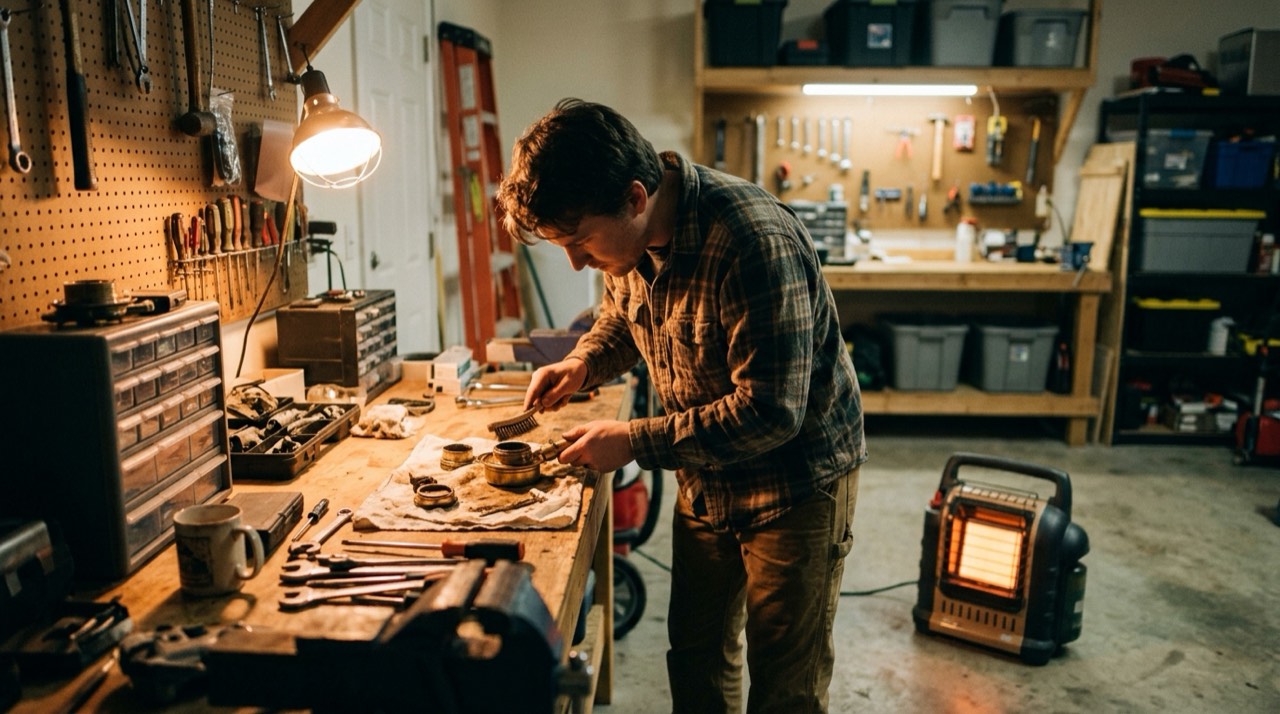
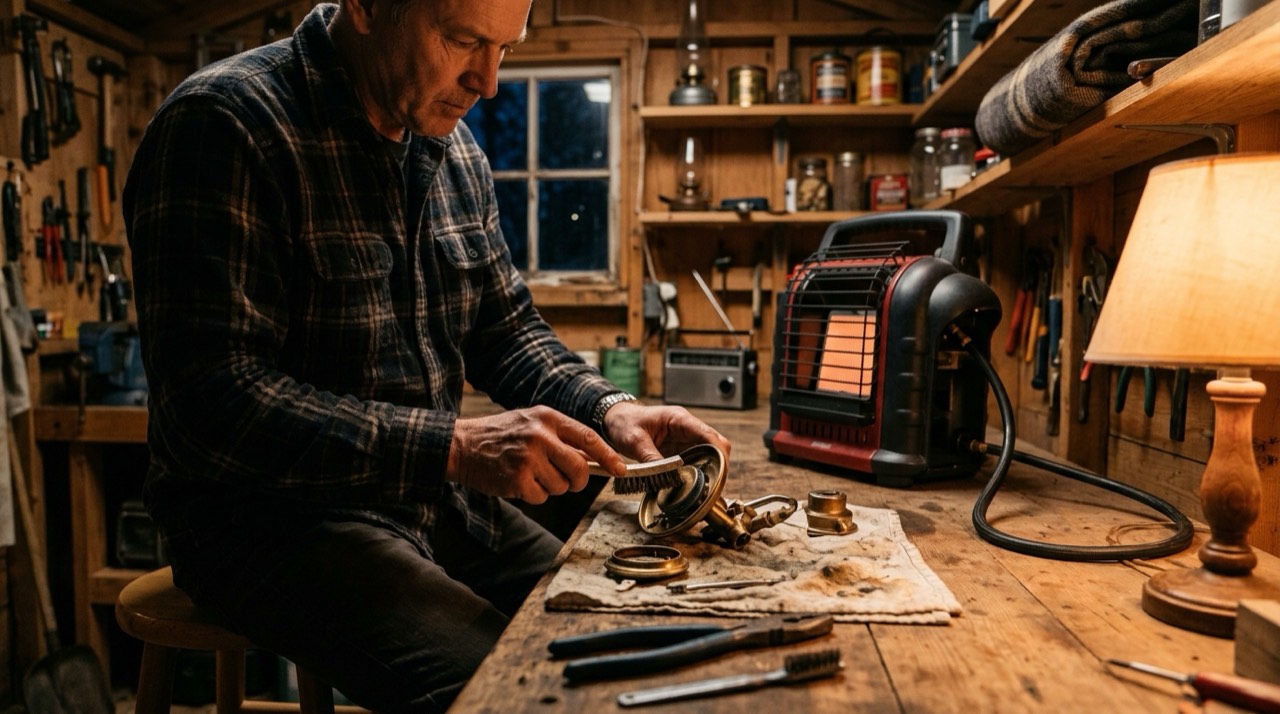
Use a soft-bristle brush, like an old toothbrush, to gently loosen dust, cobwebs or debris from the burner ports. Work along the ports rather than across them, since this is less likely to push debris deeper into a small opening.
Step 5: Use Compressed Air for Anything the Brush Misses
A can of compressed air, or a bulb-style blower, clears fine debris from ports a brush can’t fully reach. Hold the nozzle a few inches back rather than pressing it directly against the burner, and use short bursts rather than one long continuous spray.
Step 6: Check the Venturi Tube
The venturi tube is the tube that mixes air with propane before it reaches the burner. A partial blockage here, often from an insect nest, is one of the most common causes of a weak or uneven flame across an entire gas appliance category, not just heaters. Shine a flashlight through it to check for an obstruction, and clear it the same way as the burner ports.
What Never to Use
Never use a wire brush, a metal pick, or any sharp tool to clean a burner. These can scratch or enlarge the burner ports, which changes how the flame forms and can create a new problem instead of fixing the original one. Stick to soft brushes and compressed air only.
Reassembling and Testing
Put the cover or grille back exactly as it came off, and reconnect the fuel supply. Light the heater in a well-ventilated space and watch the flame. A clean burner should produce an even, steady blue flame across all the ports, not just some of them.
What an Uneven Flame After Cleaning Means
If some ports still show a weak or absent flame after cleaning, a stubborn blockage may remain in that specific port, or in the venturi tube feeding it. Repeat the compressed-air step focused on just that section before assuming a deeper mechanical fault.
Why Insects Are Drawn to Burner Tubes Specifically
Spiders and some insects are drawn to the warm, sheltered, undisturbed space inside a burner tube, especially over a long storage period when a heater sits untouched for months. This isn’t unique to any one brand — it’s a well-documented issue across gas appliances generally, from grills to heaters to water heaters. It’s also why a heater that worked perfectly the last time it ran can develop an ignition problem purely from sitting in storage, with nothing else about it having changed.
How Often Should You Clean a Burner?
At the start of each heating season, before the first real use, is the single most useful time to clean a burner, even if it seemed to run fine the last time it was used. This one habit prevents most of the seasonal "won’t light" complaints that trace back to debris rather than a genuine defect. A heater used constantly through a season, like a garage or workshop unit, benefits from a mid-season check too.
Cleaning a Forced-Air Heater’s Burner
Forced-air construction heaters have a somewhat different burner and nozzle setup than a simple radiant model, and cleaning one often involves the fan housing as well as the burner itself. Follow your specific model’s manual closely here, since forced-air units vary more between brands than radiant heaters do, and improvising on an unfamiliar assembly risks misaligning a part that’s harder to reset correctly than a simple radiant burner grille.
Cleaning a Wall-Mount or Vent-Free Heater’s Burner
A permanent wall-mount or vent-free heater typically has a wider burner tray covering more surface area than a portable radiant model, and it’s usually built into a cabinet housing rather than sitting behind a simple lift-off grille. Accessing the burner often means removing a front panel first, held on by a few screws rather than clips. Take a photo before you start disassembling anything more involved than a simple grille, since these panels don’t always go back together in the only way that seems obvious at first glance.
Signs You Need to Clean More Than the Visible Ports
If cleaning the visible burner ports doesn’t fully fix a weak or uneven flame, debris further inside the venturi tube or near the gas orifice itself may be the real cause. This is more work than a quick surface cleaning, since it usually means removing the burner assembly entirely rather than just brushing what you can see and reach from the outside. If you’re not confident going this far, a qualified technician can complete a deeper cleaning without the risk of misaligning the orifice, which is a precisely sized opening that affects how the fuel-air mixture forms.
When Cleaning Doesn’t Fix the Problem
A burner that’s visibly clean, with a clear venturi tube and an even flame test, but the heater still won’t light or runs poorly, points to a different cause entirely. Our general won’t-light guide covers the rest of the checklist, from fuel supply to the igniter and thermocouple.
Storing a Heater to Prevent This Next Season
Covering the burner opening with a simple cloth or the heater’s own storage bag before a long off-season reduces how easily insects and dust find their way in. It’s a small step that meaningfully cuts down on next season’s cleaning job, and it costs nothing beyond remembering to do it before the heater goes into storage.