
Affiliate disclosure: some links are affiliate links — as an Amazon Associate we earn from qualifying purchases, at no extra cost to you. Full disclosure.
A regulator sits between the tank and the heater. It steps fuel down from tank pressure to the lower, steady pressure a burner needs. When it fails, the symptoms look exactly like a heater problem: inconsistent flame, weak output, a heater that won’t restart. Here are the three specific ways a regulator actually fails, and how to fix each.
Problem 1: Excess-Flow Lockout After a Tank Change
Most modern regulators build in an excess-flow safety feature. Open a fresh tank’s valve too quickly, and the sudden rush of gas can trigger it. The regulator shuts fuel flow as a precaution, since a sudden rush of gas looks like a leak or a broken hose to the sensor. This is the most common regulator complaint by far. It isn’t a fault. It’s the safety feature working exactly as designed, just triggered by valve speed instead of a real problem.
The Reset Procedure
Turn the heater’s own control off completely. Close the tank valve fully. Wait about 30 seconds. Then reopen the tank valve slowly. Go noticeably slower than you normally would, taking a couple of seconds to go from closed to fully open rather than one quick twist. This slow reopening resets the excess-flow valve without tripping it a second time. Try lighting the heater normally afterward.
Problem 2: Regulator Freeze-Up in Cold Weather
As propane vaporizes to fuel a heater, it pulls heat from its surroundings, including the tank and the regulator itself. Under high demand in genuinely cold weather, this can drop the regulator’s temperature enough that moisture in the air condenses on it and freezes. That restricts flow. You’ll see a flame that starts normal, then gradually weakens over several minutes of steady running. Sometimes visible frost forms on the regulator body.
Fixing a Frozen Regulator
Turn the heater off. Let the regulator warm up on its own. Never apply direct heat, an open flame, or hot water to a regulator — that’s a genuine safety hazard. Once it’s back to room temperature and any frost has melted, normal flow should return. Does this keep happening in cold conditions? Running the heater on a lower BTU setting reduces the demand that causes the freeze-up. A larger tank also freezes up less readily than a small one under the same demand.
Problem 3: A Mismatched Regulator
Regulators are rated for a specific pressure output and a maximum BTU throughput. A regulator rated for a smaller heater than what’s actually connected can bottleneck fuel delivery. The heater might run fine on low, then struggle or fail to reach full output on high. This exact pattern, fine on low but weak on high, is the clearest sign of a throughput mismatch, not a lockout or a freeze issue.
Confirming a Mismatch
Check your heater’s maximum BTU rating against your regulator’s rated throughput. Both numbers are usually printed on the housings or in the manuals. Is your regulator’s rating lower than your heater’s maximum BTU? That’s your answer. Swap in a regulator rated for at least your heater’s full output.

Which Problem Matches Your Symptom
A heater that won’t light or restart right after a tank change points to an excess-flow lockout. Try the reset procedure first. A flame that starts fine and weakens gradually over several minutes, especially in cold weather, points to freeze-up. Stop use and let it warm. A heater that runs fine on low but weak or not at all on high, no matter the temperature or how recent the tank change was, points to a mismatched regulator. Check the BTU ratings.
Single-Stage vs. Two-Stage Regulators
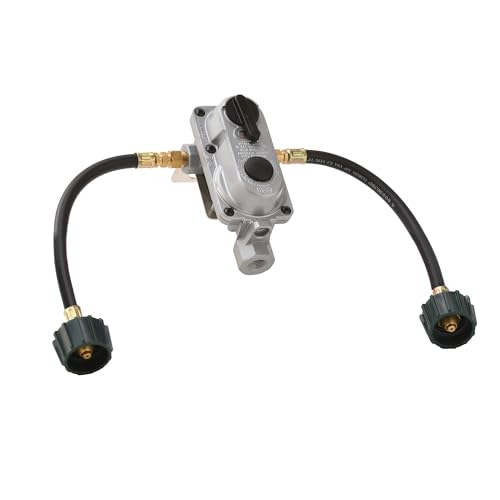
A single-stage regulator drops tank pressure to burner pressure in one step. It’s simpler and cheaper, but it can show more pressure swings as tank pressure itself changes with temperature or fill level. A two-stage regulator drops pressure in two steps instead. That gives a steadier output pressure across a wider range of tank conditions. Still seeing recurring, unexplained flame trouble after ruling out the three problems above, and currently running a single-stage regulator? Upgrading to a two-stage model is a reasonable next step.
How Regulator Problems Get Mistaken for Heater Problems
The regulator sits between the tank and the heater. Most owners never think to check it. Its failures often get blamed on the heater instead. A "flame that won’t stay consistent" gets diagnosed as a bad thermocouple or a dirty burner, when the actual cause never left the fuel-delivery path. Did a heater’s problems start right after you switched hoses or regulators, or right after a tank change? That timing is the fastest clue pointing back to the regulator.
Inspecting a Regulator for Physical Damage
Beyond the three failure types above, a regulator can simply wear out or get damaged. A crack in the housing, a bent or corroded connection point, or visible rust on the body are all reasons to replace one outright, not keep troubleshooting it. A regulator is a relatively cheap part. Replacing a visibly damaged one costs less, and is safer, than continuing to chase an intermittent problem on a part you can already see is compromised.
Preventing Both Problems Next Season
A small habit prevents most excess-flow lockouts before they happen: always open a new tank’s valve slowly, as a routine, not just after you’ve already had a lockout once. For freeze-up, buying a regulator rated well above your heater’s actual BTU draw gives it more headroom before it hits the demand level that triggers icing in cold weather. Neither habit costs anything extra, and both cut down on the two most common regulator complaints before they start.
How Often Should You Inspect a Regulator?
A quick visual check at the start of each heating season catches most problems before they cause a lockout or a weak flame mid-use. Look for cracks, rust, or a stiff valve that doesn’t turn smoothly. Pair that with the slow-open habit above, and most owners never encounter an excess-flow lockout at all, let alone need to troubleshoot one mid-season.
When to Replace vs. Keep Troubleshooting
Did the excess-flow reset and the freeze-up wait-it-out approach not fix the symptom? Have you confirmed a BTU mismatch? Replacing the regulator is the straightforward fix. It isn’t a part worth extensive DIY repair attempts. A regulator with a built-in excess-flow feature, and a rating that comfortably exceeds your heater’s maximum BTU, avoids two of these three problems from coming back.