
Affiliate disclosure: some links are affiliate links — as an Amazon Associate we earn from qualifying purchases, at no extra cost to you. Full disclosure.
Late summer through early winter is when most households and contractors shop for propane heaters and heating accessories ahead of the cold season. This guide is not a live deal tracker — we do not publish specific prices or claimed discount percentages, since those change constantly. Instead, it covers what to actually shop for during this window: which categories move first, what a fair price range looks like, and the accessories that matter as much as the heater itself. Every pick below comes from aggregated owner reviews and manufacturer specs.
Why Pre-Winter Is a Genuinely Good Time to Shop
Retailers stock up heavily for the cold season and often price competitively in the weeks before demand peaks, rather than after the first real cold snap when stock can run thin and shipping slows. Shopping early also means you can actually test a heater before you need it, rather than discovering an issue on the first genuinely cold night.
Which Categories Move First
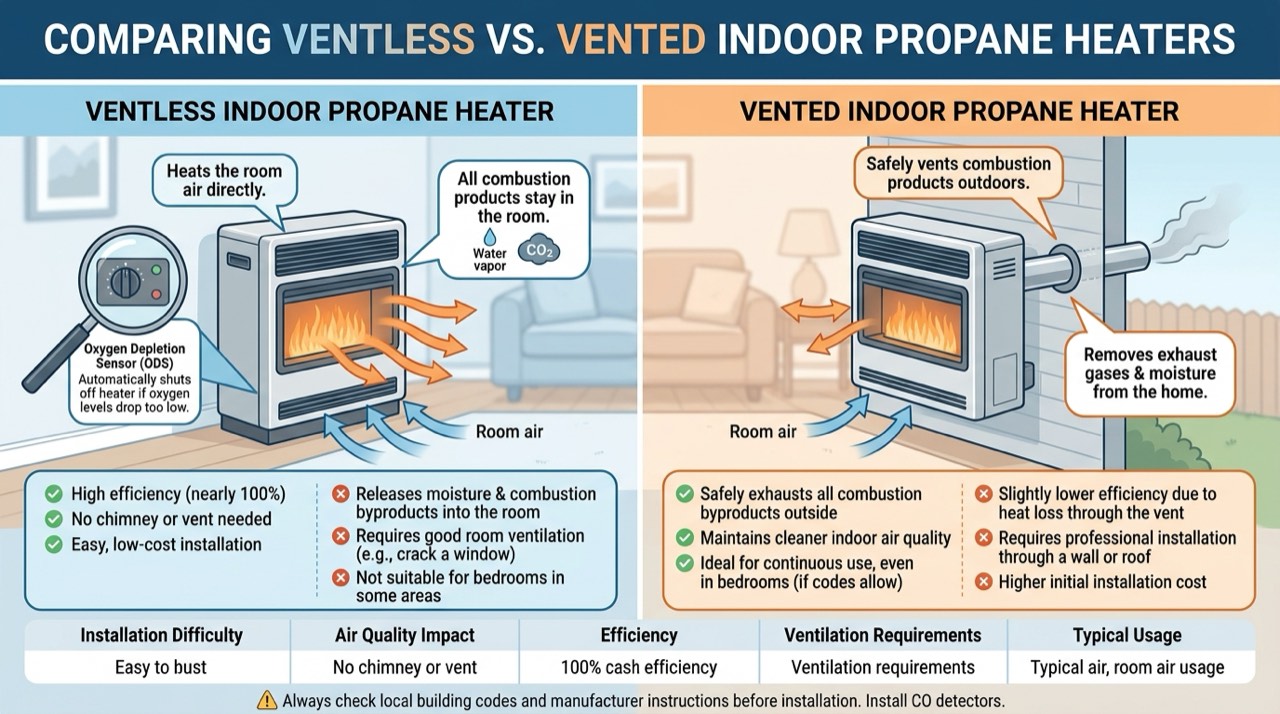
Indoor-safe radiant heaters and forced-air garage units are typically the first to see reduced stock as the season progresses, since they cover the broadest range of household and workshop needs. Niche categories, like wall-mount vent-free units, tend to stay available longer into the season, since demand for them is steadier and less seasonally spiky.
Realistic Price Expectations by Category
Without quoting numbers that will be stale by the time you read this, the rough shape holds steady year to year. Small radiant heaters and detectors sit at the low end. Mid-size indoor-safe heaters and permanent vent-free units sit a step up. Forced-air construction heaters and full CO detector setups for a multi-room home sit at the top. The "Check Price" button on any listing shows the real current number.
How to Spot a Genuine Pre-Winter Markdown
A price-history tool that tracks a listing over the past several months is the most reliable way to confirm a discount is real, rather than a briefly inflated "was" price. Early-season pricing sometimes runs higher than mid-winter clearance pricing, so a genuine early markdown is worth less patience-testing than you might expect if the size and model are exactly what you need.

Best for Winterizing a garage or workshop used through the cold months
- 125,000 BTU output
- Continuous electronic ignition
- Cart-style frame for job-site or garage use
Why buy it: A common pre-winter pickup for anyone who lets their garage heater sit unused all summer and wants a reliable, higher-output option ready before the first cold snap.

Best for A permanent, higher-output indoor-safe heat source for a workshop or cabin
- 30,000 BTU output
- Oxygen depletion sensor certified to ANSI Z21.11.2
- Wall or floor mount options
Why buy it: Owners winterizing a cabin or converted workshop space often move up to this permanent tier rather than relying on a portable unit through a full season.

Best for Households that want the option to run natural gas or propane
- Runs on propane or natural gas
- 30,000 BTU output
- Blue flame design distributes heat across a wider area
Why buy it: Dual-fuel flexibility is a common pre-winter draw for households unsure which fuel line they will ultimately settle on.
Best for Any room where a propane heater runs through the winter
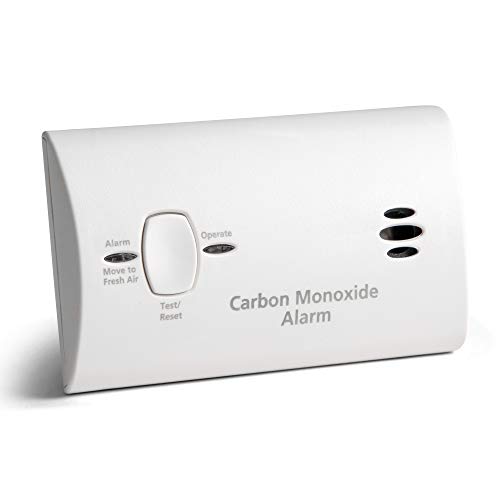
- Battery powered, keeps working through an outage
- 85 dB alarm
- LED status indicators
Why buy it: A battery-backed detector is one of the most commonly recommended pre-winter purchases alongside any fuel-burning heater, portable or permanent.
Best for A second detector for a bedroom or living space
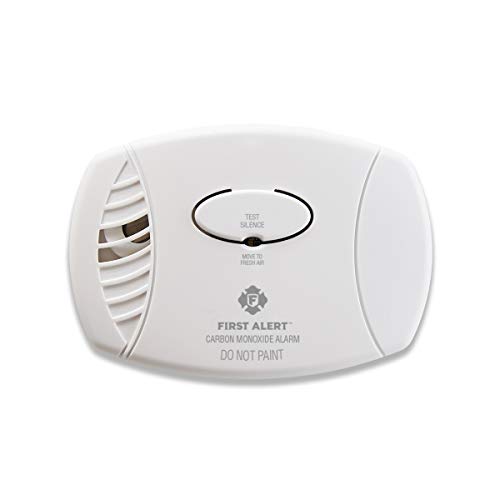
- Plugs into a standard outlet
- Battery backup for power outages
- Digital display
Why buy it: A second, differently-placed detector is a common add before winter, since one unit rarely covers every room a heater might run in.

Best for A propane tank stored or used outdoors in freezing temperatures
- Fits 20, 30, and 40 lb tanks
- Adjustable temperature control
- Helps maintain tank pressure in extreme cold
Why buy it: Cold tanks lose pressure and can underperform a heater right when you need it most, which is why this shows up on pre-winter shopping lists for anyone running a heater off an outdoor tank.
Do Not Skip the Safety Gear While Shopping for a Heater
A carbon monoxide detector and a tank pressure gauge are easy to forget when the heater itself is the exciting purchase, but both matter as much to a safe winter setup as the heater does. Buying them in the same order as the heater is a simple way to make sure they do not get forgotten later. See our carbon monoxide detector roundup for more options.
Test the Heater Before You Actually Need It
Light any newly bought heater once in a well-ventilated space before the first genuinely cold night, rather than discovering an ignition issue for the first time when you actually need the heat. A quick pre-season test also gives you time to use a return window if something is wrong.
Servicing a Heater You Already Own
Pre-winter is also the right time to clean and inspect a heater you already own, not just buy a new one. A clogged burner or a worn hose from last season shows up now, before it becomes a mid-winter problem. Our troubleshooting and repair guide covers common pre-season checks.
Buying Fuel Ahead of the Rush
Propane exchange and refill locations can see longer lines once a real cold snap hits and everyone needs fuel at once. Filling a spare tank or two before the season gets underway avoids that scramble entirely.
Comparing Prices Beyond a Single Retailer
Home improvement chains, hardware stores, and outdoor retailers all compete for pre-winter heater sales. It is not just one online marketplace. Check a specific model across two or three retailers before buying. That can turn up a better price on the exact same heater. Local stores sometimes run promotions that never show up online at all.
Reading Past the Headline BTU Number
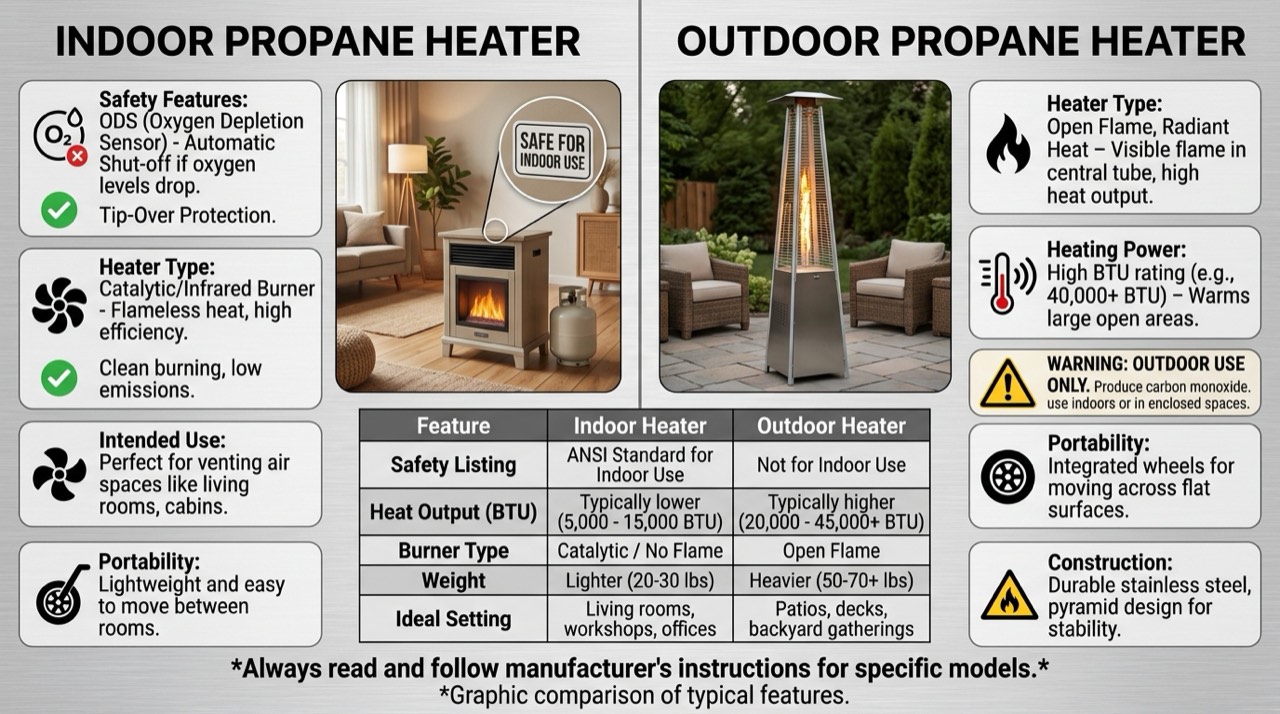
A sale price on a heater with the wrong certification for your space is not actually a good deal. Read the full listing. Check whether a model is indoor-safe or outdoor-only. Check what ships in the box. Do not buy on the BTU number and price alone. Our indoor safety and carbon monoxide guide covers what "indoor-safe" actually requires.
Watching Stock Levels as the Season Progresses
The most-recommended models in any category tend to sell out of specific sizes first. That happens as pre-winter demand builds. A popular heater in stock today is not guaranteed to stay in stock for weeks. Buying earlier instead of waiting for a deeper markdown is a real tradeoff. Weigh price against availability, based on how urgently you actually need the heat.
Comparing a Portable Heater to a Permanent Installation
Pre-winter is also when many homeowners decide between buying another portable heater or finally installing a permanent vent-free unit. A permanent installation costs more upfront and usually needs a professional for the gas line work, but it removes the yearly hassle of storing and setting up a portable model. If you find yourself buying a replacement portable heater almost every season, that repeat cost is worth weighing against a one-time permanent installation.
Checking Return Policies Before You Buy
Confirm the specific return window on any heater purchase, since you may not fully test it until conditions match what you actually bought it for. A generous return window matters more here than for most other seasonal purchases.
Registering Your Purchase
Register any newly bought heater with the manufacturer and keep the receipt somewhere easy to find. A warranty claim moves faster with a documented purchase date, and pre-winter is an easy time to lose track of a receipt amid other seasonal shopping. A photo of the receipt and the model’s serial number, saved to your phone right after purchase, takes a minute and removes any doubt later.
The Bottom Line
Pre-winter is one of the best windows to buy a propane heater and its supporting gear, mainly because it gives you time to test everything before you actually need it. Prioritize the safety accessories alongside the heater itself, and check price history before trusting any "was" price.