
Affiliate disclosure: some links are affiliate links — as an Amazon Associate we earn from qualifying purchases, at no extra cost to you. Full disclosure.
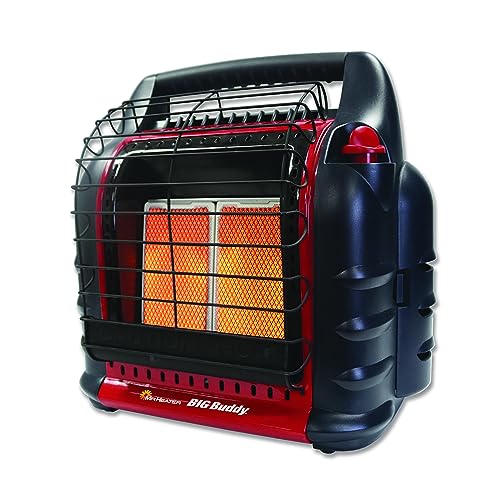
The Big Buddy is the largest heater in Mr. Heater’s Buddy lineup: two independent burner controls, an optional battery-powered fan, and the ability to run on two 1 lb cylinders or a hose connection to a 20 lb tank. These extra features add a few checks beyond the shared basics covered in our Mr. Buddy won’t-light guide.

One Burner Won’t Light or Stay Lit, the Other Works Fine
Test each burner independently rather than assuming a whole-unit failure. A single-burner problem points to something specific to that side. It could be a partially blocked burner port, a worn ODS pilot assembly on that burner only, or debris affecting just one venturi tube. See our burner cleaning guide for the safe cleaning steps, applied to the affected side.
Where the Fuel Filter Is Located
The filter typically sits along the fuel line near the connection point, often housed in a small, easily overlooked inline cylinder. Check your specific model’s manual for its exact location and part number before ordering a replacement, since the exact position can vary slightly between Big Buddy revisions over the years.
Fuel Filter Clogging
The Big Buddy uses a small in-line fuel filter that catches particulate matter before it reaches the burner. Over time, especially with older or lower-quality cylinders, this filter can accumulate enough debris to restrict flow, showing up as a weak flame or a burner that struggles to reach full output. A replacement filter is inexpensive and worth trying if flame quality has degraded gradually over many uses rather than suddenly.

Running on Two 1 lb Cylinders vs. a Hose to a 20 lb Tank
The Big Buddy can connect to two 1 lb cylinders directly, or via the optional hose kit to a single 20 lb tank instead. If you’re running two cylinders and one is more depleted than the other, the heater may show inconsistent output as one side draws down faster. Weighing both cylinders individually, rather than assuming they’re equally full, helps rule this out before suspecting a heater fault.
The Fan Doesn’t Turn On
The Big Buddy’s optional fan runs on D-cell batteries and is a separate system from the gas burners entirely — a fan that won’t spin doesn’t affect whether the heater lights or produces heat. Check the battery compartment for corrosion or dead batteries first, since this is by far the most common cause of a fan that won’t run.
The Fan Runs but Feels Weak
Weak batteries produce a fan that turns but moves noticeably less air than when the batteries were fresh. Since the fan only redistributes heat rather than generating any of it, a weak fan doesn’t reduce the heater’s actual BTU output — it just moves that same heat less effectively through the room. Fresh batteries usually resolve this immediately.
Excess-Flow Lockout on a Big Buddy Specifically
The same excess-flow safety feature that affects every Buddy model’s regulator applies here. Check both cylinder connections if running dual cylinders, since either one can trigger independently. That produces a confusing partial-lockout pattern. Disconnect both, wait about 30 seconds, then reconnect each slowly.
Altitude and the Big Buddy’s Higher BTU Output
The Big Buddy’s higher maximum BTU output draws more oxygen from an enclosed space than a smaller Buddy model at the same run time. That can make the ODS trip somewhat sooner in a marginal-ventilation space, compared to a Little Buddy in the same room. Mr. Heater’s guidance against continuous use above roughly 7,000 feet applies to the Big Buddy the same as the rest of the lineup.
Does the Optional Fan Change Fuel Consumption?
No. The fan runs entirely on its own D-cell batteries and draws no propane at all. It only redistributes the heat the burners are already producing. Running the fan doesn’t make a tank last shorter or longer, since it has no connection to the gas side of the heater whatsoever.
Powering the Fan From AC Instead of Batteries
Some Big Buddy configurations offer an optional AC power cord accessory as an alternative to D-cell batteries for the fan. If your fan won’t run and you’re using this accessory, check the cord connection and the outlet itself before assuming a fan motor failure, since a power-cord setup introduces a different point of failure than a simple battery compartment.
Does the Big Buddy Need More Ventilation Than Smaller Models?
Check your specific model’s manual for its minimum room-size guidance rather than assuming the same clearance that worked for a smaller heater applies here. A higher BTU rating generally comes with a correspondingly larger minimum space requirement in the manufacturer’s own guidance.
Transporting a Big Buddy Between Uses
Its larger size and dual burner assembly make the Big Buddy bulkier to transport than a Little Buddy or Portable Buddy. A bump during transport can occasionally loosen a cylinder connection or shift the fuel filter slightly. Check both cylinder connections after any trip before lighting. Don’t assume everything is still seated the way it was when you packed it.
Cleaning the Fan Housing
Dust can build up inside the fan housing over time, especially with storage in a garage or shed, and this can make the fan sound noisier or move noticeably less air even with fresh batteries installed. A soft brush and some compressed air, the same tools used for burner cleaning, work well here too. Never use water or liquid cleaners near the fan’s electrical contacts.
Storing a Big Buddy’s Fan Separately
Removing the batteries before long-term storage prevents the corrosion that eventually damages the battery compartment’s contacts, a common source of "fan won’t turn on" complaints on units brought out after a long summer in storage. This small habit, alongside disconnecting the cylinder, meaningfully cuts down on next-season troubleshooting.
When a Big Buddy Problem Points to Repair or Replacement
Given the Big Buddy’s higher price point compared to a Little Buddy, a confirmed part failure — a fuel filter, an ODS pilot assembly on one burner, or a damaged regulator — is more often worth repairing than simply replacing the whole unit. Our DIY vs. replace guide covers how the cost comparison shifts for a more expensive model like this one.