
Affiliate disclosure: some links are affiliate links — as an Amazon Associate we earn from qualifying purchases, at no extra cost to you. Full disclosure.
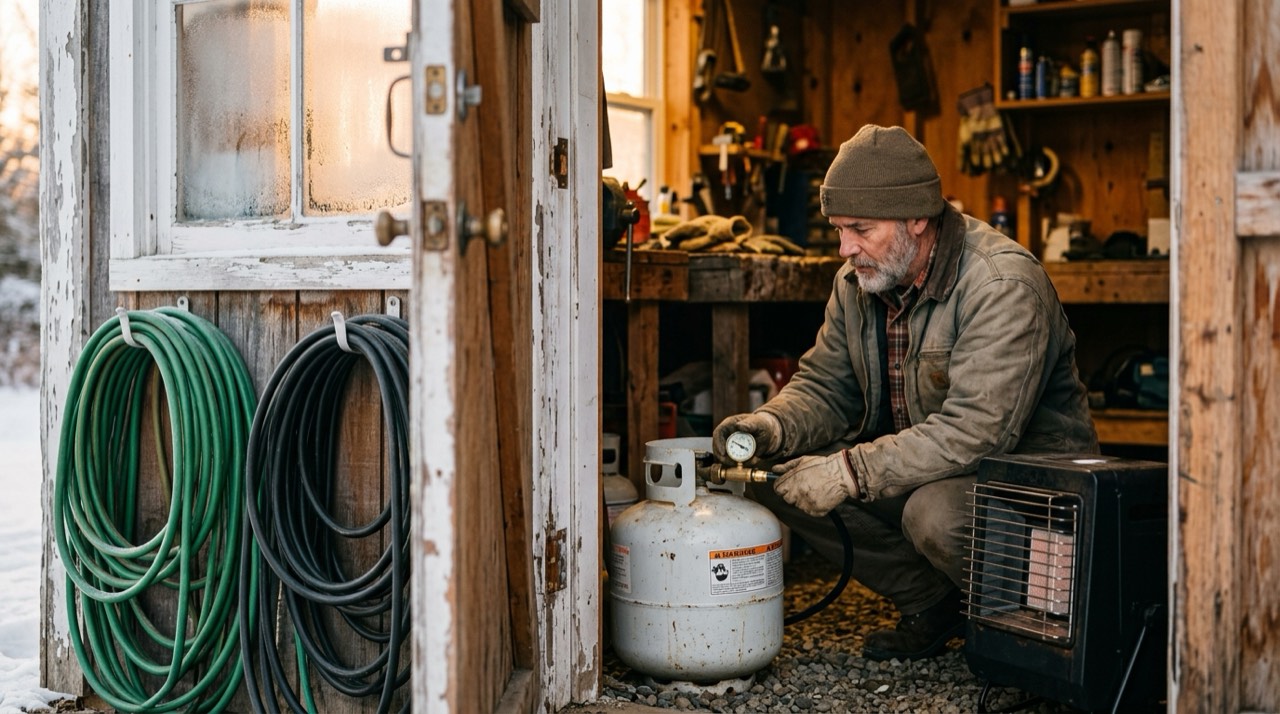
If you already know you want to hose-connect a Buddy heater to a bigger tank, here’s the quick answer: get a hose with a built-in gauge and the right fitting for your tank. Below are two solid, real options, plus what to check before buying.
What to Check Before You Buy
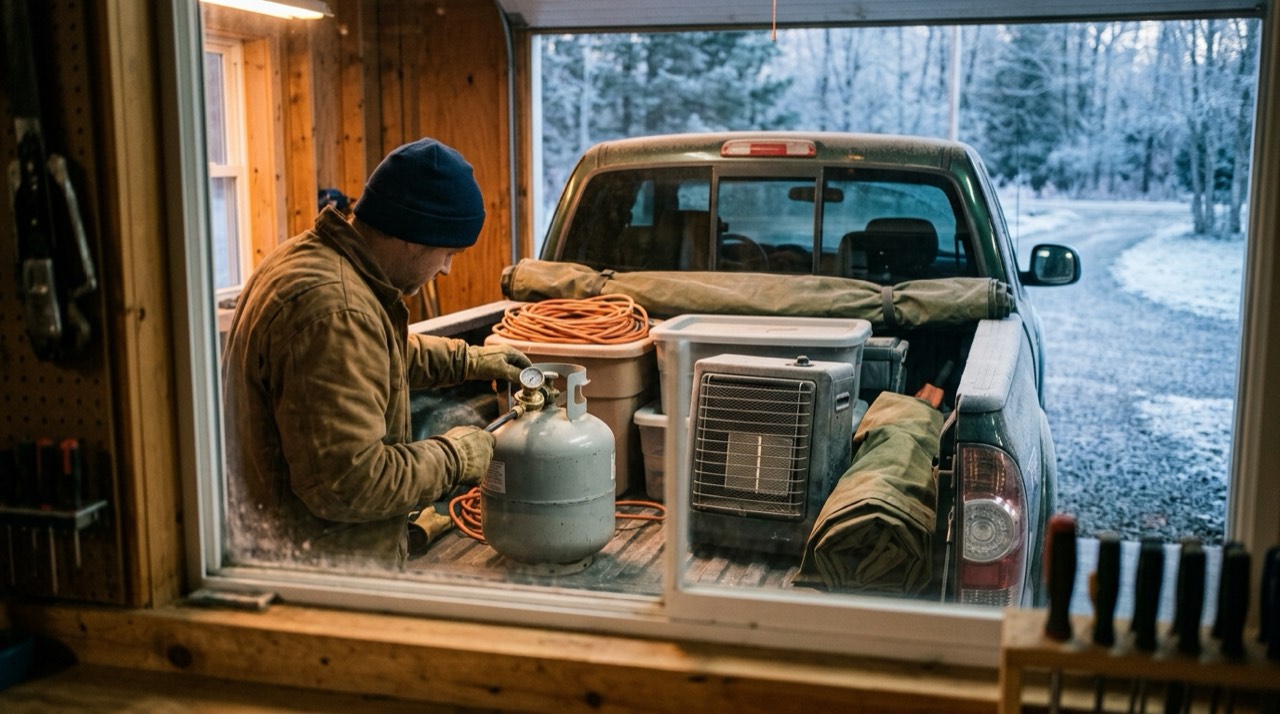
- Fitting type: most 20 lb tanks sold today use a QCC1 (hand-tight) connection. Confirm your tank matches before ordering.
- Hose length: a shorter hose keeps the tank close; a longer one gives you room to position the tank away from the heater or a walkway.
- A built-in gauge is a genuinely useful add-on, since disposable cylinders and even some hoses give no read on remaining fuel otherwise.

Best for Connecting a Buddy heater to a 20 lb tank with a built-in fuel gauge
- 12 ft braided hose
- Built-in pressure gauge
- QCC1 elbow adapter included

Best for A shorter, no-frills hose for a tank kept close to the heater
- 5 ft length
- Standard throwaway cylinder thread
- Compact for storage
Does the Little Buddy Work With These?
No. The Little Buddy is built for 1 lb disposable cylinders only and cannot hose-connect to a larger tank. The standard Buddy, Big Buddy, Hunting Buddy and Buddy FLEX all support a hose-connect setup with the right kit. If the Little Buddy’s small size is what drew you to it in the first place, staying with disposable cylinders for that specific model is the simpler and more practical path, rather than looking for a workaround that doesn’t exist.
Want the Full How-To?
This page is the quick-buy version. For step-by-step connection instructions, leak-check tips, and seasonal storage guidance, see our full hose and adapter guide. For a broader look at hose types across brands, see our best propane hose roundup.
Pairing With a Tank Stand
A hose-connected 20 lb tank needs to sit upright and stable, especially on uneven ground in a tent or blind. Our tank stand and mount guide covers dolly and leg-stand options that keep a tank secure during setup and transport.
What’s Included vs. What You’ll Need Separately
Both hose options above include everything needed to physically connect a Buddy heater to a 20 lb tank: the hose, a regulator, and the tank-end fitting. What they don’t include is a fuel filter, which is a separate, inexpensive add-on worth buying alongside your hose if you’re using a refillable tank rather than a sealed disposable cylinder. A tank stand is also sold separately, and worth adding if your tank won’t otherwise sit stable on the ground where you’re using the heater.
Setting Realistic Expectations on Fit
Both hose options here use the QCC1 fitting standard on nearly all 20 lb tanks sold today. If you’re working with an older tank that uses the earlier POL fitting instead, neither hose will thread on directly, and you’ll need a small brass adapter fitting first. Our hose adapter guide explains the difference between a hose upgrade and a fitting adapter in more detail, since the two are easy to mix up when shopping.
A Note on Price vs. Value Here
Both options above are inexpensive relative to the heater they connect to, and neither is a place worth cutting corners to save a few dollars. A hose that fails mid-use, whether from a poor connection or a cheap material, is a bigger inconvenience than the small price difference between a budget option and a well-reviewed one. Buying once, from a listing with clear specifications and a fitting type that matches your tank, beats reordering after a mismatched or failed first attempt.
After You Buy: A Quick Setup Checklist
- Confirm your tank’s fitting type matches the hose before attempting to connect anything.
- Thread every connection hand-tight first, adding a small wrench turn only if the fitting calls for one.
- Run a soapy-water test on every connection point before lighting the heater for the first time.
- Store the hose coiled and protected between uses, rather than left connected and exposed outdoors.
Step-by-Step Setup Walkthrough
Start with the tank valve fully closed. Thread the hose’s tank-end fitting onto the tank by hand — QCC1 fittings on nearly every current 20 lb tank are hand-tight only and shouldn’t need a wrench. Connect the heater end following your specific Buddy model’s port. Open the tank valve slightly and brush a soapy-water solution over every fitting, watching for bubbles that indicate a leak needing a tighter seat. Only open the valve fully and attempt to light the heater once every connection tests clean and dry.
Common Mistakes First-Time Buyers Make
The most common mistake is ordering a hose without first checking whether the tank uses a QCC1 or an older POL fitting, resulting in a hose that arrives and won’t thread on. A second is skipping the soapy-water leak test specifically because the setup feels simple compared to a bulk-tank or multi-appliance install — a straightforward hose connection still deserves the same check. A third is assuming the Little Buddy can be upgraded to hose-connect with the right kit, when that model simply isn’t built to accept one at all.
How This Differs From a Generic Hardware-Store Hose
A generic propane hose from a hardware store can technically work, provided the fitting matches, but it typically lacks the gauge and the elbow adapter that make a purpose-picked kit more convenient. Neither of the two options above costs meaningfully more than an unbranded generic hose, which is part of why they’re worth buying directly rather than assembling a setup piece by piece from whatever’s on the shelf locally.
Quick Recap
Pick a hose with a gauge if you want a fuel-level read. Pick the shorter, simpler option if your tank sits close and you don’t need one. Confirm your fitting type first. Add a filter if you’re using a refillable tank. Add a tank stand if the ground isn’t level. That’s the whole decision, start to finish, and none of it requires guesswork once you know what your specific tank and heater need. Most buyers spend more time deciding than the actual setup ends up taking once the right parts arrive. Once it’s connected and leak-tested, running a Buddy heater off a 20 lb tank feels no different day-to-day than running it off a disposable cylinder, aside from not needing to buy replacements as often.