
Affiliate disclosure: some links are affiliate links — as an Amazon Associate we earn from qualifying purchases, at no extra cost to you. Full disclosure.
BTU sizing comes down to one question: how much heat does your specific space actually need? The calculator below does the math for you. This guide explains how to read it, and gives a quick-reference chart across the room types people ask about most.
Top 3 Recommended
How the BTU Calculator Works
Enter your room’s square footage and pick the closest insulation type. The calculator applies a BTU-per-square-foot multiplier and gives you a recommended range, not a single number. Ranges matter here. Two rooms of the same size can need very different heat, depending on insulation, ceiling height and how sealed up the space is.
Quick-Reference Chart by Space Type
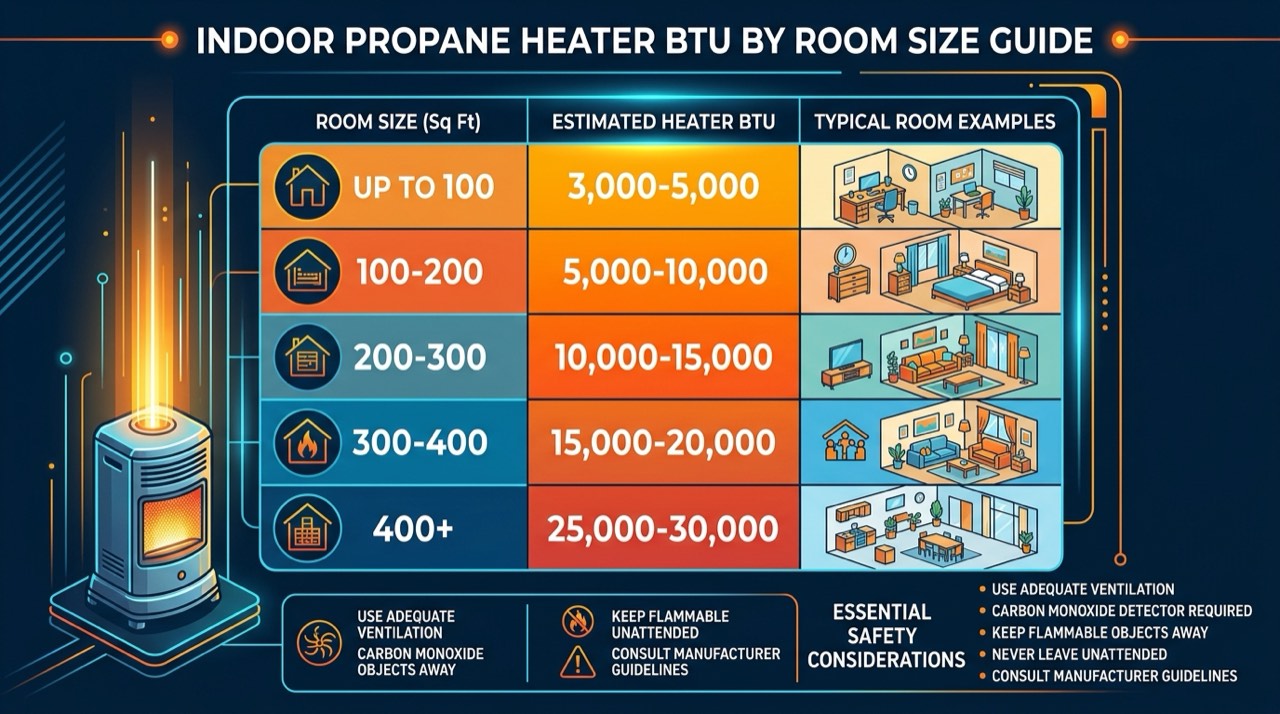
- Bedroom or small office (under 150 sq ft): roughly 3,000–4,500 BTU for a well-insulated room. See our indoor BTU by room size guide for the full indoor-specific table, since indoor rooms need an ODS-equipped heater and follow a different safety cap than outdoor spaces.
- Small tent or ice shanty (under 100 sq ft): roughly 3,800 BTU is typically enough. Our Mr. Heater Buddy series guide covers the specific models built for this size.
- Single-car garage or workshop (200–400 sq ft): 9,000–18,000 BTU for occasional use, more for an uninsulated space used for hours at a time. See our garage and workshop heater guide for the insulation-specific breakdown.
- RV or camper interior (100–300 sq ft): often 6,000–12,000 BTU, though many RVs also have a built-in furnace to supplement. Our RV and off-grid heater guide covers this in detail.
- Open patio or deck: outdoor spaces do not follow the same per-square-foot math, since heat escapes into open air. Our patio heater BTU guide uses coverage radius instead.
Why One Chart Cannot Cover Every Space
A tent, a bedroom and a garage all lose heat differently, even at the same square footage. A tent has thin walls and often no floor insulation. A bedroom is usually well-sealed with standard insulation. A garage often has a large door that leaks heat no matter how well the walls are insulated. That is why each category on this site has its own dedicated sizing page, rather than one universal table trying to cover every case. Use the chart above to get in the right range fast, then check your specific category’s guide for the detail that matters for that space.
Insulation Changes the Math More Than Square Footage Does
Two rooms of the same size can need meaningfully different BTU output. A well-insulated room might need 20 BTU per square foot. A drafty, uninsulated space can need 40 or more. This is the single biggest reason a flat square-footage number is not enough on its own. The calculator above lets you adjust for this directly, rather than guessing.
When to Round Up


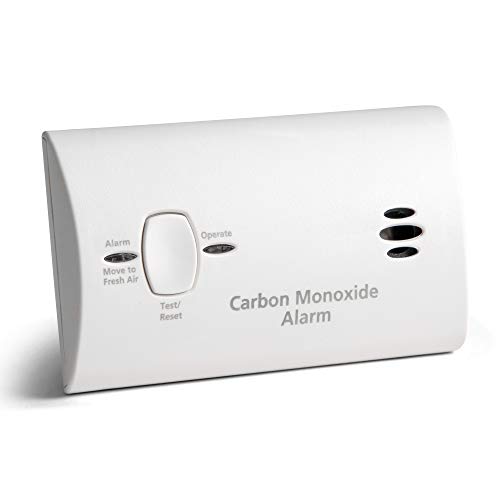

If your space sits between two BTU tiers, rounding up is usually the safer call, within reason. A heater running comfortably below its maximum output lasts longer and cycles less than one working at its limit every time you use it. That said, oversizing has real downsides too, especially indoors, where more heat output means faster oxygen consumption in an enclosed space. Round up by one tier, not by buying double the BTU you calculated.
Common Sizing Mistakes
A few patterns show up again and again across owner reviews on this site. Sizing based on the largest room in a house, rather than the specific room a heater will actually run in, is one of the most common. Ignoring ceiling height is another, especially in garages and vaulted rooms, where more air volume needs heating than floor area alone suggests. And assuming a heater’s maximum BTU rating is what you’ll always run is a third — most heaters spend more time on a lower setting than their box number implies, so sizing purely off the top number can leave you with more heater, and more fuel cost, than you actually need.
How Altitude and Climate Change the Numbers
Colder climates and higher altitudes both affect real-world heater performance in ways the basic chart above doesn’t fully capture. Propane heaters generally lose a bit of efficiency at high altitude, since combustion needs oxygen and thinner air provides less of it. Manufacturers sometimes publish altitude-adjusted guidance for specific models, worth checking if you’re at a meaningfully high elevation. In genuinely cold climates, sizing toward the higher end of the range for your space, rather than the bare minimum, gives you margin for the coldest nights of the season instead of leaving a heater working flat-out just to hold a comfortable temperature on an average day.
Sizing for More Than One Connected Space
If you’re trying to heat two connected areas, like an open garage-and-workshop combination, treat the combined square footage as your starting point, but expect a single heater to reach less effectively than the same square footage in one sealed room. Open doorways and connections between spaces let heat escape in a way four solid walls don’t. In practice, this often means sizing up from the basic calculation, or using two smaller, correctly sized heaters instead of one larger unit trying to reach every corner of a multi-room space evenly.
Using This Chart With the Full Calculator
The chart above gives you a fast starting point. The calculator gives you a number tailored to your exact square footage and insulation level. Use the chart to sanity-check the calculator’s output, and use your category’s dedicated guide, linked above, for model recommendations that actually fit your specific use case.
Re-Checking Your Sizing After a Change
Worth revisiting your BTU sizing any time the space itself changes. Adding insulation, sealing a drafty door, or finishing a garage into a proper workshop all reduce the BTU needed to hold a comfortable temperature. Removing insulation, adding a large window, or expanding the space works the other way. A heater that felt underpowered in an uninsulated garage may perform just fine after basic weatherproofing, without needing to be replaced with something bigger.
Checking Your Sizing Against Real Fuel Consumption
If you already own a heater and want to know whether it's actually sized right for the space, the fastest check isn't the BTU number on the box — it's how long a tank actually lasts. Most manufacturer spec sheets list a burn rate in gallons or pounds of propane per hour at a given BTU setting, and a 20 lb tank holds roughly 4.7 gallons of liquid propane. If a heater is burning through a full 20 lb tank noticeably faster than its listed run time suggests at the setting you're using, that's usually a sign the heater is working harder than it should — either the space is leakier than the insulation category you picked, or the heater is undersized and running near its maximum output most of the time rather than cycling on a mid-range setting.
The reverse pattern is also worth watching for: a heater that barely sips fuel and rarely needs its higher settings in a space you expected to be a harder heat to hold is a sign you sized up more than the space actually needed. That's not a wasted purchase — headroom has real value on the coldest night of the season — but it's useful information if you're deciding on a second heater for a similarly sized space, since it tells you the lower end of a BTU range was probably the better starting point the first time.
BTU & Room-Size Calculator
Estimate the heater size you need. This is a general guide, not a substitute for the manufacturer's sizing chart.