

Affiliate disclosure: some links are affiliate links — as an Amazon Associate we earn from qualifying purchases, at no extra cost to you. Full disclosure.
A note before you buy: Dyna-Glo’s only wall heater in the licensed catalog we source from runs on natural gas, not propane. This site covers propane heaters specifically, so we’re reviewing a real propane wall heater instead: the Comfort Glow DVP11. Unlike most of the vent-free heaters in this hub, this one is a true direct-vent design, meaning it vents combustion byproducts outside through the wall rather than relying on an oxygen depletion sensor alone.

Top 3 Recommended
Who It’s For
This heater suits a bedroom, bathroom or mobile/modular home where direct-vent installation is either required or preferred over a vent-free unit. Because it vents outside, it’s approved for spaces where vent-free heaters typically aren’t recommended, like bedrooms and bathrooms in some jurisdictions. It needs a wall between 4.5 and 10 inches thick and a professional venting kit, which the manufacturer includes. It’s not a portable or DIY-in-an-afternoon project the way a vent-free floor unit can be — budget for a proper wall installation.
Full Specs
| Spec | Detail |
|---|---|
| BTU output | 11,000 BTU |
| Coverage | Up to 375 sq ft |
| Efficiency | 70% |
| Dimensions | 20"H x 17"W x 7"D |
| Wall thickness | Installs on 4.5" to 10" walls |
| Venting | Direct vent through the wall, professional kit included |
| Ignition | Matchless piezo |
| Requirements | Minimum 100 lb. propane tank and a two-stage low-pressure regulator |
| Approval | Approved for bedrooms, bathrooms, mobile and modular homes |
| Warranty | 2 years |
Source: Comfort Home Products Comfort Glow DVP11 product page.
What Owners Praise
The direct-vent design is the top-cited benefit in owner feedback, specifically because it’s approved for bedrooms and bathrooms where a vent-free heater isn’t always permitted or recommended. Owners also praise the noise-free 430 stainless steel burner, describing it as quiet enough for a bedroom overnight. The matchless piezo ignition is another consistent point of praise, since it needs no electricity and lights reliably compared to some vent-free units that struggle in cold starts.
What Owners Report as Drawbacks
Installation is the most common friction point. The professional venting kit and wall-thickness requirements make this a bigger project than a vent-free floor or wall unit, and several owners recommend hiring a professional for the vent installation specifically, even if the heater itself is straightforward. A second theme: the 100 lb. minimum tank requirement surprises some first-time buyers expecting to use a standard 20 lb. cylinder, which this heater is not designed for. A smaller number of reviews mention wanting a higher BTU option in the same DVP line for larger rooms.
Pros & Cons
Pros
- True direct-vent design, approved for bedrooms and bathrooms
- Quiet 430 stainless steel burner suited to overnight use
- Matchless piezo ignition needs no electricity
- Professional venting kit included in the box
Cons
- Requires a minimum 100 lb. propane tank, not a standard 20 lb. cylinder
- Professional installation is recommended for the venting work
- Only 11,000 BTU — a larger room needs a different model
- More installation complexity than a vent-free alternative
Comparing Direct-Vent Coverage Across the Lineup
Comfort Glow sells this DVP11 alongside larger direct-vent models in the same product family, so it’s worth checking whether 11,000 BTU and 375 sq ft actually fits your room before ordering. A bedroom or small home office typically falls comfortably within that rating. A larger living space or an open-plan area usually needs a bigger direct-vent model, or a combination of a direct-vent unit for the bedroom and a separate vent-free heater for the main living area. Mixing heater types across different rooms based on each room’s specific requirements is a common, sensible setup rather than trying to find one heater that solves every room in a home.
Installation and Maintenance
Confirm wall thickness falls between 4.5 and 10 inches before ordering, and plan for a two-stage low-pressure regulator connected to a 100 lb. or larger propane tank. Hiring a professional for the vent-through-wall installation is worth the cost for most buyers, even though the heater itself uses simple matchless piezo ignition. Test the safety pilot and pressure regulator each season, and keep the exterior vent cap clear of debris, leaves or snow buildup.
Living With a Direct-Vent Heater Day to Day
Once installed, day-to-day operation is straightforward — light it with the piezo igniter, set the desired output, and let the enclosed combustion system do its job with no ongoing attention needed. Owners describe it as closer to living with a small furnace than a portable space heater in terms of routine use. The main seasonal task is checking that the exterior vent cap stays clear, particularly after storms or heavy snowfall, since a blocked vent affects both performance and safety.
How It Compares
Against the vent-free heaters reviewed elsewhere in this hub, this Comfort Glow model trades simpler installation for genuine venting. That’s a meaningful difference for bedrooms, bathrooms or any space where vent-free heat isn’t the preferred or approved option. Against a larger vent-free unit like Mr. Heater’s 30,000 BTU Vent-Free Blue Flame heater, this direct-vent model covers less square footage. It doesn’t need the same reliance on an oxygen depletion sensor for indoor safety, though.
Why Some Rooms Require Direct Vent
Not every jurisdiction or building type allows a vent-free heater in every room. Bedrooms and bathrooms are the two spaces most commonly restricted, since occupants spend hours there with doors closed and less air exchange than a living area. A direct-vent heater sidesteps that restriction entirely by exhausting combustion byproducts outside through the wall, the same principle a furnace or water heater uses. If you’re heating a bedroom specifically, check local code before assuming a vent-free unit is allowed — this is exactly the situation a direct-vent heater like this one is built to solve.
Budgeting for the Full Installation
The heater’s price is only part of the total cost here. Factor in the professional installation most owners recommend for the through-wall venting, plus the 100 lb. or larger propane tank and two-stage regulator this model requires, which is a bigger commitment than a swappable 20 lb. cylinder. Buyers coming from a vent-free heater’s simpler setup should budget both more money and more lead time for a direct-vent installation done right.
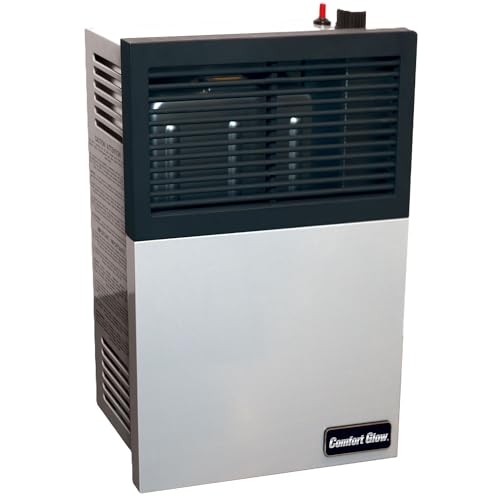
Best for A genuinely vented wall installation in a bedroom or mobile/modular home
Related Products
See our full wall-mount and cabinet heater guide, or check our propane heater worth-it breakdown before buying. Pair it with these:


