
Affiliate disclosure: some links are affiliate links — as an Amazon Associate we earn from qualifying purchases, at no extra cost to you. Full disclosure.
A pilot flame that catches and holds steady, while the main burner never fires up, is a specific and different symptom from a heater that won’t light or won’t stay lit at all. This page covers why this happens and how to fix it.
Cause 1: A Post-Connection Safety Delay
After connecting a fresh cylinder, some Buddy models briefly restrict gas flow to the main burner while the ODS pilot assembly completes an initial safety check, even though the pilot itself lights normally right away. This delay is typically short, often under a couple of minutes. If the main burner catches on its own shortly after the pilot lights, this was the explanation, not a fault.
Cause 2: The Main Burner Control Isn’t Fully Turned
On dual-control models, the pilot and main burner often use separate knobs or a knob with distinct positions. Confirm the main burner control is turned fully to an active setting, not left in the pilot-only position. This is an easy step to miss, especially soon after learning a new unit’s control layout.
Cause 3: Debris Blocking the Main Burner Ports
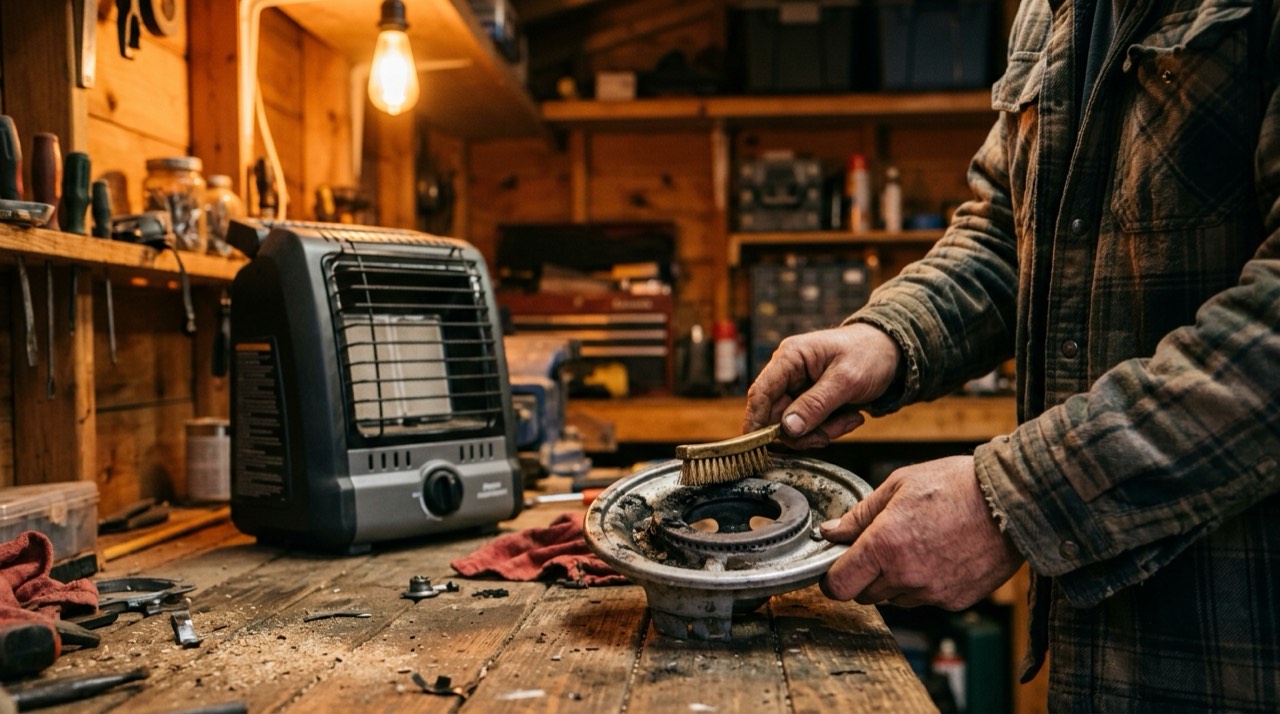
A pilot flame is small and needs very little clearance to burn, while the main burner needs its ports clear to ignite from the pilot’s flame. Dust or insect debris can block the main burner specifically while leaving the smaller pilot opening unaffected. See our burner cleaning guide for the safe way to clear this.
Cause 4: Low Fuel Pressure Reaching the Main Burner
The pilot uses a very small amount of fuel and can sometimes run on pressure that isn’t enough to fire the larger main burner. A nearly empty or cold cylinder can produce exactly this pattern: enough pressure for a small pilot flame, not enough for the main burner’s higher demand. Check your fuel level and cylinder temperature — our low-fuel symptoms guide covers how to check without a gauge.
Cause 5: An Excess-Flow Regulator Partially Restricting Flow
A partial, rather than full, excess-flow trip in the regulator can sometimes let enough fuel through for the small pilot demand while restricting the main burner’s higher flow requirement. Running through the standard reset procedure — disconnect, wait 30 seconds, reconnect slowly — is worth trying even if the pilot itself never seemed affected.
Does This Happen More With a New Heater?
A brand-new Buddy heater can occasionally show this exact symptom the very first time it’s used, since fuel has never flowed through the main burner’s line before and needs a moment to fully purge any trapped air even after the pilot itself catches immediately. This isn’t a defect. Two or three lighting attempts, spaced a minute apart, typically resolves it permanently on a new unit.
Checking the Main Burner Valve Position More Carefully
On some models the pilot and main burner share a single knob with distinct click-stop positions rather than two separate knobs, and it’s easy to stop turning at the pilot position without quite reaching the next detent for the main burner. Turn the knob firmly to its full "on" position rather than stopping at the first point where you feel resistance.
Working Through the Causes in Order
Did this just happen right after connecting a new cylinder? Wait a couple of minutes before assuming a fault. Confirm the main burner control is in an active position. Check for burner debris if the unit has sat in storage. Check fuel level and cylinder temperature. Try the regulator reset procedure if nothing else explains it.
Does This Happen the Same Way on Every Restart?
If the main burner catches instantly on some restarts but needs several attempts on others, using the same cylinder and the same settings, that inconsistency itself is a useful clue. It points more toward a marginal cause like slightly restricted flow or borderline debris, rather than a hard failure that would behave the same way every single time.
Is This the Same as an Igniter Problem?
No. An igniter problem means no spark reaches anything, including the pilot. This symptom starts from a pilot that’s already lit and burning steadily, with the main burner as the only part not responding. If your igniter itself isn’t sparking at all, see our Buddy clicking-but-not-igniting guide instead.
Does This Happen More on the Big Buddy?
The Big Buddy’s dual-burner design means this symptom can show up on one side while the other burner fires normally, which is a useful diagnostic clue in itself. See our Big Buddy troubleshooting guide for the model’s specific dual-burner checks.
Should You Keep Trying to Light It Repeatedly?
A few repeated attempts, spaced a minute or two apart, are reasonable and often resolve a post-connection safety delay on their own. Continuously cycling the igniter dozens of times in quick succession isn’t more effective and can unnecessarily wear the piezo mechanism. If several spaced-out attempts over five to ten minutes don’t produce a lit main burner, move on to the debris and fuel checks above rather than continuing to just retry.
What This Symptom Doesn’t Mean
It doesn’t mean the ODS pilot assembly has failed — that part’s job is holding the pilot valve open, and it’s clearly doing that correctly if the pilot itself stays lit. It also doesn’t mean the igniter has a problem, since ignition already happened successfully for the pilot. Keeping these distinctions clear prevents replacing the wrong part based on an assumption rather than the actual symptom.
A Quick Pre-Check Before the Full Sequence
Before working through every cause above, glance at three things: how recently the cylinder was connected, whether the main burner knob is turned fully, and how the pilot flame itself looks. This quick look often points straight at the right cause without needing to work through the full list in order.
When This Points to a Repair
Have you waited out a possible post-connection delay, confirmed the control position, cleaned the burner, checked fuel and tried a regulator reset, and the main burner still won’t catch from a steadily lit pilot? A blocked internal gas passage or a failed main burner valve is the remaining likely cause, and that’s a repair or replacement decision. Our DIY vs. replace guide covers how to weigh the two options.