
Affiliate disclosure: some links are affiliate links — as an Amazon Associate we earn from qualifying purchases, at no extra cost to you. Full disclosure.
If your Buddy’s pilot lights, holds fine while you keep the knob pressed in, and then dies the moment you release it, even after holding the full time your manual specifies, this page covers the specific part responsible and how to confirm it before replacing anything.

What the ODS Pilot Assembly Actually Does
Buddy-series heaters use an ODS pilot assembly rather than a separate standalone thermocouple. This single part combines two jobs: sensing the pilot flame, and cutting gas flow for safety. It generates a small electrical current from the pilot flame’s heat. That current holds the main gas valve open. If the pilot goes out, or never generated enough current to begin with, the valve closes on its own.
First: Rule Out Timing
Before suspecting the part itself, confirm you held the knob the full duration your manual specifies, typically 30 to 60 seconds. Releasing even a few seconds early produces the exact same symptom as a genuinely worn assembly. Time an attempt with a clock, not by feel, since a few seconds difference matters here.
Second: Check for a Weak or Dirty Pilot Flame
The assembly needs steady, direct contact with the pilot flame to generate enough current. Dust or debris around the pilot area can produce a flame that’s weak or doesn’t fully contact the sensing element, mimicking a failing part. Inspect the pilot area and clear any visible debris. See our burner cleaning guide for the safe way to do this.
Third: Rule Out an ODS Ventilation Trip
This is a different failure mode from the pilot assembly itself. If the pilot and main burner run fine for several minutes, then cut out, that points to the oxygen depletion sensor reacting to insufficient room ventilation, not the assembly failing to hold at release. Our shuts-off-by-itself guide covers this separately.
Confirming the Part Itself Has Failed
Have you timed the hold correctly, confirmed a clean and steady pilot flame, and ruled out a ventilation-driven shutoff after several minutes? An ODS pilot assembly that still won’t hold the valve open at release has genuinely worn out. This is a normal wear item on any heater with this kind of safety mechanism, not a sign of a defective unit.
Why This Part Wears Out Over Time
Like a standalone thermocouple, the sensing element inside an ODS pilot assembly degrades gradually with heat cycling over years of use. Several years of regular seasonal use is typical before this shows up. Daily or heavy use through a full season can shorten that. There’s no fixed replacement schedule — replace it once the symptom pattern confirms the part, not on a calendar basis.
Is There a Test You Can Run at Home?
A multimeter test, similar to a standalone thermocouple’s millivolt check, is possible in principle. But the ODS pilot assembly’s combined design makes the right test points harder to reach on most Buddy models than on a simple pilot-and-thermocouple heater. For most owners, the symptom pattern itself is reliable enough. Rule out timing, a dirty pilot and a ventilation trip first, and you rarely need a meter to confirm the rest.
What a Genuinely Worn Assembly Feels Like in Practice
Owners often describe it as the heater "getting worse gradually" rather than failing all at once. The hold time that used to work fine starts needing a few extra seconds. Then it needs even longer. Eventually even a generous hold doesn’t help. This slow decline, rather than a sudden one-day failure, is typical of this specific part wearing out.
Replacing an ODS Pilot Assembly
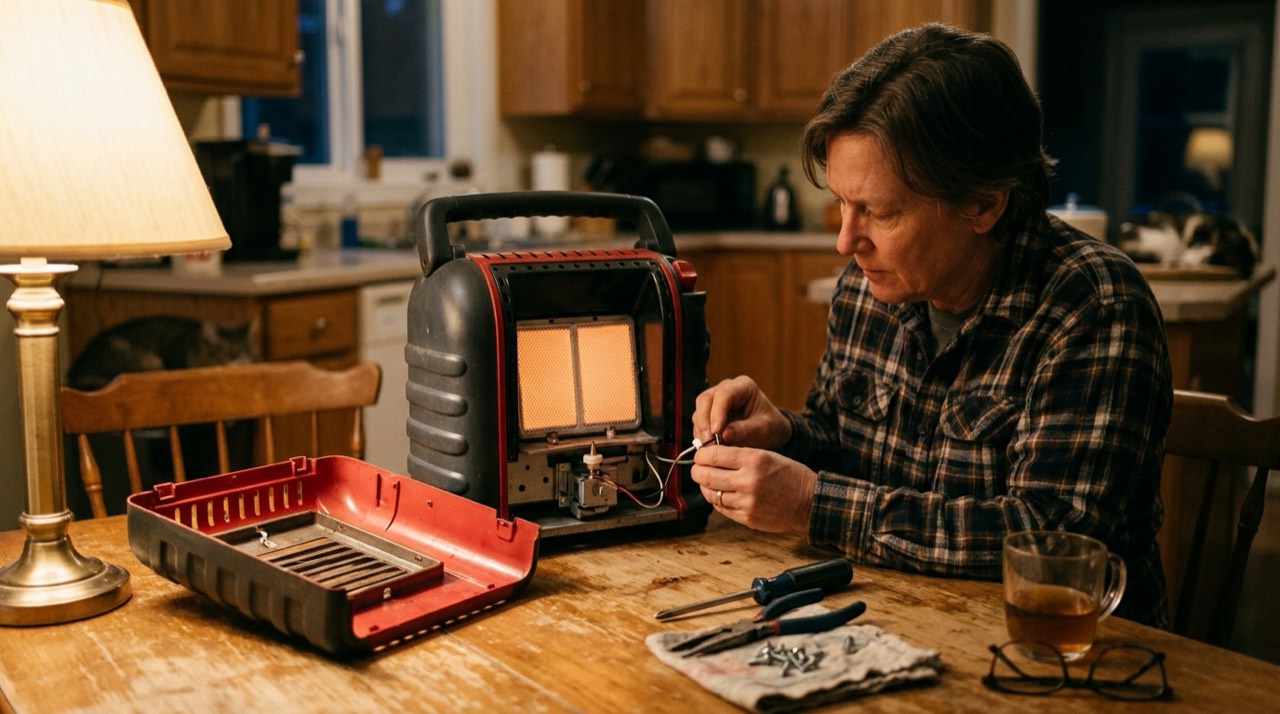
This is a more involved repair than swapping a simple standalone thermocouple, since the assembly is integrated into the heater’s control area rather than a single easily accessed part on most models. Given the low cost of most Buddy heaters, weigh sourcing and installing a specific replacement assembly against simply replacing the unit. Our DIY vs. replace guide covers that decision.
Does This Affect Every Buddy Model the Same Way?
The core mechanism is the same across the Little Buddy, Portable Buddy, Buddy FLEX and Big Buddy, though the exact assembly and how accessible it is for inspection or replacement varies by model. The diagnostic order above — timing, then pilot cleanliness, then ventilation, then the part itself — applies to all of them equally.
Does the Assembly Fail the Same Way Every Time?
A genuinely failed assembly tends to behave consistently, dying at release on essentially every attempt regardless of how carefully you follow the sequence. An assembly that holds successfully most of the time, but fails occasionally, is more likely still borderline rather than fully worn out, which is worth knowing since a borderline part sometimes lasts considerably longer before needing replacement.
A Pilot That Won’t Even Light in the First Place
This page covers a pilot that lights and holds temporarily, then fails at release. If your pilot won’t light at all, that’s a different symptom with different causes — see our Mr. Buddy won’t-light guide instead.
What to Tell a Technician if You Do Seek Repair
If you decide to have a professional inspect the heater rather than replacing it outright, describing the exact symptom pattern — holds fine while pressed, dies instantly at release, after confirming a full hold time — saves diagnostic time compared to a vague "won’t stay lit" description. This narrows the technician’s starting point to the ODS pilot assembly specifically, rather than a broader fuel-system inspection.
Why Manufacturers Don’t Make This Part Easier to Test
Combining the sensing and safety-shutoff functions into one integrated assembly, rather than a separate thermocouple plus a separate ODS sensor, simplifies manufacturing and keeps the heater’s overall part count lower. The tradeoff is a part that’s less straightforward for an owner to bench-test at home compared to a simple standalone thermocouple. This is a reasonable design choice for an inexpensive portable heater, even though it means most owners rely on symptom pattern rather than a meter reading to confirm a failure.