
Affiliate disclosure: some links are affiliate links — as an Amazon Associate we earn from qualifying purchases, at no extra cost to you. Full disclosure.
Most of the time, a propane heater that shuts off on its own isn’t broken. A safety system built into the heater is doing exactly what it’s designed to do. The oxygen depletion sensor and the tip-over switch cause most unexpected shutoffs on indoor-safe heaters. Work through the causes below in order. Most owners find the answer in the first two.

Cause 1: The Oxygen Depletion Sensor (Most Common)
An oxygen depletion sensor, or ODS, comes standard on any heater certified for indoor or enclosed-space use. It watches the oxygen level in the air around it. It shuts the gas valve if oxygen drops below a safe threshold, well before carbon monoxide becomes dangerous. Does your heater shut off after running a while in a closed room, tent or camper? This is the most likely explanation, especially in a small or tightly sealed space. It isn’t a malfunction. It’s the sensor doing its one job.
Cause 2: A Tip-Over Switch Trigger
Most portable propane heaters include a mechanical tip-over switch. It shuts gas flow the moment the unit tilts past a set angle. A heater on soft ground, an uneven surface, or a surface that vibrates — a truck bed, an RV floor while driving — can trigger this switch without a full tip-over. Check that the heater sits fully level on a hard, stable surface. Make sure nothing rests against its base that could tilt it slightly.
Cause 3: An Empty or Low Tank
A tank running low on fuel doesn’t always warn you with a weak flame first. On some models, the pressure drop alone can trip a low-pressure safety cutoff before the flame visibly weakens. Has the heater been running for a long session, or has the cylinder gone unchecked for a while? Weigh it or swap in a known-full one before troubleshooting further.
Cause 4: A Regulator Lockout
Many propane regulators include an excess-flow safety feature. It shuts fuel flow if it senses a flow rate higher than expected, which can happen simply from opening a fresh tank’s valve too quickly. This isn’t a shutoff mid-use so much as a heater that won’t restart normally after a tank change. But it’s worth ruling out if the shutoff happened right after connecting a new cylinder. See our regulator troubleshooting guide for the reset procedure.
Cause 5: A Failing Thermocouple or ODS Pilot Assembly
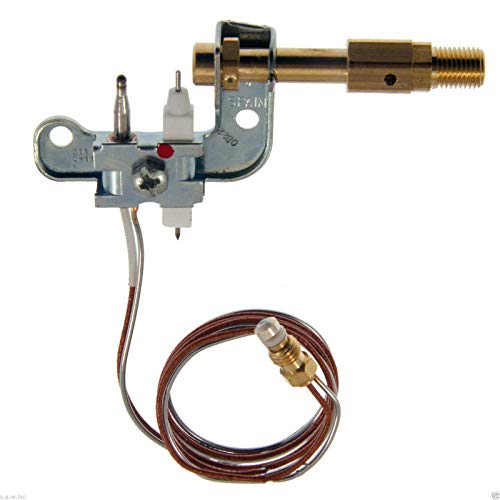
Have you ruled out the first four causes? Is the room adequately ventilated, is the heater level and stable, does the tank have fuel, and is the regulator not locked out? A worn thermocouple or ODS pilot assembly is the next suspect. These parts can fail gradually. They hold the valve open for a while before dropping out mid-session, rather than failing to light at all. Our thermocouple diagnostic guide covers how to confirm this.
How to Work Through These in Order
Check tip-over and level first. It takes ten seconds and rules out the simplest cause. Then check ventilation against your model’s manual. ODS trips are the single most common cause on indoor-safe heaters used in a small space. Then check fuel level. Only move to the regulator and thermocouple once the first three are confirmed fine. Those two take slightly more time, and the thermocouple check may need a replacement part.
What "Adequate Ventilation" Actually Means
Manufacturer manuals typically specify a minimum room size. They also require at least one permanently open vent — a cracked window or door, not a sealed room with a fan. A space that felt fine for a short visit can still trip the ODS over a longer run, since oxygen depletion builds up over time. Does a heater consistently shut off in the same room after roughly the same run time? That pattern itself points to marginal ventilation, not a faulty sensor.
Does Altitude Affect the ODS?
Yes, in a real and documented way. Oxygen concentration in the air is lower at high altitude, even in a well-ventilated space. An ODS calibrated for sea-level conditions can trip more readily as elevation increases. Mr. Heater’s own manuals note that Buddy-series heaters aren’t recommended for continuous use above roughly 7,000 feet for this reason. Do shutoffs happen consistently at a mountain cabin or a high-elevation campsite, but not at home? Altitude is a likely factor, not a defect.
A Shutoff That Happens Immediately vs. After Several Minutes
Timing narrows the cause faster than most owners expect. A shutoff within the first minute or two almost always points to the tip-over switch or a regulator lockout. The ODS needs time to register a genuine oxygen change, so an instant cutoff is rarely the sensor. A shutoff after 15 minutes to an hour of normal operation is the classic ODS signature. That’s roughly how long a small enclosed space takes to build up a meaningful oxygen change. Note how long the heater ran before it cut out. It’s one of the fastest ways to skip straight to the likely cause.
When the Same Heater Works Fine in One Room but Not Another
Does a heater shut off reliably in one space but never in another? The heater itself almost certainly isn’t the problem. The room is. Compare the two spaces for size, how tightly sealed the doors and windows are, and whether either room has a permanently open vent versus one that’s only cracked occasionally. This side-by-side comparison is one of the more reliable ways to confirm an ODS-driven ventilation issue, rather than chasing a part replacement that won’t fix a room-level cause.
Multiple Heaters Running in the Same Space
Running two or more fuel-burning heaters in one enclosed room draws down available oxygen faster than either heater alone. That can trigger an ODS shutoff well before the manufacturer’s single-heater ventilation guidance would predict. Did you add a second heater around the same time shutoffs started? Rule that out before assuming either unit has developed a fault. The combined oxygen draw, not a broken sensor, is the more likely explanation.
What Not to Do
Never tape, block or otherwise disable a tip-over switch or an ODS to stop a heater from cutting out. Both exist specifically to catch conditions that can otherwise turn dangerous. Defeating either removes a layer of protection the heater was certified with. Does a heater shut off in conditions that seem clearly safe, like a large, well-ventilated garage? That’s a sign to have the unit inspected, not a sign the safety system is being overly cautious.
When to Call It a Repair Job
Have you ruled out ventilation, level and stability, fuel, and a regulator lockout, and the heater still shuts off unpredictably? A thermocouple, ODS pilot assembly or internal wiring fault is the remaining explanation. That’s a repair or replacement decision, not a habit fix. Our DIY vs. replace guide covers how to weigh a parts repair against buying a new unit for your specific heater.