
Affiliate disclosure: some links are affiliate links — as an Amazon Associate we earn from qualifying purchases, at no extra cost to you. Full disclosure.
The Little Buddy is the simplest heater in the Buddy lineup: one fixed 3,800 BTU output, no low/high dial, and a single knob that handles both the pilot and the ignition. That simplicity narrows down what can actually go wrong. Here’s the model-specific sequence.
Step 1: Confirm the Cylinder Is Seated Correctly
The Little Buddy connects directly to a 1 lb cylinder through a swivel regulator built into the heater’s base, with no separate hose on the standard model. Confirm the cylinder threads on fully and squarely before assuming a deeper problem. A cylinder that’s cross-threaded or only partially seated won’t deliver fuel even though it looks connected.
Step 2: Check for an Excess-Flow Lockout
Did you just connect a fresh cylinder? Turn the heater’s knob fully off, disconnect the cylinder, wait about 30 seconds, then reconnect and let fuel flow in slowly rather than snapping it on quickly. This resets the regulator’s built-in excess-flow safety feature, which is the single most common Little Buddy "won’t light" cause.
Step 3: Follow the Exact Knob Sequence
The Little Buddy’s single knob needs to be pushed in and turned to the pilot position, then held while pressing the igniter, per the manual’s specific sequence. Skipping a step or turning the knob to the wrong position first is an easy, common mistake, especially the first few times using a new unit.
Step 4: Hold the Full Time Before Releasing
Once the pilot catches, continue holding the knob in for the time your manual specifies, commonly 30 to 60 seconds, before releasing. Releasing even a few seconds early is a very common cause of a Little Buddy that seems to light, then immediately goes out.
Step 5: Check for Cold Cylinder Pressure
The Little Buddy’s small 1 lb cylinder is especially sensitive to cold. A cylinder that’s been sitting outside in freezing temperatures may not deliver enough pressure to light. Warm it to room temperature before use, never with direct heat, and try again.

Step 6: Inspect for Debris in the Burner
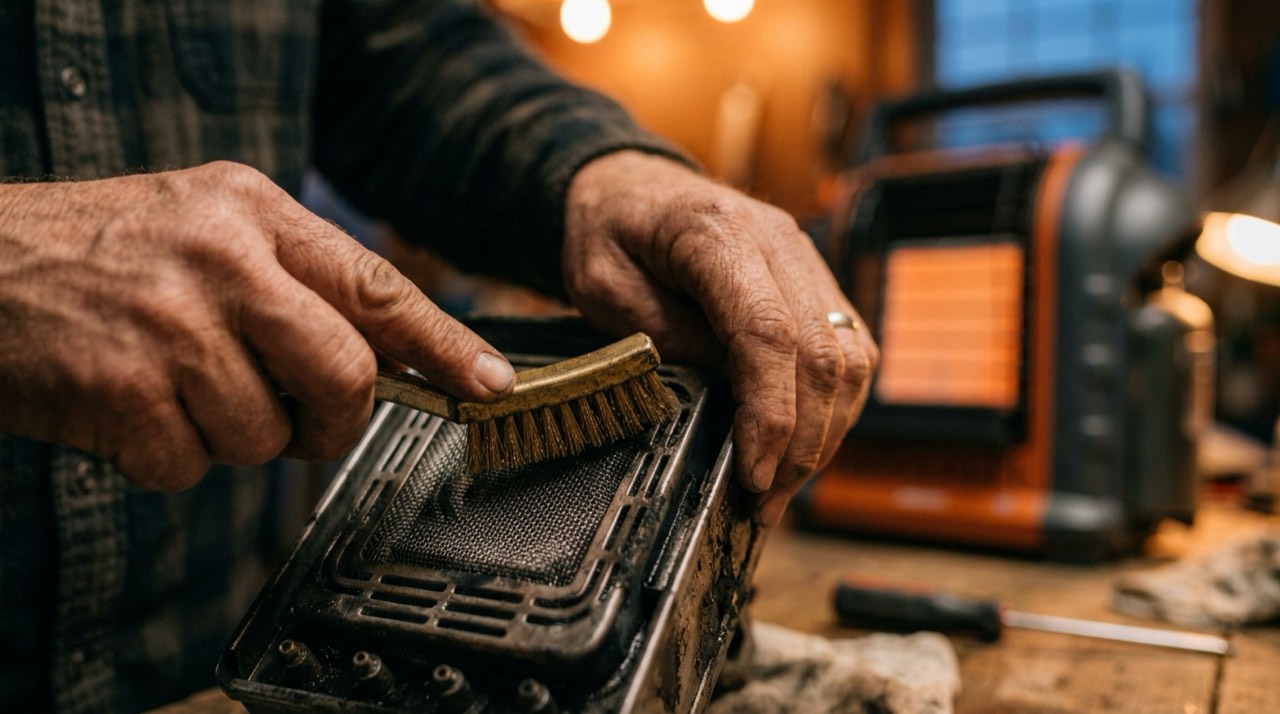
The Little Buddy’s compact burner can collect dust or insect debris just like any other model, especially after months in storage. See our burner cleaning guide for the safe cleaning steps.
Does the Little Buddy Have a Thermocouple?
It uses an ODS pilot assembly that combines the safety-shutoff function a separate thermocouple handles on some other heaters. If the unit lights and holds fine while you press the knob, but drops out the instant you release it even after a full hold time, this assembly may be worn. Our thermocouple diagnostic guide covers how to confirm this pattern, even though the Little Buddy’s specific part is an ODS pilot assembly rather than a standalone thermocouple.
A Little Buddy That Won’t Light Even After All Checks
Have you confirmed a proper cylinder connection, reset a possible regulator lockout, followed the exact knob sequence, held the full time, and ruled out cold weather and burner debris? A failed ODS pilot assembly or igniter is the remaining likely cause. Given the Little Buddy’s low cost, weigh a repair against simply replacing the unit — our DIY vs. replace guide covers that decision.
What a Successful Light Looks and Sounds Like
Knowing what "working correctly" actually looks like helps you tell a real fault from a normal quirk. A healthy Little Buddy makes an audible click at the igniter, a small whoosh as the pilot catches, and settles into a steady, even blue flame across the full ceramic panel within a few seconds of release. A flame that’s patchy across only part of the panel, rather than one part failing to light at all, usually means a burner-cleaning issue rather than an ignition or fuel problem.
Common First-Time-Use Mistakes
Owners lighting a brand-new Little Buddy for the first time sometimes skip the manual’s exact sequence entirely, assuming it works like a simple stove igniter: press and release. The Little Buddy’s knob needs continuous, sustained pressure through the whole hold period, not a quick press-and-let-go. Reading the manual’s specific sequence once, before the first light, avoids most of the false-start confusion new owners run into.
Does a New Little Buddy Need a Break-In Period?
Not really, though a brand-new unit can occasionally take a couple of extra tries to light the very first time, since the fuel line and internal components have never carried gas before. This isn’t a defect. If a brand-new, never-used Little Buddy takes two or three attempts before it lights consistently, that’s within normal range and not a sign the unit needs to be returned or repaired.
Traveling With a Little Buddy
Its compact size makes the Little Buddy a common choice for hunting blinds, truck cabs and small tents, which also means it takes more bumps and temperature swings in transit than a heater that stays in one spot. Check the cylinder connection after any trip before lighting, since vibration during transport can occasionally loosen a connection that was fine when you packed it. This one habit catches a loose-connection cause before you’re troubleshooting it in the field.
Checking the Ceramic Burner Panel for Damage
The Little Buddy’s radiant panel is a ceramic material that can crack from a hard drop or impact, and a cracked panel can sometimes affect how evenly the unit lights even when the fuel and ignition path are both fine. Inspect the panel visually for cracks or missing sections if the unit has been dropped or handled roughly, especially on a secondhand or well-traveled unit.
Why the Little Buddy Has No Low/High Setting
Its fixed 3,800 BTU output is intentional: the Little Buddy is built for a small enclosed space, like a tent, blind or truck cab, where the full output is rarely too much. This also means there’s one less thing to check when troubleshooting compared to a dual-control model. If you’re finding the fixed output insufficient for your space, that’s a sizing question rather than a fault, and a larger Buddy model may suit your needs better.