
Affiliate disclosure: some links are affiliate links — as an Amazon Associate we earn from qualifying purchases, at no extra cost to you. Full disclosure.
A workshop is a different heating problem than a garage you pass through quickly. You need the whole space warm for hours, not just a quick blast of heat near the door. We looked at the heaters that come up most in workshop-specific owner reviews and ranked six that hold up to extended use. Every ranking below reflects aggregated owner reviews, manufacturer specifications, and safety certifications.
How We Picked the Best Garage Heater or Workshop Heater by Square Footage and BTU Sizing
Extended-session use changes the priorities for a workshop heater versus a quick-visit garage heater. We weighted sustained output against the room's square footage using our standard BTU sizing approach, noise level for anyone spending full days near the heater, and fuel efficiency over a long run rather than a brief one. A heater that excels for a five-minute garage visit is not necessarily the right pick for an eight-hour woodworking session.
The Short Answer
For most workshops, the Remington 60,000 BTU Forced Air Heater is the safest starting point. It raises a real workshop’s temperature without the bulk of the largest units. If fan noise over a full day is your main concern, the DEWALT Quiet Burner heater is built specifically for that. Running the shop year-round? The ProCom thermostat heater is worth the permanent-install step.

Best for A single garage bay or workshop up to about 1,500 sq ft used for hours at a time
- 60,000 BTU output
- Rated for up to 1,500 sq ft
- Continuous electronic ignition
- Compact frame for easier storage
Why buy it: This is the workshop-friendly middle ground: enough output to actually raise the room's temperature for a long session, without the bulk or fuel draw of the largest forced-air units.

Best for A workshop where you spend full days and the fan noise of a standard forced-air heater gets old fast
- 150,000 BTU output
- Quiet Burner Technology reduces combustion noise
- Continuous electronic ignition
- Rugged cage frame
Why buy it: Every forced-air heater runs a combustion fan, but this one is built specifically to cut the noise down. Woodworkers and mechanics who spend hours next to it report a real, noticeable difference over a standard unit.

Best for A workshop that gets used regularly enough to justify a fixed, thermostat-controlled heat source
- 10,000 BTU output
- Built-in thermostat control
- Vent-free, indoor-safe design
- Freestanding base-feet install
Why buy it: For a workshop that is genuinely a year-round space rather than occasional use, a thermostat-equipped fixed heater cycles automatically and holds a steadier temperature than any portable unit switched on and off by hand.

Best for A large, uninsulated workshop or barn-style structure that needs serious output
- 125,000 BTU output
- Continuous electronic ignition
- Cart-style frame built for repeated moves
- Rated for well-ventilated commercial and residential use
Why buy it: For a genuinely large space, this is the heater that gets a cold shop to a workable temperature fast. Mr. Heater's reputation for reliability, built on its Buddy line, carries over into this forced-air model.
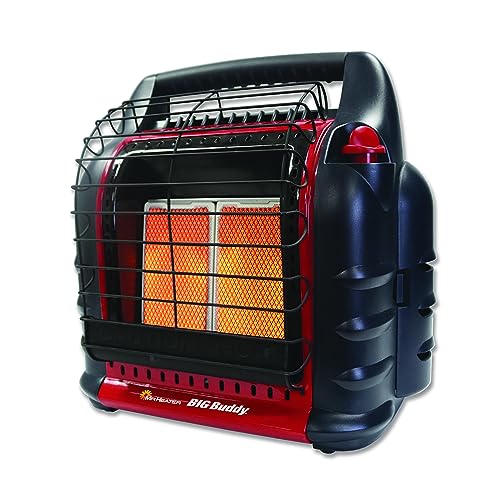
Best for Supplementing a forced-air heater with silent, targeted warmth at a workbench
- 18,000 BTU output
- Radiant heat, no fan noise
- Indoor-safe with oxygen depletion sensor
- Portable, no assembly needed
Why buy it: Some workshop owners run a forced-air heater to bring the space up to temperature quickly, then switch to a quiet radiant heater like this one to maintain comfort at the workbench without the ongoing fan noise.

Best for Buyers who want stepless output control at a lower price point
- 60,000 BTU output
- Stepless temperature settings
- Security protection features
- Indoor/outdoor rated with proper ventilation
Why buy it: Stepless control lets you dial in exactly the output a mild day calls for rather than choosing between a few fixed settings, and owners specifically call this out as a nice feature at this price point.
Full Comparison: Heat Output, Fuel Consumption and Cold Start Performance
All six picks side by side, compared on heat output, fuel consumption, and how quickly each reaches a comfortable temperature from a cold start.
| Product | Best for | Buy |
|---|---|---|
| Remington LP Forced Air Heater, Portable 60,000 BTU | Best Overall for a Workshop | Check Price |
| DEWALT 150,000 BTU Forced Air Propane Quiet Burner Technology Job Site Heater | Best Quiet Operation for Long Sessions | Check Price |
| ProCom Heating Liquid Propane Ventless Blue Flame Heater With Base Feet, 10,000 BTU, T-Stat Control | Best for a Permanent Setup | Check Price |
| Mr Heater 125,000 BTU Forced Air Propane Heater | Best High-Output for a Big Shop | Check Price |
| Mr. Heater 18,000 BTU Big Buddy PRO Series Heater | Best Radiant Backup for Spot Heat | Check Price |
| VEVOR Propane Heater, 60000BTU Forced Air Propane Heater with Stepless Temp Settings | Best Value Forced-Air | Check Price |
Portable Forced Air Heater vs. a Permanent Vented Heater Installation
A portable forced-air heater is the right call for a workshop used seasonally or inconsistently, since it needs no installation and can move with you.
A Simple Tank Top Heater for a Hobbyist Workshop
Some smaller hobbyist workshop spaces get by with a simple tank top heater instead, though most workshop owners running a heater for hours prefer the steadier output of a forced-air unit. A fixed, thermostat-equipped heater — vented or vent-free depending on local code — makes more sense for a genuinely year-round workshop, where the convenience of automatic temperature control outweighs the upfront installation work. A vented heater exhausts combustion byproducts outside the building, which some jurisdictions require for a permanent installation. Our wall-mount and cabinet heater guide covers the fixed-install side of this decision.
Sizing for Extended Sessions: Insulation R-Value and Clearance
Because a workshop heater runs for hours rather than minutes, undersizing is more costly here than for a quick-visit garage heater. Size to the higher end of your calculated BTU range for your shop's actual square footage and insulation R-value if you plan to run the heater for full days regularly, since a heater working at its maximum constantly wears components faster than one with headroom. Keep the manufacturer's stated clearance to combustibles in mind when placing any of these units. Our BTU sizing guide can work out a specific number for your shop.
Noise Over a Full Workday
This matters more here than in almost any other page on this site. A forced-air heater’s combustion fan runs the entire time it is on, and owners who spend full days next to one report real fatigue from the constant noise. The DEWALT Quiet Burner pick exists specifically for this problem, and it is worth the extra cost if you are in the shop daily rather than occasionally.
Fuel Consumption and a 20-lb Tank for Daily Use
A workshop heater running most of a work day burns through fuel differently than one used briefly. Using the standard conversion of roughly 21,600 BTU per pound of propane, a 60,000 BTU heater at full output empties a 20-lb tank in around 6 hours. A full day of use needs either a tank swap or a larger tank. Most workshop owners running a heater daily connect to a 100 lb tank to avoid the interruption.
Workshop Layout, Heater Placement and an Overhead Mount
Position a forced-air heater to blow across the largest open floor area of the shop, not into a corner or directly at a wall. This lets the moving air actually circulate through the space you work in. For a permanent installation, an overhead mount keeps the heater out of the way of tools and foot traffic while still directing warm air across the floor. Keep the heater clear of dust collection equipment, finishing materials, and anything flammable, per the manual’s stated distances, since a workshop typically stores more combustible material than a simple garage.
Balancing Comfort and Ventilation in an Enclosed Shop
A fully enclosed workshop needs the same real ventilation a forced-air heater requires anywhere else, even though sealing the space feels like it should improve comfort. Cutting corners on ventilation to trap more heat is not a safe tradeoff. Look for CSA certification on any heater you run in an enclosed shop, and follow the ventilation and clearance requirements set out in NFPA 58, the LP-gas code most local fire codes reference. Dyna-Glo and Mr. Heater both publish clearance specs for their forced-air lines that make this easy to check against your own space. Meet the manual’s stated minimum first, then look at insulation improvements if the space still is not warm enough.


When a Permanent Propane Line Installation With Thermostat Control Makes Sense
If the workshop is a genuine year-round space rather than occasional use, running a fixed propane line to a wall-mount or cabinet heater is worth the bigger upfront project. This typically requires a licensed plumber or gas fitter, and many local codes require professional installation and permitting. For occasional weekend use, a portable forced-air heater remains far simpler.
Combining a Quiet Burner With a Radiant Heat Backup
Some workshop owners run a forced-air heater to bring a cold shop up to temperature quickly at the start of a session, then switch to a quieter radiant heater like the Big Buddy pick above to maintain comfort once the room has warmed. This combination covers both the fast-warmup need and the all-day noise concern without buying only one heater that compromises on both.
Buying Checklist for Workshop Use
- Size for sustained daily use, not just a quick warm-up — err toward more BTU headroom.
- Weigh noise seriously if you spend full days in the space, not just passing through.
- Consider a fixed, thermostat-equipped heater if the shop is a genuine year-round space.
- Plan tank size for daily runtime, not occasional use.
- Check power availability for a forced-air heater’s ignition system before buying.
What Workshop Owners Report
Across reviews, owners running a forced-air heater daily in a workshop consistently mention fuel cost and noise as the two ongoing tradeoffs against the benefit of genuinely warm, usable space through winter. Owners who upgraded from an undersized radiant heater to a properly sized forced-air unit report the change as one of the more worthwhile upgrades to their workshop setup, ahead of most tool purchases in terms of actual daily comfort improvement.
Insulating an Uninsulated Space Before Buying a Bigger Heater
Before stepping up to a higher-BTU heater, check whether basic insulation upgrades would solve the comfort problem more cheaply. An uninsulated space loses heat almost as fast as the heater produces it, no matter how large the unit. Weatherstripping around doors, insulating an uninsulated overhead door panel, and sealing obvious drafts around windows can meaningfully cut the heat loss a heater has to overcome. Workshop owners who insulate first frequently find a mid-size heater performs like a much larger one, without the added fuel cost of stepping up a BTU tier.
Setting Up a Workshop Heater for Daily Routine
For a workshop used most days, establish a simple startup routine: check the tank level, inspect the hose for wear, and confirm ventilation is set before lighting the heater each time. This takes under a minute once it becomes habit, produces a more reliable cold start each morning, and catches most small problems, like a loosening connection, before they become a bigger issue mid-session.
Electric Power for Ignition in a Workshop Setting
Since most forced-air heaters need power for ignition and the fan, confirm your workshop has a reliable outlet near where the heater will run. A workshop with several power tools already competing for outlets may need a dedicated circuit or a heavy-duty extension cord rated for outdoor or garage use, since running the heater off an overloaded circuit can trip breakers at inconvenient moments.
Adjusting Output Through the Workday
An adjustable-output heater, like several of the picks above, lets you run higher heat output when first warming a cold shop, then step down once the space reaches a comfortable temperature. This single habit saves meaningful fuel across a full season of daily use, since most heaters spend more total hours holding a temperature than reaching one from cold.
Workshop-Specific Maintenance Habits
A workshop generates more dust and debris than a typical garage, from sawdust, metal shavings, or whatever the specific trade produces. Clean the heater’s fan intake and burner assembly more frequently than the seasonal check recommended for occasional-use heaters, since daily exposure to shop dust accelerates buildup. This single habit is the most commonly cited factor separating a heater that lasts many seasons from one that fails early.
Final Thoughts on Workshop Heating
A workshop heater is a daily-use tool, not an occasional convenience. Getting the BTU size, noise tolerance, and fuel logistics right the first time saves money and daily frustration across a full heating season.
Revisiting Your Choice After a Season
After a full winter of use, reassess whether your heater choice matched your real work habits. Some owners wish they had bought toward the higher end of a BTU tier; others find a smaller unit was plenty. Use that feedback to guide any future upgrade.
Upgrading From a Homeowner Setup to a Serious Workshop
As a hobby grows into a more serious pursuit, heating needs often grow with it. A heater bought for occasional weekend use may not keep up once the shop sees daily activity. Revisit your BTU calculation whenever your usage pattern changes meaningfully.
Comparing Total Cost of Ownership and a Carbon Monoxide Detector
The heater’s purchase price is only part of the real cost. Factor in expected fuel spend, maintenance supplies, and the cost of a carbon monoxide detector if you don’t already have one. A cheaper heater that burns more fuel per hour can cost more over a season than a pricier, more efficient model.
What to Do Before Your First Cold Snap
Test your chosen heater before the first cold day of the season, not during it. Confirm ignition works, check the tank connection for a tight seal, and verify ventilation is set up correctly. Discovering a problem in a mild test run beats discovering it when you need the heat.
A Quick Summary: Sustained Output, Stepless Temperature and Best Value
Six heaters, six different workshop situations. The Remington covers most single-bay shops. The DEWALT Quiet Burner solves the noise problem for full-day use. The ProCom thermostat unit fits a genuine year-round space. The Mr. Heater 125,000 BTU model handles the biggest, coldest shops. The Big Buddy backs up any of them with silent spot heat. The VEVOR delivers solid value at a lower price. Pick based on your actual hours in the shop, not the highest spec sheet.