
Affiliate disclosure: some links are affiliate links — as an Amazon Associate we earn from qualifying purchases, at no extra cost to you. Full disclosure.
A note before you buy: The real Mr. Heater Big Buddy is already covered twice on this site — the PRO Series and the standard version. Both are genuinely portable radiant heaters better suited to a cabin, tent or small enclosed space than a full garage. For "propane heater for garage" searches specifically, a purpose-built forced-air garage heater is usually the better fit anyway. So we’re reviewing a real one here instead: VEVOR’s 60,000 BTU barrel-style forced-air heater.

Top 3 Recommended
Who It’s For
This heater fits a genuine garage or shop workspace, not a tent or cabin. Its barrel design and stepless temperature control are built for a workshop routine — start it up, dial in a temperature, and let it run while you work. At up to 1,400 sq ft of coverage, it comfortably handles a two-car garage. It needs active ventilation, so it’s the wrong choice for a sealed room. Anyone wanting a genuinely portable heater for a tent or small cabin should look at the Big Buddy reviews linked above instead.
Full Specs
| Spec | Detail |
|---|---|
| BTU output | 40,000 to 60,000 BTU, stepless adjustment |
| Coverage | Up to 1,400 sq ft |
| Power | 120V, 60Hz |
| Weight | 13.67 lbs |
| Dimensions | 19.3"L x 7.3"W x 13.2"H |
| Heat angle | Adjustable 30-45 degrees |
| Max elevation | 4,921 ft |
| Safety | Overheat protection, flameout protection |
| Build | Carbon steel body, impact and weather resistant |
Source: Lowe’s VEVOR 60,000 BTU garage heater product listing.
What Owners Praise
Stepless temperature control gets consistent praise for precision compared to a fixed-setting forced-air heater. Owners describe dialing in exactly the output they want rather than jumping between a few fixed steps. The 1,400 sq ft coverage also draws praise as genuinely accurate for a two-car garage, with several reviews specifically confirming it heats a full garage bay rather than falling short of the stated rating. The compact barrel design and manageable weight get positive mentions for easy storage on a shelf when not in use.
What Owners Report as Drawbacks
The most common caution is the same as any forced-air heater: it needs real ventilation and shouldn’t be run in a sealed space. A few reviews come from buyers who didn’t realize that requirement before ordering. A second theme: at 120V, it needs a nearby outlet, which can be a limiting factor in an older garage without convenient power. A smaller number of reviews mention wanting a longer hose for tank placement flexibility, since the included connection length is on the shorter side.
Pros & Cons
Pros
- Stepless 40,000-60,000 BTU adjustment for precise temperature control
- Accurately covers a full two-car garage per owner feedback
- Compact barrel design, easy to store when not in use
- Overheat and flameout protection standard
Cons
- Requires active ventilation — not for sealed rooms
- Needs a 120V outlet nearby for the fan motor
- Some owners want a longer hose for tank placement flexibility
Sizing It to Your Garage
The stepless 40,000-60,000 BTU range gives real flexibility, but it still helps to know roughly what your space needs before buying. A single-car garage rarely needs the full 60,000 BTU on a normal winter day. A two-car garage, especially an older one with less insulation, often does. Start on a lower setting and dial up as needed rather than defaulting to maximum output every time. That habit alone stretches a tank noticeably further across a full season of regular use.
Installation and Maintenance
Connect the regulator and hose to a propane tank per the manual, and make sure a 120V outlet is within reach of the power cord. Keep the heater in a space with real airflow — an open garage door or a vent — never fully sealed. Check the hose connection each season with a soapy-water test, and keep the fan intake free of dust for consistent airflow.
Running It Safely in a Garage
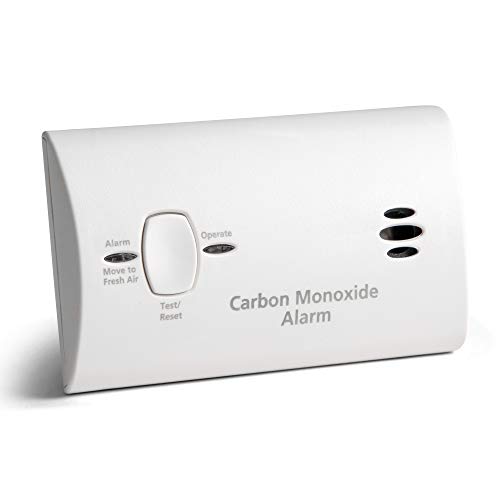
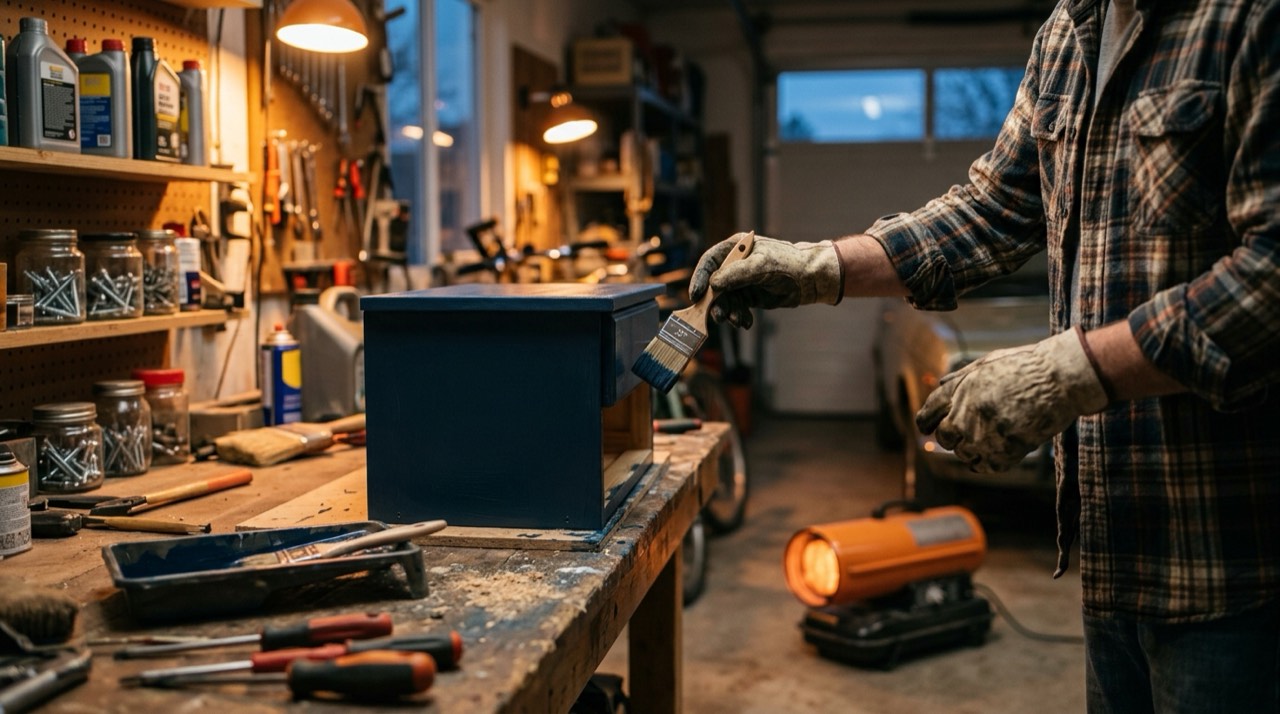
Even with ventilation, running any forced-air heater in a garage benefits from a bit of routine. Crack the door a consistent amount rather than fully open, which balances airflow against heat loss. Position the heater so its exhaust doesn’t blow directly at stored fuel, paint or other flammable materials common in a garage setting. A battery-powered carbon monoxide detector placed nearby, independent of the heater’s own safety features, adds a real second layer of protection worth the small cost.
How It Compares
Against a genuine Mr. Heater Big Buddy, this VEVOR model trades portability and radiant heat for a much bigger coverage area and stepless control, better suited to a fixed garage workspace than a tent or cabin. Against Dyna-Glo’s Workhorse forced-air line reviewed elsewhere in this hub, this VEVOR model offers similar output with a more compact barrel form factor.

Best for A ventilated garage or shop up to 1,400 sq ft
Related Products
See our full garage and workshop heater guide, or check our propane heater worth-it breakdown before buying. Pair it with these: