

Affiliate disclosure: some links are affiliate links — as an Amazon Associate we earn from qualifying purchases, at no extra cost to you. Full disclosure.
Propane Forced-Air Garage Heater
A tank-fed forced-air heater that produces high BTU output quickly, needing only a propane tank and a standard outlet for ignition and the fan.
Best for: A large or uninsulated garage needing fast, high-volume heat
- Very high BTU output relative to purchase price
- Fast heat-up, useful for occasional or intermittent use
- No dedicated electrical circuit required beyond a standard outlet
- Ventilated-use-only — needs active airflow, not for a sealed garage
- Ongoing fuel cost from tank refills or exchanges
- Combustion byproducts require the same ventilation discipline as any open-flame heater
Electric Garage Heater (Category)
A resistance or fan-forced electric heater that plugs into household or dedicated 240V power, producing no combustion byproducts and requiring no fuel tank.
Best for: A smaller, insulated garage where an electrical circuit is available
- No combustion, no ventilation requirement, no carbon monoxide risk
- No fuel to buy, store or refill
- Simple thermostat control for many models
- Lower BTU-equivalent output at a given price point than propane
- Whole-garage electric heat often needs a dedicated 240V circuit — a real electrical project
- Running cost scales with electricity rates, which can be higher than propane per BTU in many regions
Spec-by-spec comparison
| Factor | Propane Forced-Air Garage Heater | Electric Garage Heater (Category) |
|---|---|---|
| Combustion | Yes — open flame, needs ventilation | None — no combustion byproducts |
| Typical output for the price | High BTU per dollar | Lower BTU-equivalent per dollar |
| Installation | None — connect tank, plug into standard outlet | Often needs a dedicated 240V circuit for whole-garage heat |
| Fuel/power source | Propane tank | Household or dedicated electrical circuit |
| Carbon monoxide risk | Yes — ventilation required per manual | None |
| Best for | Large, uninsulated or occasionally used garages | Smaller, insulated garages with spare electrical capacity |
This site specializes in propane heaters. It doesn’t carry a specific electric garage heater pick. So the electric side of this comparison is covered as a category, using sourced, general facts rather than a tested model. The propane side includes one real, verified product.
| Product | Best for | Buy |
|---|---|---|
| Remington-Style 60,000 BTU Forced Air Propane Heater | Our propane pick for this comparison | Check Price |

Top 3 Recommended
BTU Output Per Dollar: Propane’s Clearest Advantage
A propane forced-air heater in the 50,000 to 100,000+ BTU range costs far less than electric resistance heat at the same output. Electric heaters generally cost more per unit of heat at the high end. Delivering that much heat electrically takes more current, heavier wiring, and often a dedicated circuit. For a large or uninsulated garage that needs to warm up fast, propane’s output-per-dollar is a real, well-established advantage.
Installation: A Standard Outlet vs. a Dedicated Circuit
Most propane forced-air heaters need only a standard household outlet for ignition and the fan. The actual heat comes from burning propane, not from the electrical draw. A comparably powerful electric heater is different. It often needs a dedicated 240V circuit, since standard 120V household wiring can’t safely carry that much current. Adding a 240V circuit to a garage is a real electrical project. It typically needs a licensed electrician, which adds cost beyond the heater’s own price.
Ventilation and Carbon Monoxide: Electric’s Clearest Advantage
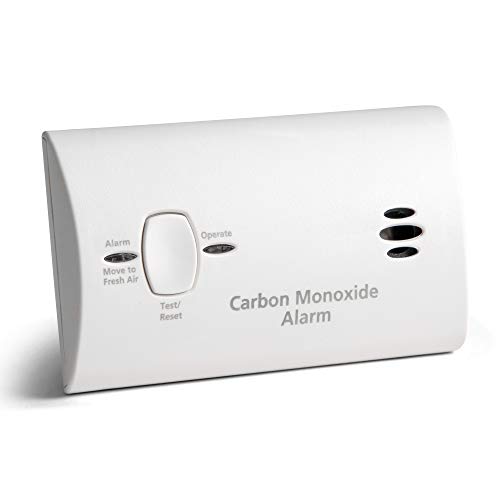
This is where electric heat wins outright. A propane heater makes combustion byproducts. It needs active ventilation per its manual. Running one in a sealed garage is a real carbon monoxide risk, no matter the outside temperature. An electric heater makes no combustion at all. That means no carbon monoxide risk and no ventilation requirement. If you want to run a heater with the garage door fully closed, and not think about airflow, electric is the simpler and inherently safer pick on this point.
Running Cost: It Depends on Local Rates


Comparing ongoing cost directly takes current local pricing for both propane and electricity. Both shift independently by region. As a general pattern, propane often delivers more heat per dollar at high output levels. Electric heat’s cost is purely a function of the local electricity rate and the heater’s wattage. Neither fuel is universally cheaper. Check current local pricing for both before assuming one wins in your area.
Noise and Maintenance
A propane forced-air heater’s fan runs loudly the whole time it’s on. Most owners compare the sound to a shop vacuum. An electric heater is generally quieter, since it has no combustion driving a larger fan. On maintenance, propane heaters need a seasonal check of the burner and hose connections. Electric heaters need little beyond keeping the intake and coils free of dust. There’s no fuel system to inspect.
Winner by Use Case
Large, uninsulated garage needing fast heat-up: propane — the BTU-per-dollar advantage is hard to match electrically at this scale.
Small, well-insulated garage with a 240V circuit already available: electric — no ventilation concerns and no fuel to manage.
Garage used with the door closed most of the time: electric — removes the carbon monoxide and ventilation questions entirely.
Occasional, quick-use garage heat: propane — fast heat-up and no electrical installation needed.
No easy propane exchange access nearby: electric — works anywhere there’s a suitable electrical circuit.
Pick Propane If…
- You need high BTU output for a large or uninsulated space.
- You can maintain the ventilation the manual requires whenever it runs.
- You’d rather avoid a dedicated 240V electrical installation.
Pick Electric If…
- You want zero combustion byproducts and no ventilation requirement.
- Your garage is smaller or well-insulated, reducing the output you actually need.
- A suitable electrical circuit is already available, or you’re willing to add one.
Read the Full Review
For complete specs and owner-reported detail on the propane option featured here, see our full Remington-style 60,000 BTU Forced Air Heater review. See also our garage and workshop heater guide for the full propane radiant-vs-forced-air breakdown, including BTU sizing for your specific garage.