
Affiliate disclosure: some links are affiliate links — as an Amazon Associate we earn from qualifying purchases, at no extra cost to you. Full disclosure.
A garage is one of the hardest spaces in a home to heat well. It is usually uninsulated, has a large door that leaks heat, and sits on cold concrete. We looked at the propane heaters that come up most often in garage-specific owner reviews and ranked six worth buying. Every ranking below reflects aggregated owner reviews, manufacturer specifications, and safety certifications.
How We Picked These Garage Heaters and Their Oxygen Depletion Sensor Ratings
Three things mattered most. First, how the heater matches actual garage use, since quick tool runs and full workshop sessions call for different heater types entirely. Second, safety features like an oxygen depletion sensor for indoor-safe models. Third, what owners report after a real winter of use, not a first-week impression.
The Short Answer: The Best Overall Propane Heater for Garage Use at a Glance
For most garages, the Mr. Heater 18,000 BTU Big Buddy is the safest starting point. It warms you instantly with no setup and works equally well outside the garage. Have a full two-car bay that needs to actually warm up? Go with the DEWALT 68,000 BTU Forced Air Heater. Want something small enough to carry anywhere? The Dyna-Glo 10K Grab N Go covers that.
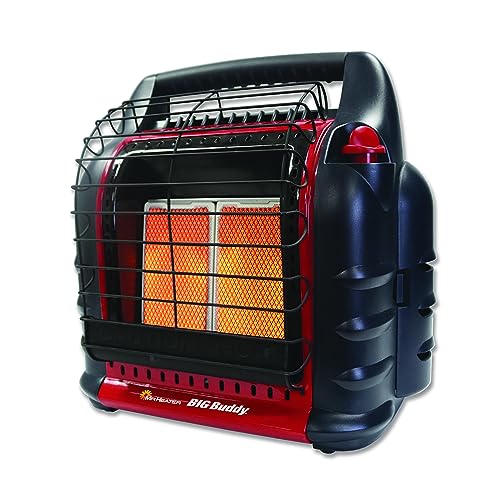
Best for A single-car garage or anyone popping in and out for short tool runs
- 18,000 BTU output
- Radiant heat, no fan noise
- Indoor-safe with oxygen depletion sensor
- Runs on a small cylinder or a hose-connected 20 lb tank
Why buy it: This is the heater most homeowners reach for first, since it warms you directly the moment it lights and needs no ventilation setup. Owners specifically like that it works equally well in a garage, a job trailer, or a hunting blind without any changeover.

Best for A larger garage where you need the whole space to actually warm up
- 68,000 BTU output
- Rated for up to 1,700 sq ft
- Continuous electronic ignition
- Cart-style frame for moving between spaces
Why buy it: When a radiant heater cannot keep up with a genuinely large or drafty garage, this is the step up. It raises the ambient temperature of the whole bay rather than just warming whoever stands in front of it.

Best for A garage that also doubles as a quick heater for the driveway or a tailgate
- 10,000 BTU output
- Compact, carry-handle design
- Indoor/outdoor rated
- Simple dial control
Why buy it: Owners like that this heater is small enough to carry one-handed between the garage and outside, without sacrificing enough output to actually take the chill off a small- to mid-size space.

Best for A large, uninsulated two-car garage used as an active workshop
- Adjustable output from about 120,000 to 150,000 BTU
- Continuous electronic ignition
- Cart-style frame with wheels
- Rated for well-ventilated commercial and residential use
Why buy it: For a genuinely large, poorly insulated space, this is the heater that actually gets the job done. The adjustable output means it can run lower on milder days instead of only offering one fixed setting.

Best for Buyers who want a middle ground between the Little Buddy and standard Buddy output
- 11,000 BTU output
- Indoor/outdoor rated
- Runs on a 1 lb cylinder or hose-connected tank
- Compact radiant design
Why buy it: This sits neatly between the smaller and larger Buddy heaters, giving a bit more output than the standard 9,000 BTU model without stepping up to the bulkier 18,000 BTU Big Buddy.

Best for Buyers who want forced-air coverage without paying for a name-brand heater
- 60,000 BTU output
- Stainless steel housing
- Continuous electronic ignition
- Rated for garage, job site, and patio use
Why buy it: Owners comparing this against pricier 60,000 BTU heaters report similar real-world performance for less money, with the stainless housing holding up well to a garage's dust and moisture over time.
Full Comparison
All six picks side by side. "Best for" reflects the specific garage situation each heater is most consistently recommended for in owner reviews.
| Product | Best for | Buy |
|---|---|---|
| Mr. Heater 18,000 BTU Big Buddy PRO Series Heater | Best Overall for Quick Warm-Up | Check Price |
| DEWALT 68000 BTU/H 1700 SQ FT Forced Air Propane Heater | Best for a Full Two-Car Garage | Check Price |
| Dyna-Glo 10K BTU Grab N Go Portable Propane Heater | Best Compact Grab-and-Go | Check Price |
| Dyna-Glo RMC-FA150DGD 120,000–150,000 BTU Liquid Propane Forced Air Heater | Best High-Output for a Big Workshop | Check Price |
| Mr. Heater Buddy FLEX 11,000 BTU Radiant Propane Indoor/Outdoor Space Heater | Best Indoor/Outdoor Flex | Check Price |
| Flame King 60,000 BTU Portable Propane Forced Air Heater, Stainless Steel | Best Budget Forced-Air | Check Price |
Radiant Heater vs. Forced Air Heater for Garage Use: Cold Start, Heat Output and a Tank Top Heater on a 20-lb Tank
This is the first real decision, and it depends entirely on how you use the space. If you are in and out quickly, grabbing tools or working on one spot for a few minutes, a radiant heater warms you directly and starts working the moment it is on. If you are working in the garage for hours and need the whole space to actually warm up, a forced-air heater is the better investment. It raises ambient air temperature instead of just warming what is directly in front of it. A radiant pick has no cold start delay. It begins warming you the instant it lights, while a forced-air heater takes a moment to reach full heat output but ultimately moves far more total warmth into a large space. Some owners also like a tank top heater bolted straight onto a 20-lb tank for simple, budget radiant heat in a garage, though it is rated for outdoor or well-ventilated use only, not a sealed bay.
Sizing to Your Single-Car or Two-Car Garage: BTU Sizing, Square Footage and an Uninsulated Garage
A single-car garage used occasionally is often well served by an 18,000 BTU radiant heater on its highest setting. A two-car garage, especially one used as an active workshop, typically needs a forced-air heater in the 60,000 to 150,000 BTU range depending on insulation. As a rough guide, uninsulated garages need considerably more than the 20 to 30 BTU-per-square-foot guidance used for a sealed interior room, often 40 or more BTU per square foot of actual floor space. Our BTU sizing guide can work out a specific number for your garage.
Ventilation Requirements, Carbon Monoxide Risk and the Vented Heater's Thermostat
An indoor-safe radiant heater with an oxygen depletion sensor can run with the garage door closed, though manufacturers still recommend cracking a window or door slightly for airflow. A forced-air heater is outdoor-use-only and needs active ventilation meeting the manual’s stated minimum. Running a forced-air heater in a sealed garage is a genuine carbon monoxide risk regardless of how cold it is outside. A forced-air heater is a vented heater by design. It depends on open airflow to clear combustion byproducts rather than the safety sensor a CSA-certified indoor-safe radiant unit relies on. Some forced-air models add a thermostat to hold one set temperature instead of running at a single fixed output. See our garage ventilation guide for the full picture.
Propane Tank Size for Garage Use: Fuel Consumption, Propane Line and Clearance to Combustibles
A standard 20-lb tank works fine for a portable radiant heater used occasionally, but a forced-air heater running at 100,000+ BTU has fuel consumption that burns through a 20-lb tank in a few hours. Garages used as a regular workshop through winter typically benefit from a 100 lb tank connected via a longer hose or a dedicated propane line. Any larger tank kept in a garage should follow NFPA 58 guidance and its clearance to combustibles requirements for LP-gas storage. Our tank sizing guide covers this in more depth.
Insulation Matters as Much as Heater Choice
Before buying a bigger heater, check whether basic insulation improvements would help more cheaply. Weatherstripping around the garage door, insulating an uninsulated door panel, and sealing obvious drafts can meaningfully reduce the BTU output needed to hold a comfortable temperature. Owners who fix insulation first frequently find they can get away with a smaller, cheaper heater than originally budgeted.


Noise: The Tradeoff With Forced-Air Heaters
Every forced-air heater on this list runs a combustion fan the whole time it is on, and owners consistently compare the sound to a shop vacuum or small generator. A radiant heater runs silently by comparison. If you spend hours in the garage rather than passing through, factor this into the decision alongside raw BTU output. Our noise levels guide covers this in more depth.
Buying Checklist: Tank Size, Ventilation and an Overhead Heater Option
- Match heater type to how you actually use the garage — quick visits favor radiant, extended sessions favor forced-air.
- Size to your garage’s actual square footage and insulation, not the biggest BTU number available.
- Check ventilation requirements before assuming any heater is safe to run with the door closed.
- Budget for tank size appropriately — occasional use is fine on 20 lb; regular use calls for 100 lb or larger.
- Install a battery-backed carbon monoxide detector in the garage regardless of heater type.
- Consider a permanently mounted overhead heater if the garage is used daily — it frees up floor space that a portable radiant or forced-air unit would otherwise occupy.
Beyond the brands featured above, ProCom is another widely available manufacturer selling radiant and vented garage heaters, worth cross-shopping if a specific pick above is out of stock.
Propane vs. Electric for a Garage
If the garage has a dedicated high-amperage circuit, an electric heater avoids propane’s fuel logistics entirely. If electrical service is limited, a common situation in older homes and detached garages, propane can deliver far more BTU output at a comparable price and keeps working during a power outage.
What Owners Report
Across both radiant and forced-air categories, the most common regret is undersizing: buying a smaller, cheaper heater and finding it inadequate for a genuinely large or poorly insulated garage. Oversizing shows up less often as a direct complaint but does appear as wasted fuel cost in long-term ownership reviews. Getting an accurate read on your garage’s actual square footage before buying is the single best predictor of satisfaction.

Attached vs. Detached Garages
An attached garage often benefits from some residual warmth bleeding through from the house’s heated interior, which can reduce the BTU needed compared to a fully detached structure exposed to outside temperature on all sides. A detached garage or workshop typically needs to be sized at the higher end of BTU-per-square-foot guidance, and insulating the structure itself pays off faster there than anywhere else in this category.
Electronic Ignition and Power Needs
Radiant Buddy-style heaters use a simple piezo spark igniter and need no electricity at all, which is part of why they work equally well in a garage or outdoors. Forced-air heaters need power for both ignition and the fan, so a corded model needs an outlet or generator nearby. If your garage lacks convenient power, check this before buying a forced-air heater, since it changes what else you need on hand to actually run it.
Maintenance That Extends Heater Life
A garage heater used through a full winter picks up dust and debris faster than one used indoors, especially in a garage where projects generate sawdust or where a car tracks in road grime. Clean the fan intake and burner assembly periodically during heavy use, and do a more thorough check before the first cold night of each new season. Most "won’t light" or "reduced output" complaints in long-term reviews trace back to a skipped seasonal check rather than an actual defect.
Storing Your Garage Heater Off-Season
Disconnect the propane tank before storing any heater for the off-season, whether radiant or forced-air. This reduces stress on the hose and regulator from temperature swings and prevents a slow leak from going unnoticed over months of storage. Store the heater itself somewhere dry, since a garage that floods or gets damp seasonally can accelerate corrosion on metal components.
Buying New vs. Used for Garage Heaters
A used radiant heater carries less risk than a used forced-air unit, since radiant heaters have fewer moving parts to fail. A forced-air heater’s fan motor, ignition system, and regulator all see real wear, and a used unit’s history is hard to verify. For a heater running unattended at high output, a new unit with a full warranty is generally worth the extra cost over a secondhand model of unknown condition.
Garage Heaters and Home Insurance
Some homeowner’s insurance policies have specific language about supplemental heating equipment, particularly fuel-burning heaters used in an attached garage. Check your policy or ask your insurance agent whether a propane heater in your garage affects your coverage, especially if you plan to run one regularly through a full winter season. This is a quick call that can prevent an unpleasant surprise later.
Common Regrets Owners Report
Beyond simple undersizing, owners commonly regret not checking ventilation requirements before buying a forced-air heater, assuming any propane heater works the same way indoors. A smaller number regret buying a heater with more BTU output than their garage will ever need, paying more upfront and burning more fuel than necessary. Reading the sizing and ventilation sections above before buying avoids both of these common mistakes.
Combining a Garage Heater With Weatherstripping and Other Improvements
A garage heater works better alongside other basic upgrades: weatherstripping, a working garage door seal, and clearing clutter that blocks airflow around a radiant heater’s heat path. None of these cost much compared to the heater itself, and owners who address them at the same time as buying a heater consistently report better results than those who treat the heater as a standalone fix for a cold garage.
Choosing Between the Six Picks for Your Situation
If you are still unsure which of the six picks above fits best, start with how you actually use the garage day to day rather than the specs alone. Quick, occasional visits point toward a radiant heater. Regular, extended sessions point toward forced-air. A garage that doubles as an outdoor heater for a driveway or tailgate points toward the compact, portable options. Matching the heater to your actual habits, not an idealized use case, is what separates a satisfied buyer from someone shopping again next season.
What to Check Before Your First Use
Before running any new garage heater for the first time, check the tank connection for a tight seal with a soapy-water test, confirm the heater sits level on a stable surface, and read the manual’s specific startup sequence rather than assuming it works like a heater you have used before. This takes a few minutes and prevents most first-use frustration.
Garage Heaters and Resale Value
A well-maintained garage heater setup, especially a permanent wall-mount installation, can be a modest selling point when listing a home, particularly in colder climates where buyers value a genuinely usable garage workspace. This is a minor factor compared to the heater’s actual comfort benefit, but it is worth mentioning to a real estate agent if you have invested in a quality heating setup for the space.
A Final Word on Choosing a Garage Heater
The right garage heater is the one that matches how you actually spend time in the space, not the one with the most impressive spec sheet. Six solid options are covered above, spanning quick radiant heat through serious whole-room forced-air output. Start with your real usage pattern. Size correctly for your specific garage. The rest of the decision becomes straightforward.
A Quick Recap of the Six Picks: The Best Value Option
The Big Buddy handles quick visits with zero setup. The DEWALT 68,000 BTU heater covers a full two-car bay. The Dyna-Glo Grab N Go travels easily between the garage and outside. The Dyna-Glo RMC-FA150DGD tackles the biggest, coldest workshops. The Buddy FLEX splits the difference in radiant output. The Flame King delivers forced-air coverage at a lower price, making it the best value pick if you don't need a name-brand heater. Match one to your actual garage habits and the choice gets easy fast.