

Affiliate disclosure: some links are affiliate links — as an Amazon Associate we earn from qualifying purchases, at no extra cost to you. Full disclosure.
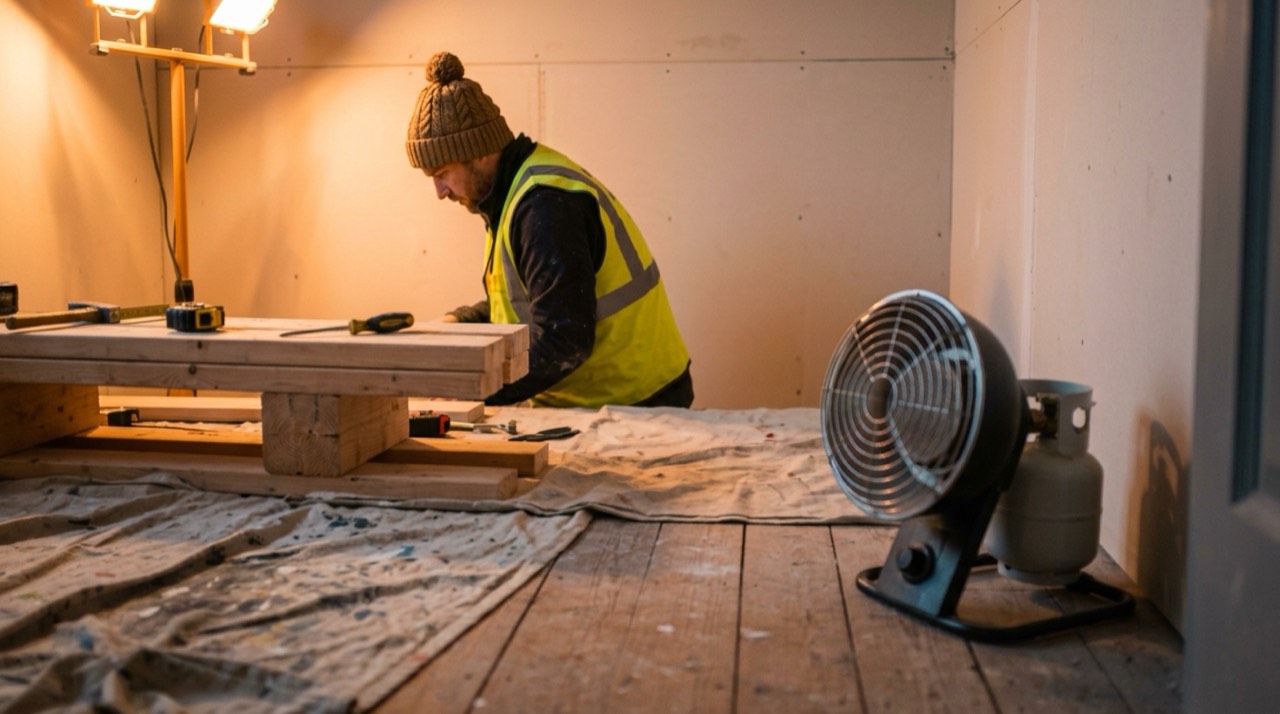
Every forced-air propane heater runs a combustion fan the whole time it is on, and that fan is loud enough to change how comfortable a space feels over a full shift. Here is what to actually expect, and what helps.
Top 3 Recommended
Why Forced-Air Heaters Are Loud in the First Place
The fan that makes a forced-air heater effective, the one that pushes heated air across a room, is also the main noise source. Unlike a radiant heater, which has no fan at all, a forced-air heater cannot deliver its whole-room heating without one. The noise is a direct tradeoff for the heating performance, not a design flaw.
How Loud, Really
Owners consistently compare the noise to a shop vacuum or a small portable generator, roughly in the 70 to 85 decibel range depending on the model and how close you stand. That is loud enough to require raising your voice to talk over it and loud enough that hearing protection is a reasonable consideration for a full day of close, extended use in an enclosed space.
Does BTU Output Affect Noise?
Generally, yes, though not in a perfectly linear way. Higher-output heaters run bigger fans to move more air, and bigger fans tend to run louder. A 60,000 BTU heater is typically noticeably quieter than a 150,000 BTU unit from the same product line, so if noise is a real concern, sizing down slightly where your space allows can help alongside choosing a quieter model outright.
Quiet Burner Technology: Does It Actually Work?
Some manufacturers, including DEWALT with its 150,000 BTU Quiet Burner Job Site Heater, build models specifically to reduce combustion noise through a redesigned burner assembly. Owners who spend hours next to the heater report a real, noticeable difference compared to a standard forced-air unit at the same BTU rating. It will not make the heater silent, but reviewers consistently say it is quieter than a standard model in the same room.
Radiant Heaters as a Quiet Alternative
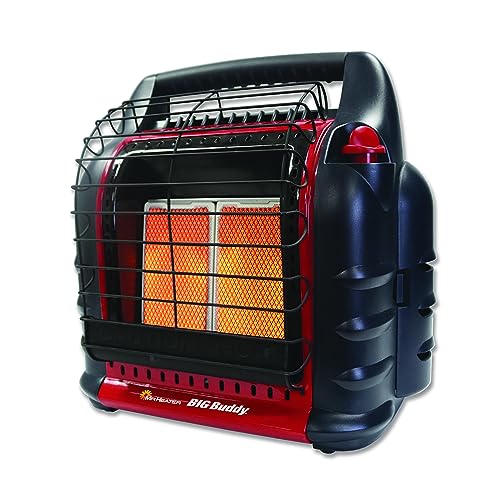
If noise matters more than whole-room heating, a radiant heater like the Mr. Heater 18,000 BTU Big Buddy runs essentially silently, with no fan at all. The tradeoff is that it only warms what is directly in front of it rather than raising the whole room’s temperature. Some workshop owners split the difference: run a forced-air heater to bring the space up to temperature quickly, then switch to a quieter radiant heater to maintain comfort once the room has warmed.
Where You Work Relative to the Heater
Noise drops off with distance the same way heat does, just faster. Positioning the heater as far as practical from where you are actually working, while still meeting clearance requirements, reduces how loud it feels without changing the heater itself. In a large garage or open structure, this alone makes a noticeable difference over a full shift.

Hearing Protection for Extended Use
For anyone working near a forced-air heater for hours at a time, simple foam earplugs or over-ear protection reduce fatigue from the constant fan and burner noise. This matters more in an enclosed garage or workshop, where the sound has nowhere to dissipate, than in an open job-site structure.
How Loud Is That, Really? A Quick Comparison
Numbers on their own are hard to picture, so here is a rough comparison. Normal conversation sits around 60 decibels. A vacuum cleaner runs around 70 to 75 decibels. A forced-air heater at 70 to 85 decibels sits somewhere between a vacuum and a running lawnmower, which is close to 90 decibels at close range. Extended exposure above 85 decibels is the point where hearing protection becomes a genuine health consideration, not just a comfort choice, according to general workplace noise guidance.
Running One in a Residential Garage
A forced-air heater running in an attached garage is loud enough to carry into the house through a shared wall, especially at night. If other people in the home are sleeping or working nearby, consider the time of day you run it and whether the garage door being open for ventilation also lets more noise escape toward neighbors. This is a courtesy issue more than a safety one, but it is worth thinking about before running a 150,000 BTU heater at 6 a.m. in a quiet neighborhood.
Does Noise Mean Something Is Wrong?
Steady fan and burner noise is normal operation, not a sign of a problem. A sudden change in pitch, a rattling sound, or a noise that gets louder over time is worth checking, since it can indicate a loose fan blade or a failing motor bearing. Our troubleshooting guide covers unusual noise complaints in more detail.
Does Fan Speed Affect Noise?
Some forced-air heaters run their fan at a single fixed speed no matter the BTU setting, while others reduce fan speed at lower output levels. A heater that slows its fan on a milder day, rather than always running at maximum, tends to feel noticeably quieter during those lower-output stretches. If noise is a real concern, check whether a specific model’s fan speed scales with output before assuming all heaters at the same BTU rating sound the same.
Placement Tricks That Actually Help
Beyond simple distance, positioning a heater against a wall rather than in open floor space can direct some of the fan noise away from your immediate work area, though it also changes how the heated air circulates through the room. A concrete or masonry wall reflects sound differently than open framing does, so results vary by structure. This is a minor adjustment, not a substitute for a genuinely quieter model, but it costs nothing to try.
What to Expect From Owner Reviews on Noise
Read noise complaints in owner reviews with some context. A reviewer complaining about noise after a single short use is describing a real but expected characteristic of the whole category, not a defect specific to that heater. A reviewer describing a change in noise character over time, like a new rattle or grinding sound, is describing something worth taking seriously. Learning to tell these two types of complaints apart saves time when comparing models.
Noise as a Factor When Choosing Between Models
If two heaters otherwise look equally matched on BTU output, price, and features, check owner reviews specifically for noise comments before deciding. Reviewers who use a heater for short bursts rarely mention noise at all, since it does not bother them enough to write about it. Reviewers who use a heater for full shifts almost always mention noise if it was a problem, which makes their reviews the more useful signal for anyone planning similar extended use.
Talking to Neighbors and Crew Ahead of Time
A quick heads-up to neighbors before running a loud heater early in the morning, or a note to a crew about which model tends to draw noise complaints, costs nothing and avoids friction later. This matters most for residential garage use and for job sites near occupied buildings, where noise is more likely to be noticed and remembered than on an open, empty lot.
Related Reading
For the full radiant-vs-forced-air comparison for garage use, see our garage and workshop heater guide.