
Affiliate disclosure: some links are affiliate links — as an Amazon Associate we earn from qualifying purchases, at no extra cost to you. Full disclosure.
No. Forced-air propane heaters are built for outdoor or well-ventilated job sites. None of them have the oxygen depletion sensor that makes a Buddy-style radiant heater indoor-safe. Run one in a closed room, and carbon monoxide can build up fast — even if the heater is working just fine.
Why Forced-Air Heaters Skip the ODS
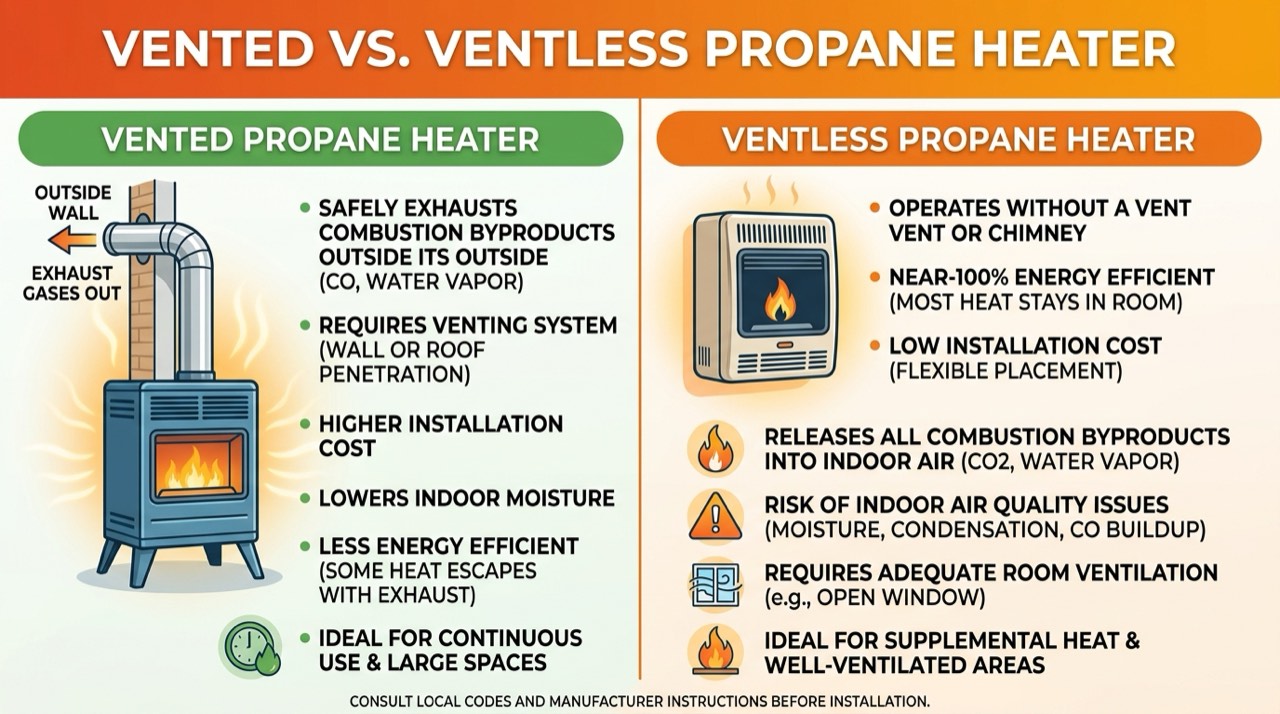
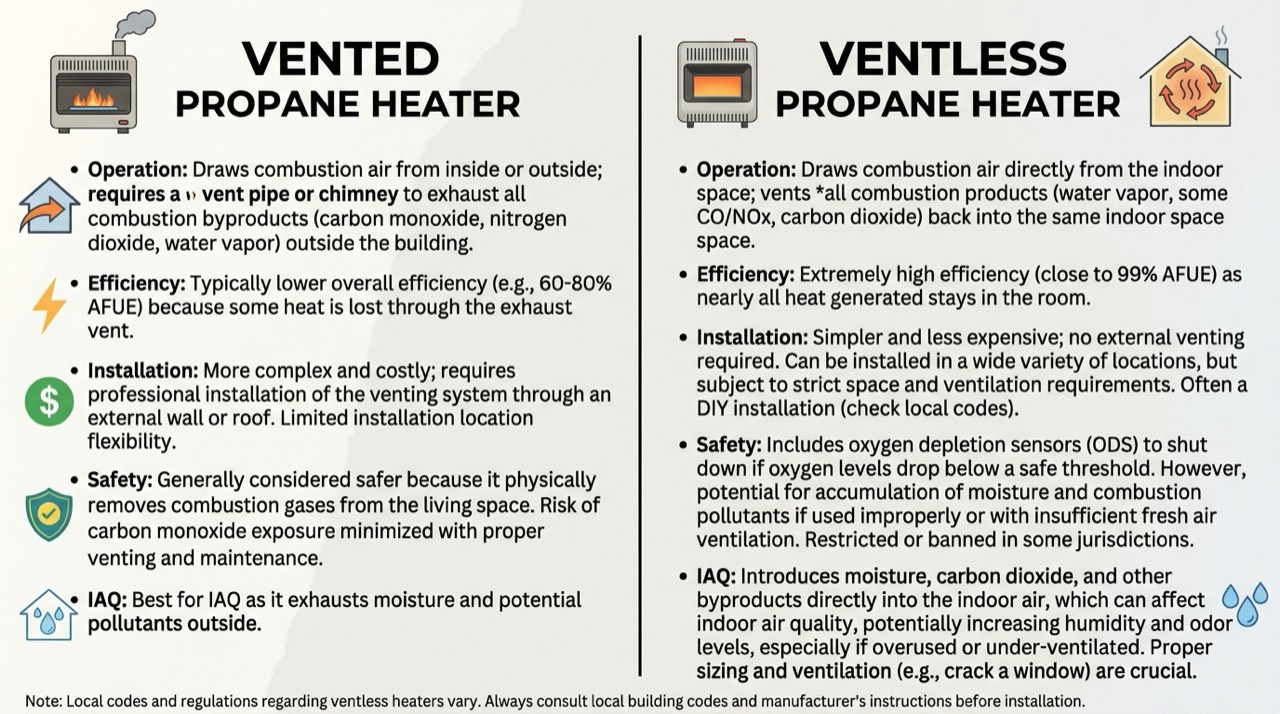
An oxygen depletion sensor is built for spaces where fresh air is limited. Forced-air heaters assume the opposite: constant airflow through a big, open area like a job site or garage bay. Makers skip the ODS on this category for a simple reason. The whole safety plan relies on real ventilation being there, not on a sensor catching a problem after the fact.
What "Well-Ventilated" Actually Requires
A cracked window is not enough. Neither is a door propped open an inch. The Consumer Product Safety Commission is clear: any fuel-burning heater used without real fresh air can build up dangerous carbon monoxide. Think fully open garage door, large vent, or true outdoor placement. That is the standard these heaters are built around. Our job-site heater safety checklist covers the full ventilation and clearance rules.
What to Use Instead for an Indoor Space
Say a small workshop needs to stay closed up through a cold night. The right pick is an ODS-equipped indoor-safe radiant heater, or a permanent vent-free wall unit built to that same standard. Not a scaled-down forced-air model. Our garage and workshop heater guide walks through picking between these types by space and use.
The Job-Site Exception Contractors Ask About
Some crews run a forced-air heater inside a temporary enclosure, like a tarped-off framing bay, with mechanical fans adding to the natural airflow. That is a specific, engineered setup. It is not a general green light for indoor use. It still needs real, monitored air exchange. Never assume an enclosure is "close enough" to outdoors on its own.
The Bottom Line
Forced-air propane heaters are not built or certified for indoor use. Save them for a garage with the door open, a truly open job site, or another space with real, steady airflow. Pick an ODS-equipped indoor-safe heater for anywhere that has to stay closed up.