

Affiliate disclosure: some links are affiliate links — as an Amazon Associate we earn from qualifying purchases, at no extra cost to you. Full disclosure.
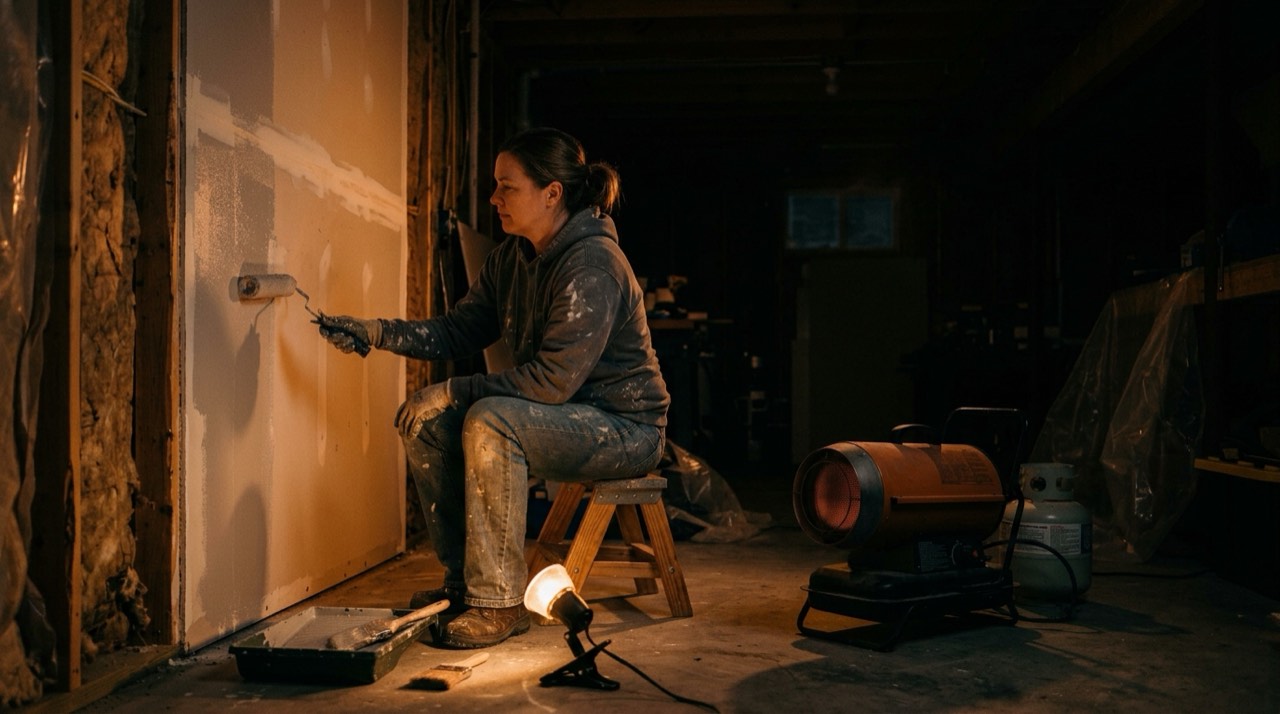
A forced-air propane heater is the right tool for a garage that needs to actually warm up, not just feel a little less cold near one spot. Here is how to size one correctly and set it up the right way.
Top 3 Recommended
Why Forced Air Instead of Radiant for a Garage
A garage loses heat fast. It usually has a large door, cold concrete floor, and little or no insulation. A radiant heater only warms what is directly in front of it, so it never raises the room’s overall temperature. A forced-air heater blows heated air across the whole space instead, which is what actually gets a garage warm enough to work in for hours. If you only need quick, spot heat while grabbing tools, a radiant Buddy-style heater is simpler. If you are working in the garage for a while, forced air is the better fit.
Step 1: Measure Your Garage
Get the actual square footage of your garage before shopping. Multiply length by width. A single-car garage is usually 200 to 300 sq ft. A two-car garage runs closer to 400 to 600 sq ft. This number drives every other decision below.
Step 2: Account for Insulation
An insulated, sealed garage needs roughly 20 to 30 BTU per square foot to hold a comfortable temperature. An uninsulated garage needs a lot more, often 40 BTU per square foot or higher, since heat escapes through the door and walls almost as fast as the heater produces it. Most garages fall into the uninsulated category, so size on the higher end unless you know your garage has real insulation.
Step 3: Pick a BTU Tier
Using the 40 BTU per square foot rule for a typical uninsulated garage: a single-car bay around 250 sq ft needs about 10,000 BTU at minimum, though in practice most owners choose a 60,000 BTU heater like the DEWALT 68,000 BTU Forced Air Heater for faster warm-up and some headroom on colder days. A full two-car garage used as a workshop typically calls for 100,000 BTU or more, which is where an adjustable unit like the Dyna-Glo RMC-FA150DGD earns its higher price. Its output adjusts from about 120,000 up to 150,000 BTU, so it can run lower on milder days and save fuel.
Step 4: Set Up Ventilation Before You Light It
Forced-air heaters are rated for outdoor or well-ventilated use only. None of them have the oxygen depletion sensor that makes a radiant Buddy heater safe for a closed room. Crack the garage door a specific amount, per your heater’s manual, before starting it, and never assume a "cracked" door is enough without checking the actual number. The CPSC warns that fuel-burning heaters used without enough fresh air can produce dangerous carbon monoxide, even when the heater itself is working correctly. See our garage ventilation guide for the specific setup.
Step 5: Connect the Right Tank Size
A standard 20 lb tank works for occasional use, but it empties fast at high BTU output. Using the standard conversion of about 21,600 BTU per pound of propane, a 100,000 BTU heater burns through a 20 lb tank in around 4 hours at full output. If you plan to heat the garage regularly through winter, a 100 lb tank connected with a longer hose cuts down on constant tank swaps. Our tanks and accessories guide covers sizing in more depth.
Step 6: Position the Heater Correctly
Point a forced-air heater across the largest open area of the garage, not into a corner, so the moving air actually circulates through the space. Keep it clear of parked vehicles, stored fuel, and anything flammable, per the manual’s stated distances. Set it on a stable, level surface where it will not get bumped by foot traffic or a vehicle backing in.


Step 7: Plan Basic Maintenance for the Season
A forced-air heater used through a full winter picks up dust and debris in the fan intake and burner assembly, especially in a garage where projects generate sawdust or dust. Clean the intake periodically during heavy use, and give the whole unit a more thorough check before the first cold night of each new season. Check the hose and fittings for cracking or wear at the same time, since temperature swings between seasons can age rubber components faster than a climate-controlled space would.
Common Mistakes When Setting Up a Garage Forced-Air Heater
The most common mistake is undersizing. Owners who buy a heater based on price rather than actual square footage often end up running it at maximum output constantly and still feeling cold. The second most common mistake is skipping the ventilation step because the garage "seems" airy enough. Manufacturer ventilation minimums are specific numbers, not a feeling, and skipping this step is a real safety risk, not just a comfort issue.
How Long Until the Garage Actually Feels Warm
Owners running a correctly sized forced-air heater in a cold garage consistently report reaching a comfortable working temperature in under 30 minutes. A heater that takes much longer than that is usually undersized for the space rather than defective, which is why getting the sizing step right up front matters more than any other decision in this guide.
Insulation Improvements Before You Buy
Before settling on a heater size, check whether simple insulation fixes would help more cheaply. Weatherstripping around the garage door, sealing obvious gaps around windows, and insulating an uninsulated door panel all reduce how much heat escapes in the first place. Owners who make these fixes first sometimes find a smaller, less expensive heater does the job they originally thought needed a bigger unit. This is worth doing before shopping, not after, since it changes which BTU tier actually fits your garage.
What to Do If the Heater Still Feels Inadequate
If a correctly sized heater still is not keeping the garage comfortable after a reasonable warm-up period, check for an obvious ventilation gap or door seal issue before assuming the heater itself is underpowered. A garage door that does not seal well at the bottom can undo a surprising amount of a heater’s output. Confirm the basics are working as expected before spending more money on a bigger unit that may not solve the actual problem.
Signs You Sized the Heater Correctly
A correctly sized forced-air heater brings a cold garage to a comfortable temperature within about 30 minutes and then holds that temperature without running constantly at full output. If your heater never seems to catch up, even after a longer warm-up period, it is likely undersized for the space. If it reaches temperature almost immediately and cycles frequently, it may be larger than the garage actually needs, which wastes fuel without adding comfort.
Related Reading
For the full radiant-vs-forced-air decision, see our garage and workshop heater guide. For running cost across BTU tiers, see our fuel consumption guide.