
Affiliate disclosure: some links are affiliate links — as an Amazon Associate we earn from qualifying purchases, at no extra cost to you. Full disclosure.
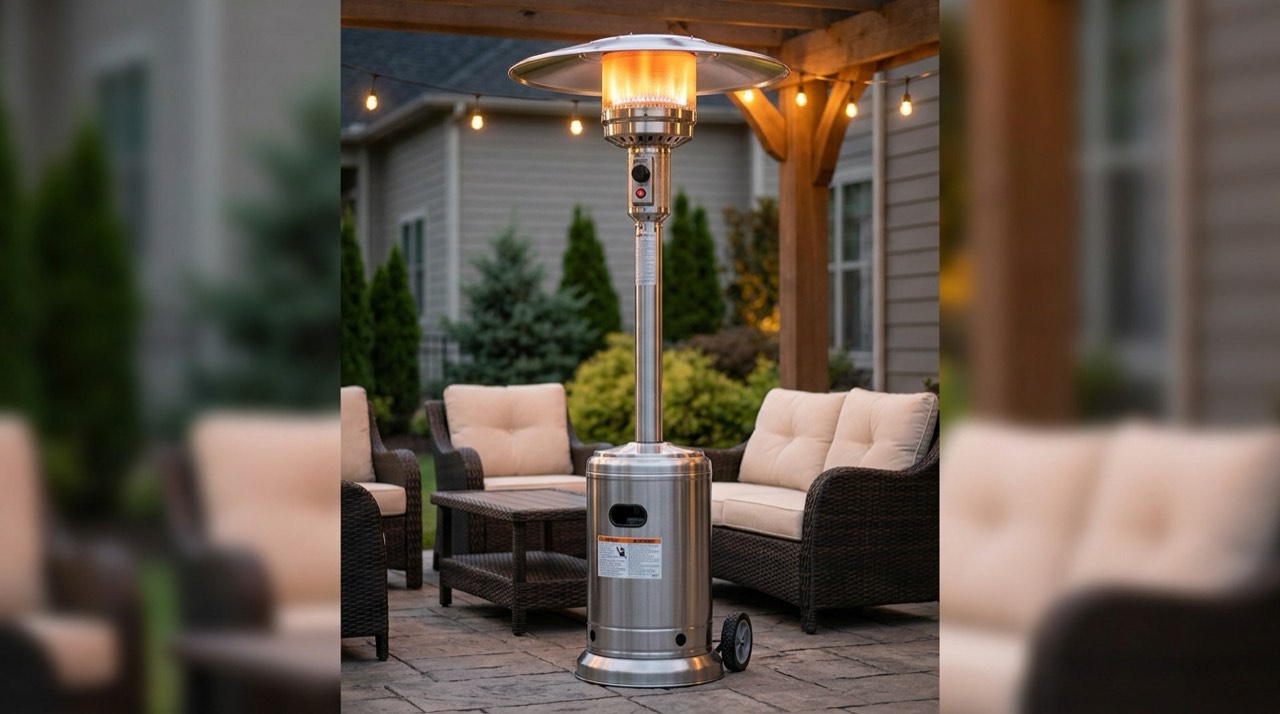
A standard 20 lb propane tank runs a typical 40,000 to 48,000 BTU standing patio heater for roughly 8 to 11 hours at full output. A small tabletop heater in the 10,000 to 11,000 BTU range stretches the same tank much further, often 35 to 40 hours. Running the heater on a lower thermostat setting extends any of these figures.
The Math Behind Tank Run Time
A pound of propane holds about 21,600 BTU of usable energy. A standard 20 lb steel cylinder holds roughly 432,000 BTU total when full. Divide that by a heater’s BTU-per-hour rating to get an estimated run time at full output. It’s the same formula used across every propane appliance, not something specific to patio heaters.
Run Time by Common Patio Heater Output
- 10,000–11,000 BTU tabletop heater: roughly 39–43 hours on a 20 lb tank.
- 40,000 BTU standing heater: roughly 10.8 hours on a 20 lb tank.
- 48,000–50,000 BTU standing heater: roughly 8.6–9 hours on a 20 lb tank.
Our patio heater BTU guide covers how these output tiers map to actual patio size and heat coverage.
Why Real-World Run Time Runs Shorter
These figures assume the heater runs flat-out the whole time and the tank fills to its full rated capacity, and neither is always true. Most standard 20 lb cylinders are only filled to about 80% of capacity for safe expansion room, which trims the real number down somewhat. Cold outdoor temperatures also reduce a tank’s usable pressure toward the end of a fill, which can make the last stretch of propane harder to draw down efficiently.
A Thermostat Setting Extends Every Number Above
A patio heater with a variable or thermostat-controlled setting rarely runs at its maximum rated BTU output the entire evening, especially on a mild night. Dropping from a high to a medium setting can meaningfully extend real-world run time beyond the full-output figures above, since fuel use scales roughly with heat output.
Tracking How Much Propane Is Left
A cylinder gives no obvious visual cue about remaining fuel once it’s more than half empty, which catches people off guard mid-gathering. A simple inline pressure gauge or a weight-based check removes the guesswork. Our propane tank gauges explained guide covers the options.
The Bottom Line
Expect roughly 8 to 11 hours from a 20 lb tank in a standard-output standing patio heater, and well over a full day of intermittent use from a small tabletop model. A lower thermostat setting and a tank gauge both make that number more predictable for planning a longer gathering.