
Affiliate disclosure: some links are affiliate links — as an Amazon Associate we earn from qualifying purchases, at no extra cost to you. Full disclosure.
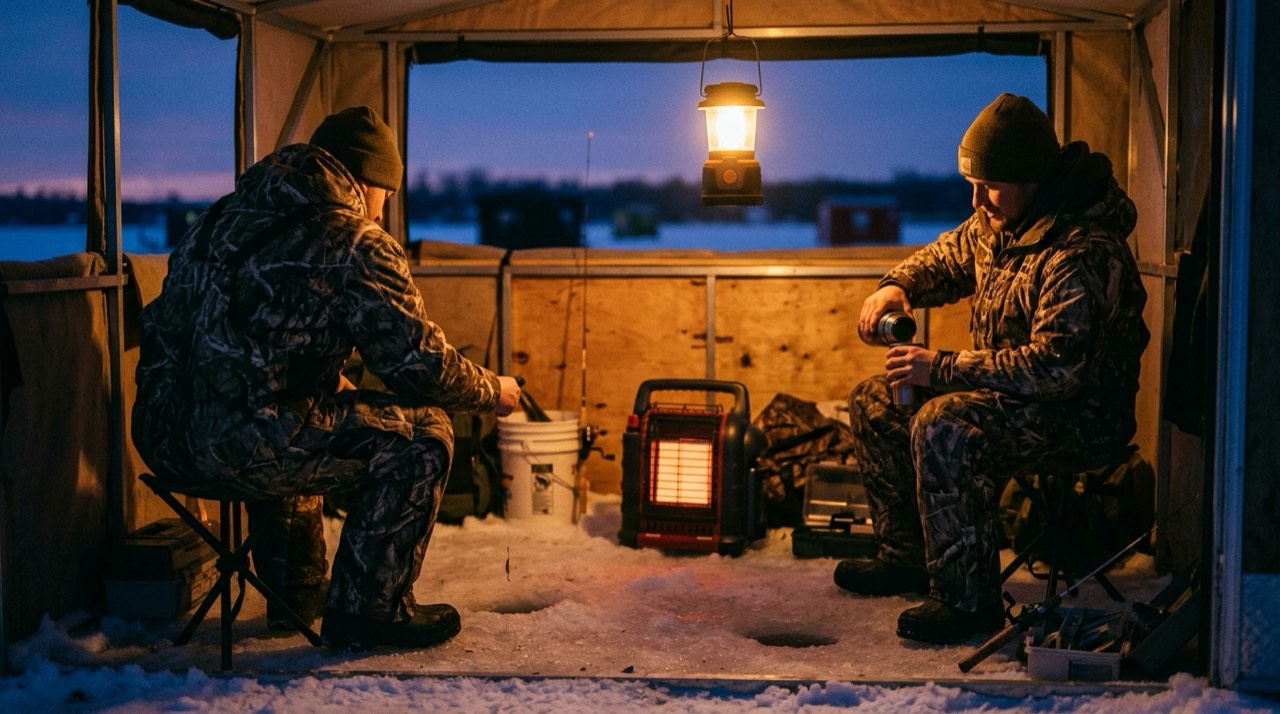
Yes, with the right heater and a little airflow. An ODS-equipped indoor-safe model, like the Mr. Heater Buddy series, is built for a small enclosed space like an ice shanty. Keep a vent or door flap cracked even with a certified heater running. A tank-top or other outdoor-only heater should never go inside a shanty, and a completely zipped-up shanty with no airflow is not safe with any heater running.
Why an Ice Shanty Concentrates the Risk
A shanty is small, often smaller than a tent, and anglers commonly zip it up tight specifically to trap warmth against brutal cold. That instinct is exactly backward for carbon monoxide risk: the smaller and more sealed the space, the faster a byproduct of combustion can build up if a heater lacks the right safety features.
Picking the Right Heater for a Shanty
A compact Buddy-style radiant heater fits a shanty’s tight footprint and its certified indoor-safe design is the whole reason it works here at all. Tank-top heaters, common for ice fishing because they screw straight onto a tank with no hose, are outdoor-only and should stay outside the shanty walls. Our propane heater for an ice shanty guide covers sizing and setup specifics.
Why "It’s Freezing Outside" Doesn’t Change the Rule
Extreme cold outside a shanty does not make the inside air any less vulnerable to carbon monoxide buildup. If anything, brutal cold makes it more tempting to seal every gap, which is exactly the wrong instinct here. Crack a vent regardless of the temperature outside.
A CO Detector Matters More in a Shanty
A small, portable battery-backed carbon monoxide detector is worth carrying specifically for ice shanty use, since the enclosed space and cold-weather sealing instinct combine to raise real-world risk more than in most other outdoor heater settings. See our carbon monoxide detector roundup for compact options.
The Bottom Line
An ODS-equipped indoor-safe heater with a cracked vent is the safe setup for an ice shanty. Skip any tank-top or outdoor-only model, and never fully zip up the shanty, no matter how cold it is outside.