
Affiliate disclosure: some links are affiliate links — as an Amazon Associate we earn from qualifying purchases, at no extra cost to you. Full disclosure.
Four specific features, working together, make a propane heater indoor-safe: an oxygen depletion sensor, a tip-over switch, an added fuel odorant, and an output rating matched to a specific room type. A heater missing any one of these — especially the first — isn’t built for enclosed-space use, no matter how it’s marketed.

1. An Oxygen Depletion Sensor (ODS)
This is the non-negotiable feature. The ODS is a pilot-mounted sensor. It continuously reads oxygen levels in the room and automatically shuts the gas valve once oxygen drops to roughly 18%, well before the room reaches a genuinely unsafe level. It’s the single feature separating an indoor-safe heater from an outdoor-only one. It can’t be retrofitted onto a heater that wasn’t built with it. See our what is an oxygen depletion sensor answer for how the mechanism actually works.
2. A Tip-Over Switch
This is a mechanical safety switch, usually a weighted or spring-loaded piece inside the heater. It physically shuts the gas valve if the unit tips past a set angle. It protects against a knocked-over heater continuing to burn unattended on its side, a real risk in a household with kids, pets, or simply a crowded room. Our odor sensor and tip-over switch explainer covers exactly how this mechanism works.
3. An Added Fuel Odorant
Pure propane has almost no natural smell. Manufacturers add a chemical odorant, usually ethyl mercaptan, so a leak announces itself to your nose before it reaches a dangerous concentration. It’s often described as a rotten-egg or sulfur smell. This is a deliberate manufacturing step, not something the fuel does on its own. It’s present in every indoor-safe heater’s fuel supply.
4. A Room-Type Output Rating
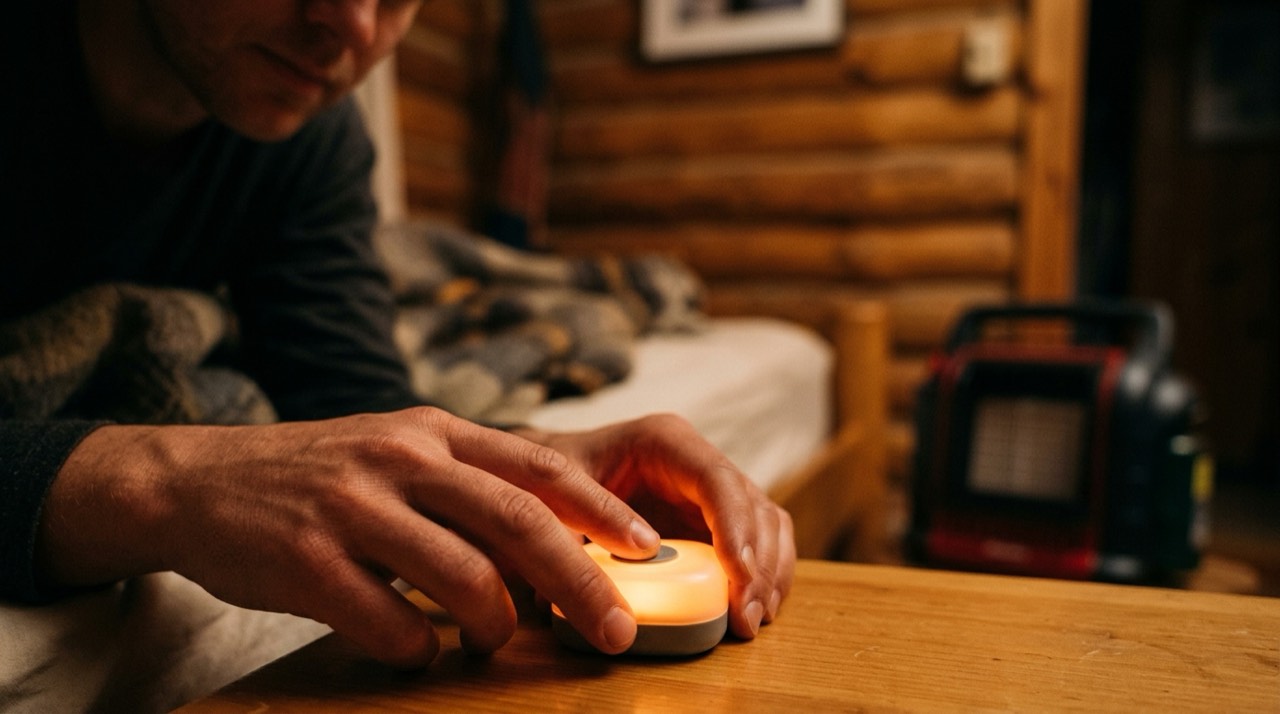
Indoor-safe heaters are rated for a specific room type, not just "indoors" in general. General indoor use is capped at 40,000 BTU/h under the relevant safety standard. A bedroom-rated unit is capped at 10,000 BTU/h, and a bathroom-rated one at 6,000 BTU/h. Those spaces are smaller, more likely to be sealed, and possibly occupied by someone asleep, so they get a lower ceiling. A heater rated for general indoor use isn’t automatically cleared for a bedroom.
What These Four Features Don’t Cover
None of these features make unattended or overnight operation automatically safe — most manufacturers still don’t rate their indoor-safe models for that use, even with all four features present. They also don’t replace the manual’s stated ventilation requirement, or a standalone carbon monoxide detector as a backstop. These four features are the certified hardware baseline; the rest of the safety picture still depends on how the heater is actually used.
How to Check for All Four on a Specific Model
Read the manual, not the marketing. Look for explicit mention of an oxygen depletion sensor, a tip-over shutoff, and a stated room-type rating (general indoor, bedroom, or bathroom). The added odorant is present on essentially every propane heater by default and generally isn’t called out separately. If the manual doesn’t clearly state the first three, treat the heater as outdoor-only. See our indoor-safe vs. outdoor-only guide for a full pre-purchase checklist.
The Bottom Line
An indoor-safe propane heater isn’t defined by size, price, or brand — it’s defined by four specific, testable features: an oxygen depletion sensor, a tip-over switch, an added odorant, and a rating matched to the room it’s meant for. Confirm all four in the manual before treating any propane heater as safe for an enclosed space.