

Affiliate disclosure: some links are affiliate links — as an Amazon Associate we earn from qualifying purchases, at no extra cost to you. Full disclosure.
Some buyers search for a Dyna-Glo heater’s "odor sensor." There is no such component. What they mean, almost always, is the oxygen depletion sensor, a real and important safety feature built into the Grab N Go. Here is what it actually does.

Top 3 Recommended
What the Sensor Is Actually Called, and Why the Confusion Happens
The correct name is oxygen depletion sensor, or ODS. It does not detect odor at all. It detects oxygen. The mix-up is understandable. Propane itself has an added odorant so leaks are noticeable by smell, and it is an easy jump to assume a heater’s built-in safety sensor works the same way. It does not. The ODS is purely an oxygen-level sensor.
How the ODS Actually Works
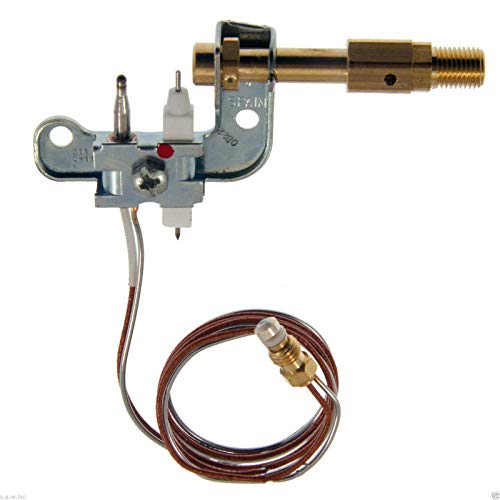
The sensor sits near the pilot flame and continuously monitors the oxygen level in the surrounding air. As oxygen in an enclosed space drops, a properly functioning pilot flame’s shape and position shift in a predictable way. The ODS detects that shift and shuts off the gas supply automatically, before the oxygen level gets low enough for dangerous carbon monoxide to build up.
Why This Feature Is What Makes the Grab N Go Indoor-Safe
Without an ODS, a propane heater has no built-in way to detect a room slowly running low on oxygen from prolonged combustion in an enclosed space. This is exactly why forced-air heaters without an ODS are outdoor-use only, while the Grab N Go’s ODS earns it an indoor-safe rating. The sensor is a backstop for one specific failure mode, not a general safety guarantee, and manufacturer guidance still recommends basic ventilation even with it present.
What It Feels Like When the ODS Trips
The heater shuts off the gas supply and the flame goes out, sometimes with a small audible click from the valve. This is not a malfunction. It means oxygen in the room has dropped below the safe threshold the sensor is calibrated to. The correct response is to ventilate the space, not to keep relighting the heater in the same conditions.
What to Do When the ODS Shuts the Heater Off
- Open a window, door, or vent to bring in fresh air.
- Wait a few minutes for oxygen levels to recover before relighting.
- Confirm the room has some ongoing airflow before running the heater again for an extended period.
- If the sensor trips repeatedly in a room you believed was adequately ventilated, treat that as a sign the space needs more airflow, not as a sign the sensor is faulty.
Testing Whether the ODS Is Working
There is no simple do-it-yourself test that safely confirms ODS function without deliberately depleting oxygen in a controlled setting, which is not something to attempt at home. The more practical check is indirect: if the heater has run for extended periods in a genuinely under-ventilated space without ever tripping, that is worth investigating rather than assuming the sensor is simply not needed in your situation.
When to Suspect a Failed Sensor vs. Genuine Low Oxygen
A sensor tripping in a small, sealed room with the heater running for hours is very likely doing its job correctly. A sensor tripping within minutes in a large, well-ventilated space is unusual and worth investigating, either as a sensor issue or an unrelated airflow problem specific to that room. If you suspect a genuine sensor fault, our troubleshooting and repair guide covers next steps.
Can the ODS Be Serviced or Replaced?
Yes, though this is a job for a qualified technician rather than a casual DIY repair, since it is a safety-critical component. Universal ODS pilot assemblies are sold for a range of vent-free propane appliances, and matching the correct replacement to your specific model matters for both fit and calibration. Never disable or bypass an ODS to keep a heater running through repeated shutoffs.
Does Every Dyna-Glo Model Have an ODS?
No. Only the Grab N Go, the brand’s portable radiant heater, carries this sensor. Dyna-Glo’s forced-air models (the LPFA40WH, LPFA60WH, and RMC-FA150DGD) do not, since they are designed for outdoor and well-ventilated use where an ODS is not the applicable safety standard. Our full BTU lineup guide covers the difference between these categories.
How the ODS Compares to a Standalone CO Detector
The ODS and a battery-powered carbon monoxide detector serve related but different purposes. The ODS acts on the heater itself, cutting fuel before CO can build up in the first place. A standalone CO detector monitors the room’s air directly and alarms after CO is already present, regardless of the source. Running both together gives you prevention and detection, which is why a CO detector is still worth having even with an ODS-equipped heater.
Common Misunderstandings About the ODS
Some owners assume the ODS means a room needs no ventilation at all, since the heater is "indoor-safe." That is a misreading of what the certification covers. The ODS is a backstop for one specific failure mode, not a green light to seal a room completely. Manufacturer guidance recommending a cracked window applies precisely because the ODS is a safety net, not a replacement for basic airflow.
How Room Size Affects How Often the ODS Trips
A smaller, more sealed room depletes oxygen faster than a larger or draftier one running the same heater at the same setting. If the ODS trips frequently in a specific room, that is useful information about the room’s ventilation, not a reason to suspect the sensor itself is oversensitive. Moving the heater to a larger space, or improving airflow in the current one, usually resolves frequent trips without needing any repair.
Altitude and ODS Sensitivity
At higher altitudes, where ambient oxygen levels are naturally somewhat lower than at sea level, an ODS may trip more readily than it would at lower elevation, since it is calibrated against a baseline oxygen percentage. This is expected behavior rather than a defect, and it is worth knowing if you regularly use the heater at elevation and notice more frequent shutoffs than owners at sea level report.
Does the ODS Wear Out Over Time?
Like any mechanical safety component, the ODS can gradually lose calibration accuracy after years of heavy use, though this is uncommon within a normal service life. A sensor that seems to trip erratically, either far too often in a well-ventilated space or not at all when it clearly should, is worth having inspected rather than continuing to rely on if you have doubts about its accuracy.
Why the ODS Cannot Detect a Propane Leak
It is worth being precise about what the ODS does not do. It does not detect propane in the air the way a dedicated gas leak detector does. It only responds to oxygen levels changing near the pilot flame. If you smell gas, treat it as a leak regardless of what the ODS is or is not doing, and follow standard leak-response steps: shut off the fuel supply, ventilate, and check connections with a soapy-water test before relighting.
The ODS in the Context of the Site’s Broader Safety Guidance
The ODS is one piece of a larger safety picture that includes proper clearance from combustibles, a stable surface, and a working carbon monoxide detector in the room. Relying on the ODS alone, while skipping these other basics, still leaves real gaps in a genuinely safe setup. Our indoor safety and carbon monoxide guide covers the fuller picture beyond this one component.
What New Owners Should Know Before First Use
If you are lighting a Grab N Go for the first time, expect the ODS to behave normally and not trip during ordinary use in a reasonably ventilated room. If it trips on a first use in a space you believe is adequately ventilated, do not assume the unit is defective. Check for an unusually sealed room first, since this is a far more common cause than a sensor fault straight out of the box.

The Bottom Line
There is no "odor sensor" on a Dyna-Glo heater. There is an oxygen depletion sensor, and it is one of the most important safety features on the Grab N Go. It shuts the heater off before a room’s oxygen level becomes dangerous. Treat a trip as the sensor working correctly, ventilate the space, and only then relight.