

Affiliate disclosure: some links are affiliate links — as an Amazon Associate we earn from qualifying purchases, at no extra cost to you. Full disclosure.
A Dyna-Glo propane heater needs very little beyond fuel to keep running. A short list of parts and accessories makes ownership easier. It also extends the heater’s working life.
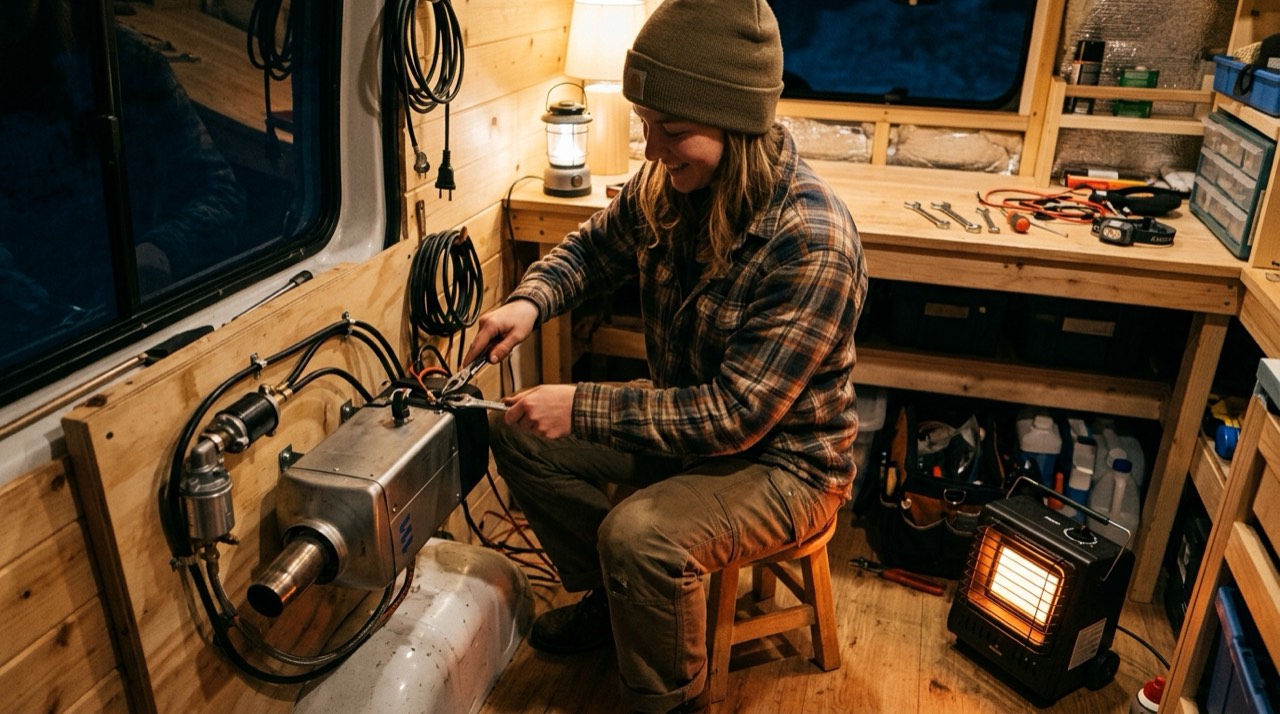
Top 3 Recommended
Genuine Dyna-Glo Hose Assembly
A genuine Dyna-Glo propane hose assembly connects the heater to a standard 20 lb tank. It uses the correct appliance-end fitting for the brand. Using the manufacturer’s own hose, rather than a generic universal one, cuts the chance of a fitting mismatch. A mismatched fitting is the most common source of a leak found during setup.
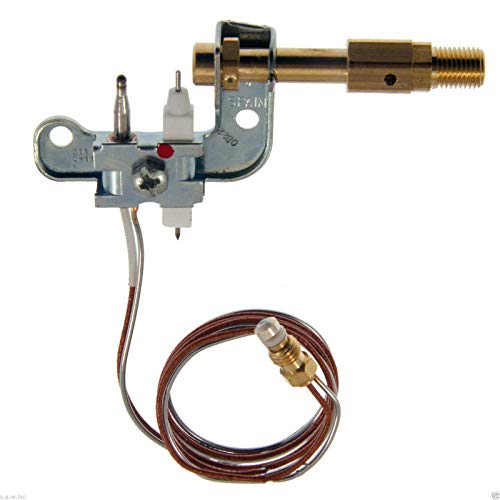
Replacement ODS Pilot Assembly
The Grab N Go’s oxygen depletion sensor is built into its pilot assembly. If the pilot will not stay lit, a replacement pilot assembly is often the fix. This is also true if the ODS seems to trip unusually often. It is the component most likely to wear out over years of regular use. Universal vent-free propane pilot assemblies fit a range of models across several brands. Confirm compatibility with your specific model before ordering.
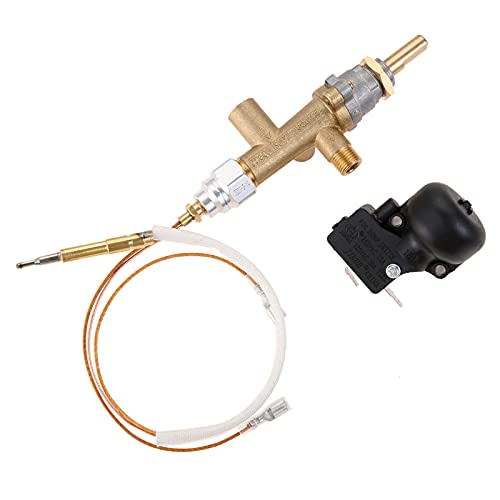
Replacement Control Valve and Thermocouple
On the forced-air line, the control valve and thermocouple assembly is the part most likely to need replacement. This shows up after extended job-site use. Both components are inexpensive next to the cost of a new heater. Replacing them is usually a straightforward job for anyone comfortable with basic appliance repair. If you are not confident doing this yourself, a qualified technician can finish it quickly.
Propane Tank
A standard 20 lb steel tank with a working OPD valve is the baseline. It works for hose-connecting either the Grab N Go or a Workhorse-tier forced-air model. Confirm the OPD valve is present and functioning. Most retailers will not fill or exchange a tank without one. It is a required safety feature on modern consumer tanks anyway.
Fuel Filter for Extended Tank Use
Connecting to a refillable tank, rather than a disposable cylinder, brings a small risk. Debris from the tank can reach the heater’s regulator over repeated fills. An inline fuel filter guards against this. It is a low-cost way to protect the regulator on any Dyna-Glo model that hose-connects to a larger tank.
Regulator Considerations for Forced-Air Models
Forced-air heaters run at much higher BTU output than the Grab N Go. That means a higher fuel flow rate through the regulator. Use a regulator rated for your forced-air model’s specific BTU tier. A generic low-flow regulator, meant for a smaller appliance, can cause pressure issues. Those show up as reduced output or an inconsistent flame.
Storage Accessories
A basic weatherproof cover protects a forced-air unit’s cart-mounted frame and controls. It guards against moisture during outdoor storage between job-site uses. For the Grab N Go, a simple padded bag or case protects the smaller unit during transport. Dyna-Glo does not currently sell a model-specific case the way some competing brands do.
When to Repair vs. Replace
A worn pilot assembly, thermocouple, or control valve is almost always cheaper to replace on its own than to replace the whole heater. Doing so extends a well-built unit’s working life by years. A cracked burner housing or a fan motor failure on a forced-air model is a bigger repair. At that point, compare the repair cost against a new unit’s price before committing.
Buying Genuine vs. Universal Parts
For safety-relevant components, an ODS pilot assembly or a thermocouple, buy a part rated for your model. It costs a little more than a generic universal part. Fit and calibration affect how reliably the safety system actually works. For non-safety accessories like a cover or a tank stand, a universal option is a reasonable way to save money.
Sourcing Parts When a Model Is Discontinued
An older Dyna-Glo model no longer sold new can still have parts available through official channels for several years after discontinuation. Check the manufacturer’s parts lookup by model number before assuming a part is unavailable. If a genuine part truly cannot be found, a compatible universal part is the fallback, checked carefully against your unit’s exact specifications first.
Signs a Part Needs Replacing Soon
A hose that feels stiff or shows surface cracking when flexed is due for replacement before it fails outright. A thermocouple that takes longer than usual to hold the pilot lit is often close to the end of its service life. Catching these signs early, rather than waiting for a full failure, keeps a minor part swap from turning into an unplanned trip mid-season with a heater that will not run at all.
Keeping Spare Parts on Hand
For a heater used through a full winter, keeping one spare thermocouple or pilot assembly on hand avoids a multi-day wait for shipping if the original fails during a cold snap. This is a small upfront cost for meaningful peace of mind, especially for a forced-air unit relied on for a job site or an unheated workshop.
Tools Worth Having for Basic Repairs
An adjustable wrench, a small flathead screwdriver, and a soapy-water leak test kit cover most basic maintenance and part swaps on either the Grab N Go or the forced-air line. Nothing here requires specialized equipment. A basic home toolkit is enough for swapping a thermocouple, hose, or pilot assembly on your own, provided you follow the manual’s specific steps for your model.
Where to Buy Genuine Dyna-Glo Parts
Genuine parts are sold through major online retailers and, for some components, directly through Dyna-Glo’s own customer support channel. Confirm a listing is explicitly stated as a genuine Dyna-Glo part, not just "compatible with," if brand-original parts matter to you for a safety-relevant component like the ODS pilot assembly.
What Not to Improvise
Never substitute a generic hose or fitting not rated for propane use, even temporarily, since the pressure and material requirements differ from other gas applications. Never bypass a safety component like the ODS or the tip-over shutoff to keep a heater running through a fault. These are the two places where improvising to save time or money introduces a real safety risk rather than just a performance tradeoff.
Accessory Compatibility Across the Dyna-Glo Lineup
A hose or filter designed for the Grab N Go’s smaller fittings will not necessarily fit a forced-air model’s higher-flow connections, and vice versa. Always check stated compatibility against your specific model number, covered in our model number guide, rather than assuming a part that fits one Dyna-Glo heater fits them all.
Seasonal Parts Checklist
Before the first cold night of each season, run through a short checklist: inspect the hose for cracking, confirm the OPD valve on your tank is current, check the thermocouple’s response time when lighting, and clean any dust or debris from the burner assembly. This five-minute habit catches most small issues before they turn into a mid-winter breakdown.


Building a Basic Parts Kit
For an owner running a Dyna-Glo heater regularly through a full season, a sensible starting kit covers three things: a genuine hose assembly, a spare thermocouple or pilot assembly matched to your specific model, and a working 20 lb tank with a current OPD valve. This covers the most common points of failure. It does not overspend on parts you may never need.