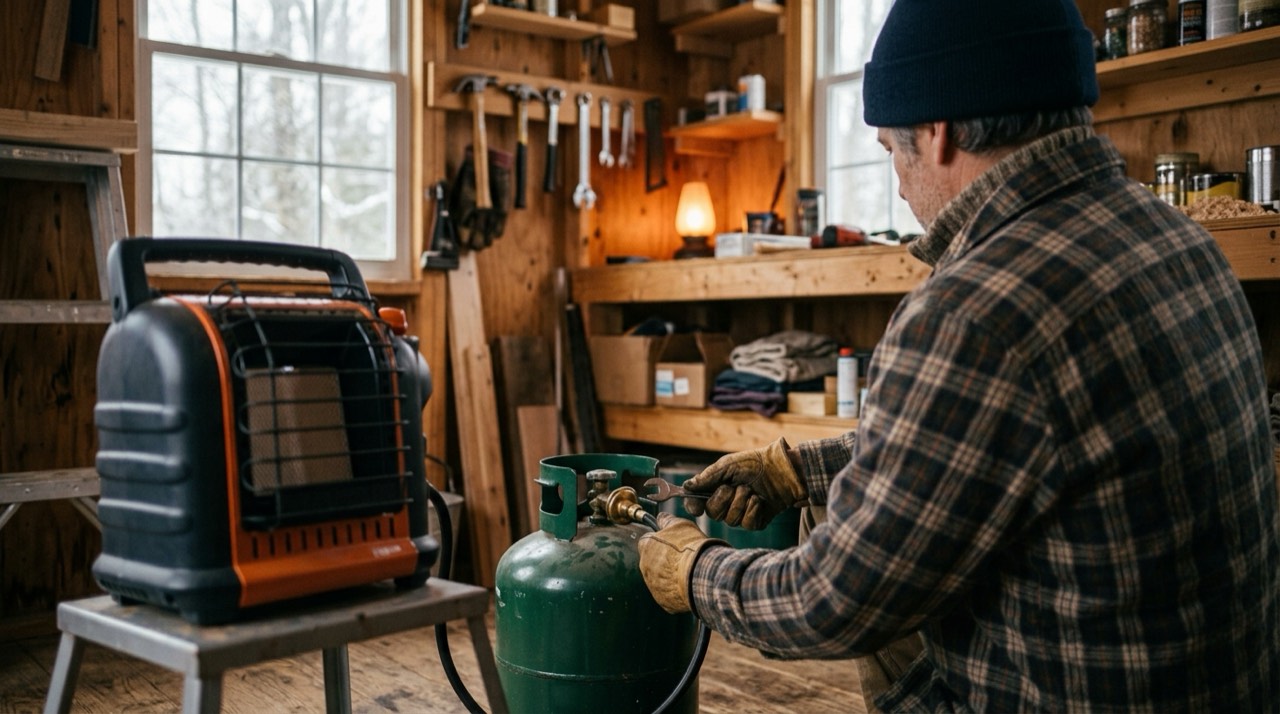

Affiliate disclosure: some links are affiliate links — as an Amazon Associate we earn from qualifying purchases, at no extra cost to you. Full disclosure.
Yes. Any propane heater running indoors should be paired with a battery-backed carbon monoxide detector. That includes a certified indoor-safe model with an oxygen depletion sensor. The sensor and the detector do two different jobs. Neither one replaces the other.
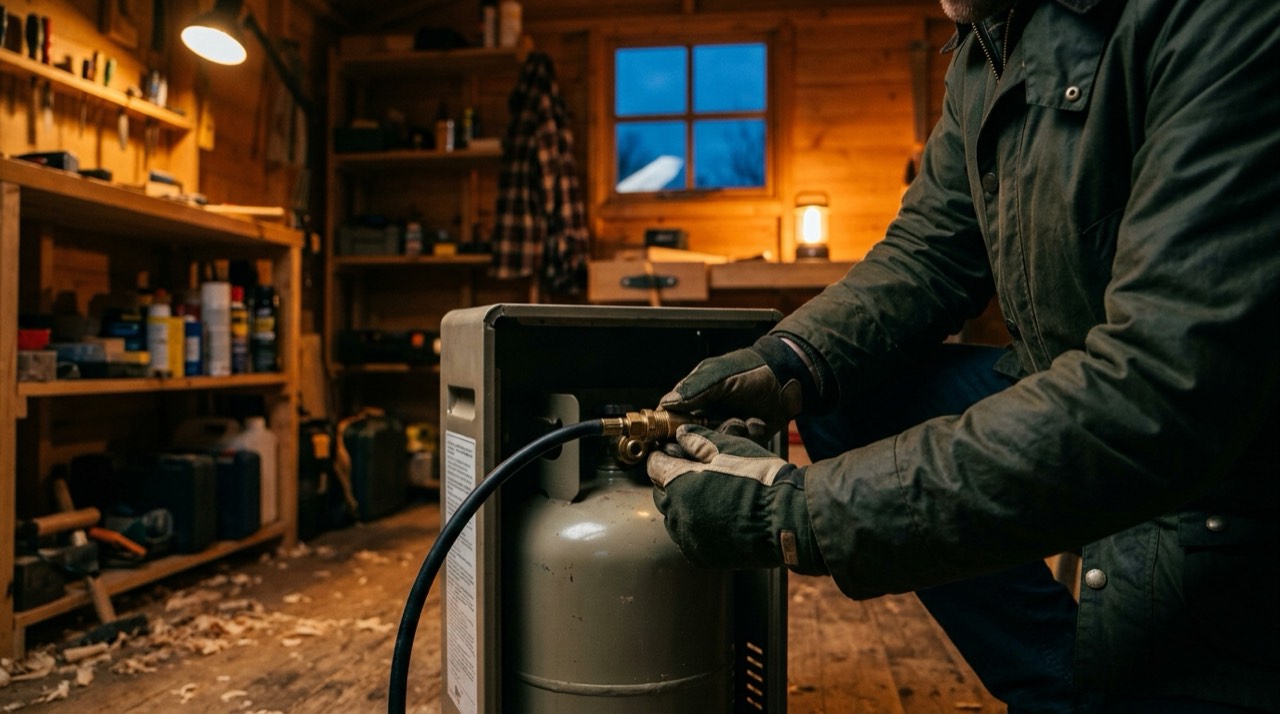
Why an ODS Doesn’t Make a Detector Optional
An oxygen depletion sensor shuts a heater off before oxygen drops to a dangerous level under normal operation. But it’s a mechanical device. Mechanical devices can fail, get tampered with, or sit on a heater that isn’t functioning correctly. The Consumer Product Safety Commission recommends a carbon monoxide detector in any space with a fuel-burning heater, regardless of what safety features that heater has. Think of the detector as the backstop that catches the case the sensor misses. It’s not a redundant extra.
It Matters Even More for Non-ODS Heaters
Outdoor-only heaters — forced-air units, tank-top radiant heaters — have no oxygen depletion sensor at all. If one of these ever runs in a space with weak airflow, even briefly, a detector is the only automatic safety check in place. That’s one more reason outdoor-only heaters should never double as a temporary indoor option, detector or not.
What Kind of Detector to Use
Use a battery-backed unit, so it keeps working through a power outage. That’s often the exact scenario where a propane heater gets used for backup heat in the first place. Plug-in models with battery backup work too. See our best carbon monoxide detectors for use with a propane heater roundup for specific models.
Where to Put It (Briefly)
Place it close enough to alert people sleeping nearby. Keep it far enough from the heater itself that a normal startup burst doesn’t trigger false alarms. Our carbon monoxide detector placement guide covers the exact distance guidance and how many detectors a space needs.
Does This Apply to Kerosene and Diesel Heaters Too?
Yes, for kerosene. It burns fuel directly in the room’s air, just like propane. Diesel parking heaters are different. Their sealed-combustion design routes exhaust entirely outside the heated space, which changes the risk profile. A detector is still recommended as a backstop against an exhaust leak or blockage. Our diesel heater exhaust venting guide covers that specific case.
The Bottom Line
Yes, every propane heater running indoors needs a working carbon monoxide detector nearby. There are no exceptions for indoor-safe models. It’s the backstop for the one failure mode a built-in sensor can’t fully rule out on its own.