
Affiliate disclosure: some links are affiliate links — as an Amazon Associate we earn from qualifying purchases, at no extra cost to you. Full disclosure.
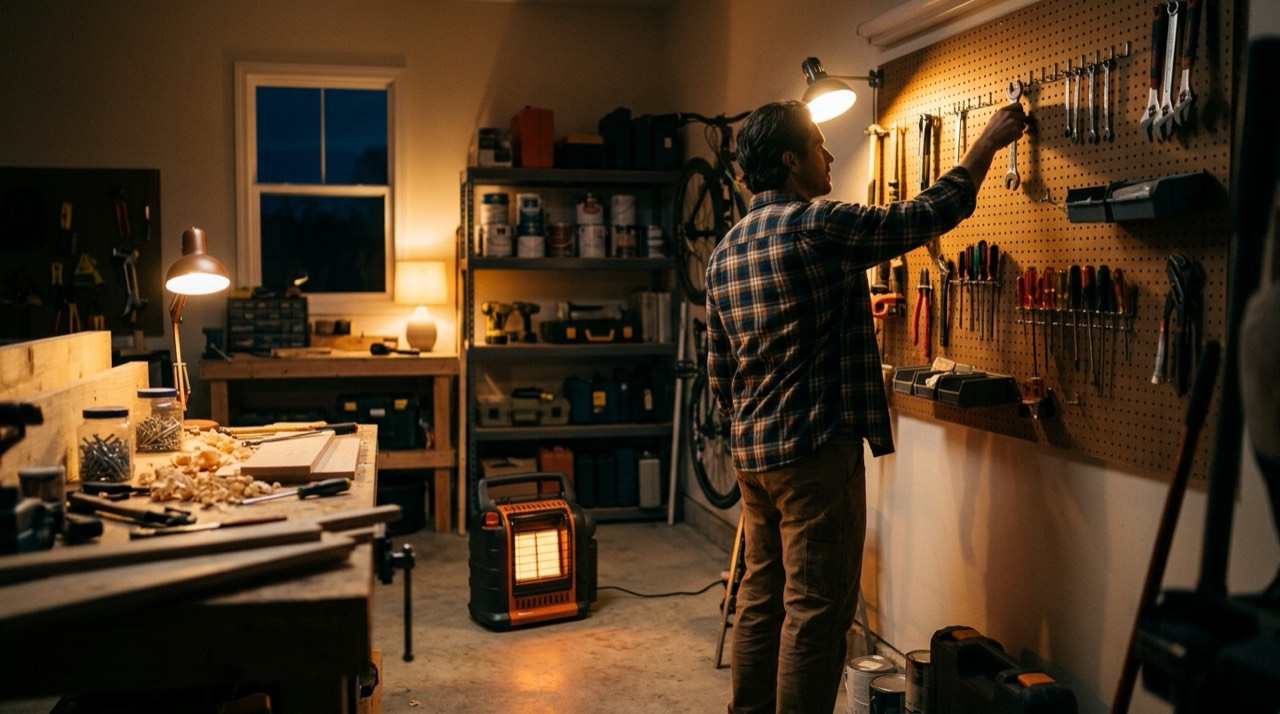
A garage combines several safety factors at once: stored chemicals, vehicles, an enclosed space, and often an open-flame heater running for hours. This checklist covers what actually matters.

Top 3 Recommended
Before You Start the Heater
- Confirm the heater’s rating matches your setup — indoor-safe radiant heaters can run with the door closed; forced-air heaters cannot.
- Check the connection for a tight seal using a soapy-water test before lighting.
- Clear the area around the heater of stored chemicals, fuel, and flammable materials.
- Confirm the heater sits on a stable, level surface away from foot traffic and vehicle paths.
Stored Chemicals Are a Real Garage-Specific Risk
Garages commonly store paint, solvents, gasoline for lawn equipment, and other flammable materials that most rooms in a home do not. Keep a propane heater well clear of these, following the manual’s stated clearance distances as a minimum, not a suggestion. Fuel vapors from stored gasoline are a particular concern near any open flame.
Vehicles and Clearance
A parked vehicle counts as a combustible object for clearance purposes, and a hot engine or exhaust system adds additional heat to a garage already running a heater. Keep the heater positioned so a parked vehicle does not encroach on its clearance zone, and never run a heater directly beside an idling vehicle in an enclosed garage.
Ventilation Rules Depend on Heater Type
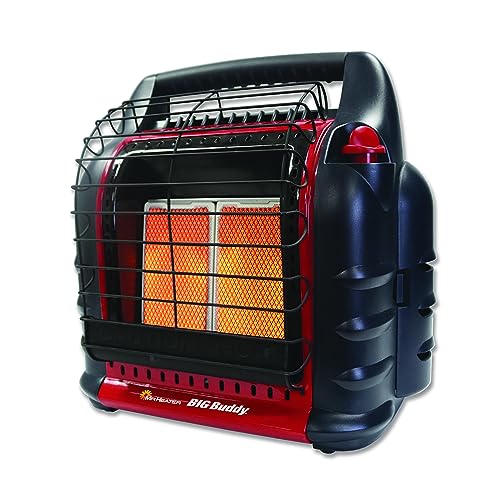
An indoor-safe radiant heater with an oxygen depletion sensor can run with the door closed, though some airflow is still recommended. A forced-air heater needs active ventilation meeting the manual’s stated minimum every time it runs, since it lacks this safety sensor entirely. Our garage ventilation guide covers this distinction in full.
Carbon Monoxide Detection
Install a battery-backed carbon monoxide detector in the garage regardless of which heater type you use. Test it periodically and replace batteries on a schedule. The CPSC recommends this as standard practice for any space with a fuel-burning heater.

Never Leave a Forced-Air Heater Unattended
Forced-air heaters are not built for continuous, unattended operation the way an indoor-safe radiant heater might be rated for. Never leave one running overnight or when you leave the garage for an extended period. This applies even in cold weather when the temptation to keep it running is strongest.
Tank Storage and Handling
Store spare propane tanks upright, away from direct heat sources and away from the heater’s own flame path. Check that any tank has a working OPD valve before connecting it. Disconnect tanks before long-term storage between heating seasons to reduce wear on the hose and regulator.
Children and Pets in the Garage
A running heater, especially a radiant model with an exposed hot surface, is a burn risk for children and pets who may not understand to keep their distance. Position the heater somewhere they cannot easily reach, and never leave a heater running unattended in a garage where children or pets have unsupervised access.
What to Do If You Smell Gas
If you smell gas near a heater or tank connection, turn off the fuel supply at the tank, ventilate the area by opening the garage door fully, and leave the space. Do not attempt to locate the leak with an open flame. Once ventilated, check connections for looseness or damage before reconnecting and testing again with a soapy-water solution.
End-of-Season Checklist
- Disconnect the tank and store it separately from the heater.
- Clean dust and debris from the heater’s intake and burner assembly.
- Inspect the hose and connections for cracking or wear before the next season.
- Store the heater somewhere dry, out of the way of vehicle traffic.
Training Household Members on Heater Safety
If more than one person in the household uses the garage heater, make sure everyone understands the same basic rules: which heater type is safe with the door closed, where the clearance zone is, and what to do if they smell gas. A safety habit that only one person follows consistently is not a reliable safety habit for the household as a whole.
Seasonal Weather and Garage Heater Safety
Wet or snowy conditions tracked into a garage on vehicles and boots can create a slippery area near a heater, increasing the risk of an accidental bump or fall into it. Keep a clear, dry path around any running heater, especially during winter months when this risk is highest. A simple floor mat near the entry point can help manage tracked-in moisture during heavy use periods.
Recognizing a Heater That Needs Servicing
A heater that produces a yellow or flickering flame instead of a steady blue one, an unusual smell beyond the normal propane odor, or soot buildup around the burner are all signs that warrant a service check before continued use. Do not keep using a heater showing these signs while hoping the problem resolves on its own, since they can indicate an incomplete combustion issue with real safety implications.
A Final Safety Reminder
None of these precautions are complicated on their own, but skipping several at once is how most preventable incidents happen. Building these checks into a routine, rather than treating them as optional extras, is what separates years of safe garage heater use from a preventable close call.
Sharing This Checklist With Occasional Users
If a family member or friend occasionally borrows the garage or uses the heater while you are not around, walk them through the basics at least once rather than assuming familiarity. A heater that feels obvious to a regular user is not always obvious to someone using it for the first time, and a two-minute conversation prevents most of the avoidable mistakes covered in this checklist.
Seasonal Inspection Before First Use
Before lighting a garage heater for the first time each season, inspect the hose for cracking, check the connection for a tight seal, and confirm the burner assembly is free of dust and debris accumulated during storage. This five-minute check at the start of each season catches most of the small problems that would otherwise surface at an inconvenient moment mid-winter.
Keeping a Fire Extinguisher Nearby
A basic fire extinguisher rated for the materials typically stored in a garage is worth keeping within easy reach of any running heater. Check that it is charged and not expired at the start of each heating season. This is a low-cost precaution that most garages benefit from regardless of whether a propane heater is in use.
What Makes Garage Safety Different From Other Rooms
A garage combines more risk factors than a typical living space: stored fuel, vehicles, tools, and often less consistent supervision than a room inside the main house. Treating garage heater safety with the same casual approach you might use for a living room space heater misses these real differences. The checklist above reflects precautions specific to what a garage actually contains, not generic heater safety advice.
The Short Version
Match the heater to the ventilation it needs. Keep chemicals, fuel, and vehicles clear of its heat path. Install a carbon monoxide detector. Never leave a forced-air heater unattended. Store tanks properly between seasons. Five habits, repeated every time, cover nearly everything that goes wrong with garage heaters in practice.
Related Reading
For the full radiant-vs-forced-air decision, see our garage and workshop heater guide. For the broader indoor safety picture, see our indoor safety guide.