
Affiliate disclosure: some links are affiliate links — as an Amazon Associate we earn from qualifying purchases, at no extra cost to you. Full disclosure.
Many people assume kerosene heaters are riskier indoors than propane heaters. That’s not quite fair. The real answer depends on the specific model’s design and certification, not the fuel type in general. Here’s what actually determines whether a kerosene heater belongs indoors.
Top 3 Recommended
What Makes a Kerosene Heater "Indoor-Rated"
An indoor-rated kerosene heater is a convection or radiant unit built and certified for use in an occupied room. Forced-air kerosene heaters exist too, but they’re built for construction sites, not living rooms. Certification comes from an independent testing organization. It checks combustion completeness, tip-over shutoff response, and other safety factors against a recognized standard. That certification applies to the specific model tested. It doesn’t apply to “kerosene heaters” as a whole category. Always check the exact unit you’re considering, not just the fuel type.
Convection and Wick Designs Are the Indoor-Safe Standard
Most indoor-rated kerosene heaters use a wick-fed convection design. Fuel draws up a cotton or fiberglass wick to a burner. The burner heats the surrounding air through natural convection. This design burns more completely and predictably than a forced-air kerosene heater. That’s part of why convection units dominate the indoor-rated category. If a heater isn’t explicitly labeled for indoor use, treat it as outdoor-only. Do this even if it looks similar to a model that is indoor-rated.
Does a Kerosene Heater Produce Carbon Monoxide?
Yes. Like any fuel-burning heater, kerosene combustion produces carbon monoxide. A well-maintained, indoor-rated heater burning correctly produces it at low levels. A room’s normal air exchange typically manages that. But this isn’t a guarantee against buildup. Small, sealed spaces carry more risk. The CPSC recommends a battery-backed carbon monoxide detector in any space using a fuel-burning heater. Kerosene included. Treat this as standard practice, not an optional extra.
Ventilation: Required Even on Indoor-Rated Models
An indoor rating doesn’t mean zero ventilation is needed. Manufacturers consistently recommend cracking a window or door slightly for airflow. This applies even to a certified indoor unit. Manuals often specify a minimum room size or air exchange guideline too. Running any fuel-burning heater in a fully sealed room is a real risk. This is true no matter what the heater’s indoor certification says. Certification testing assumes some margin for airflow. A sealed room removes that margin entirely.
Why Kerosene Heaters Smell More Than Propane Heaters
A distinct odor during lighting and extinguishing is normal for kerosene heaters. It’s one of the most consistent complaints in owner reviews, even from otherwise satisfied owners. This isn’t necessarily a safety issue on its own. It’s a property of the fuel’s combustion, not a sign of malfunction. Persistent odor during steady operation is different. That does warrant checking the wick and fuel quality, since it can point to incomplete combustion.
Using Only 1-K Kerosene Matters for Indoor Safety
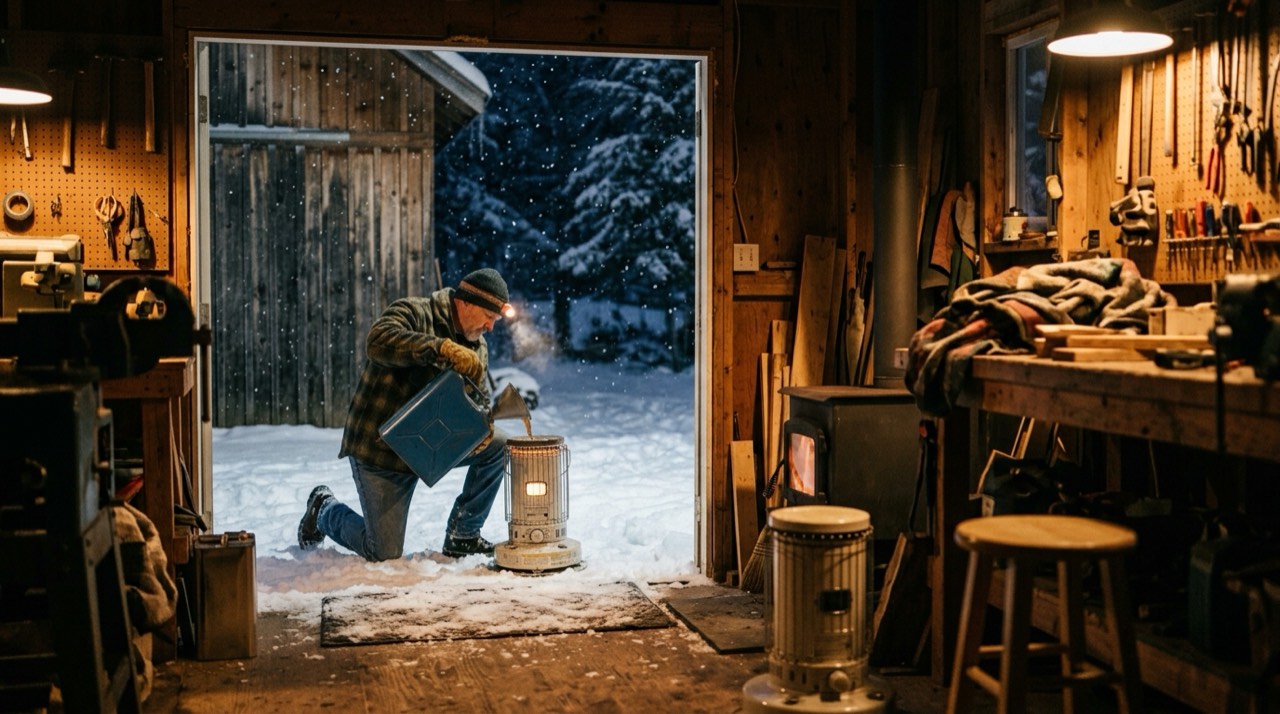
Indoor-rated kerosene heaters are calibrated for 1-K kerosene. That’s the refined, low-sulfur grade sold at hardware stores and some gas stations. A lower fuel grade can produce more soot. It can also mean unsafe combustion byproducts, since the burner assumes 1-K’s specific properties. This matters more indoors than outdoors, where excess byproducts simply disperse. Our kerosene fuel type guide covers this distinction in full.
Room Size and Fresh-Air Exchange
Manuals often list a minimum room size for a given BTU output. Don’t treat that number as a suggestion. A heater run in a room smaller than its rated minimum concentrates combustion byproducts faster than the room’s natural air exchange can clear them. Pairing the right room size with a cracked window or door gives you two independent layers of protection instead of relying on just one.
Placement Rules for Indoor Use
Put any kerosene heater on a stable, level, non-flammable surface. Keep it clear of curtains, furniture, and foot traffic per the model’s clearance requirements. Avoid placing it directly on carpet unless the manual explicitly allows it. Heat and any fuel spillage affect flooring differently than a hard surface does. A central location, rather than a corner, generally spreads convection heat more evenly through the room.


Tip-Over Shutoff: A Core Safety Feature
Every indoor-rated kerosene heater sold today includes an automatic shutoff. It extinguishes the flame if the unit tips over. This feature is tested as part of certification. Confirm it’s present on any heater you buy. On a used heater, check that it hasn’t been disabled or removed. A heater missing this safeguard isn’t a reasonable buy at any price.
Running a Kerosene Heater Overnight Indoors
Guidance on unattended overnight operation varies by model. Check your exact heater’s manual rather than assuming based on general reputation. Some indoor-rated models aren’t meant for unattended operation at all, regardless of certification. A sleeping household can’t respond to a problem the way an awake, present adult can. When in doubt, run any fuel-burning heater only while someone is awake and nearby.
Signs a Kerosene Heater Isn’t Safe to Keep Running
Watch for a yellow or flickering flame instead of a steady blue one. Persistent smoking beyond normal lighting and extinguishing is another warning sign. So is an unusual smell beyond kerosene’s normal odor. Any of these points to incomplete combustion. Stop using the heater and check the wick, fuel quality, and burner assembly before continuing. Incomplete combustion produces more carbon monoxide relative to heat output than clean combustion does. That’s why these signs matter more indoors.
Comparing Indoor Safety to Propane Heaters
Indoor-rated propane heaters use a different safety mechanism. Most rely on an oxygen depletion sensor. It shuts the heater off automatically if oxygen in the room drops too low. Kerosene heaters generally don’t use this specific technology. They rely instead on the combustion design itself, plus manufacturer ventilation guidance. Neither approach is inherently better. Both depend on the specific model being genuinely certified and the ventilation guidance actually being followed. Our indoor propane heater ventilation guide covers the propane side of this comparison.
What to Check Before Your First Indoor Use
Confirm the specific model’s indoor rating on the manual or a visible label. Check that the tip-over shutoff engages when you gently tilt the unit. Confirm you have real 1-K kerosene, not an unverified fuel source. This takes only a few minutes. It also addresses the most common first-use mistakes.
Children, Pets, and Indoor Kerosene Heaters
A running kerosene heater has an exposed hot surface. That’s a real burn risk for children and pets who don’t know to keep their distance. Put the heater somewhere they can’t easily reach. Never leave one running unattended in a room where children or pets have unsupervised access, no matter how confident you are in its certification.
The Honest Bottom Line on Indoor Safety
A properly certified kerosene heater is a reasonable choice for indoor supplemental heat. That’s true when it’s well maintained, gets adequate ventilation, runs on correct 1-K fuel, and shares the room with a working carbon monoxide detector. The real risk isn’t the fuel type. It’s skipping one of the checks above, like using the wrong fuel grade or assuming an uncertified model is safe because it looks like one that is. Treat every check here as non-negotiable. Do that, and indoor kerosene heat is no riskier than any other fuel-burning appliance used correctly.