
Affiliate disclosure: some links are affiliate links — as an Amazon Associate we earn from qualifying purchases, at no extra cost to you. Full disclosure.
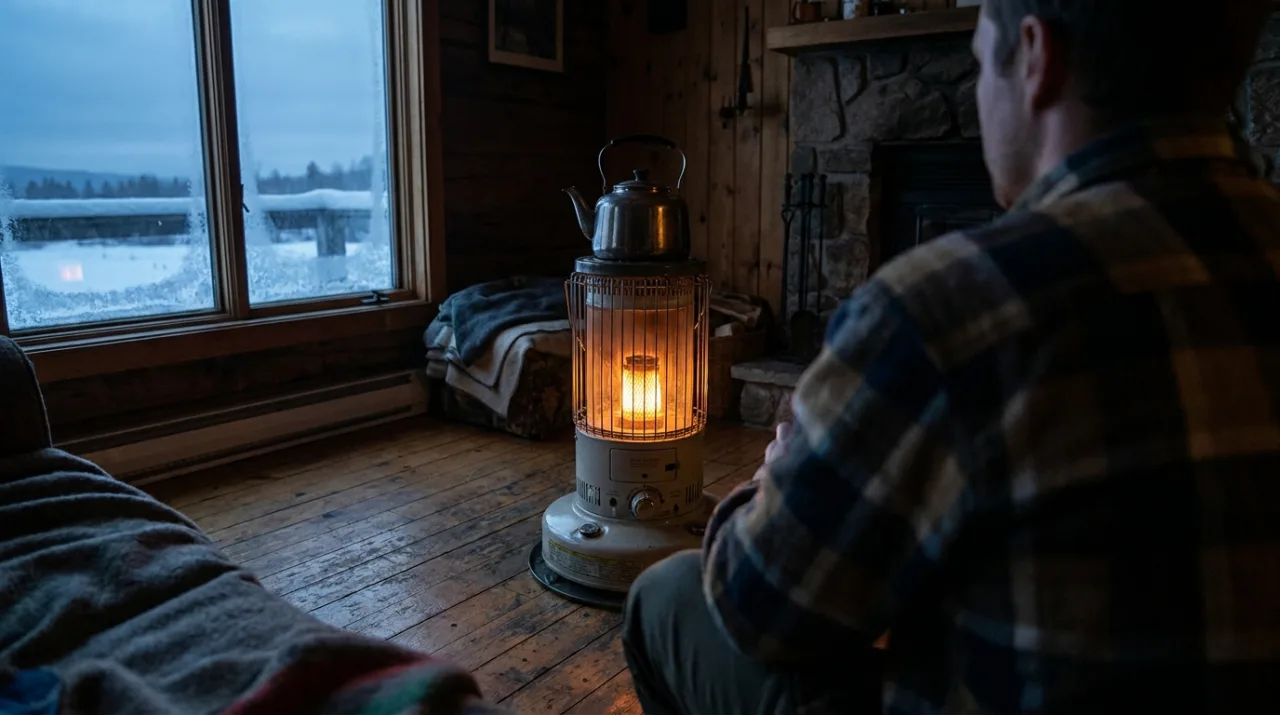
Kerosene heaters remain a genuinely popular alternative to propane. Buyers chase lower fuel costs over a long winter, or they live somewhere kerosene is easier to find than a propane exchange point. Every ranking below reflects aggregated owner reviews, manufacturer specifications, and safety certifications — the same honest-research standard we apply to every propane heater on this site.
How We Picked the Best Kerosene Heater
Three things mattered most. First, indoor-safety certification. The single most common search around kerosene heaters is whether a specific model is actually safe indoors. Second, how well a heater’s BTU output and design match a realistic room size. An undersized or oversized heater is the most common source of buyer disappointment. Third, what owners report after real winters of use — wick reliability, ease of fueling, and how the heater holds up season after season.
The Short Answer: Our Best Overall Kerosene Heater Pick
For most households, the Sengoku HeatMate 10,000 BTU is the safest starting point. It’s a well-known, widely reviewed indoor-rated heater sized right for a bedroom or den. Heating a genuinely larger room? Go with the Comfort Glow 23,800 BTU Convection Heater. Want a single unit that also functions as a stove for camping or off-grid use? The VEVOR 9000 BTU Heater & Stove covers that.

Best for A household wanting a well-known, widely reviewed indoor-rated kerosene heater
- 10,000 BTU output
- Cordless (battery-powered igniter)
- Indoor convection design
- Compact footprint for a mid-size room
Why buy it: Owners consistently point to this as the kerosene heater they recommend to a first-time buyer. It’s straightforward to light, easy to find parts for, and puts out enough heat for a typical bedroom or den without being oversized.

Best for A bigger living space or an open-plan room a 10,000 BTU unit can’t keep up with
- 23,800 BTU output
- Convection design for even room heating
- Large-capacity fuel tank
- Indoor-rated
Why buy it: This is the step up when a smaller kerosene heater leaves a large room only partly warm. Owners report it holds a genuinely bigger space at a comfortable temperature without running at maximum output constantly.

Best for Buyers who want a recognizable heater brand at a similar output tier to the Comfort Glow
- 23,000 BTU output
- Indoor convection design
- Sturdy build for regular winter use
- Established heater brand with wide parts availability
Why buy it: Owners comparing this against other 23,000 BTU convection heaters cite the build quality. Dyna-Glo is already a well-known name in propane and kerosene heaters, with a broad network of compatible replacement wicks and parts.

Best for A buyer who wants a simple, no-frills wick heater at a lower price point
- 10,000 BTU output
- Glass burner system
- Sure-Seat chimney system
- Removable 1.1-gallon fuel tank
Why buy it: This is a straightforward wick heater with no extra features, which owners like for keeping both price and maintenance simple. The removable tank makes refueling less of a chore than a fixed internal tank.

Best for A buyer who wants to move the heater between rooms without much effort
- Convection heat with radiant component
- Lightweight, compact design
- Sure-Seat chimney system
- Simple wick-based operation
Why buy it: Owners specifically call out how much easier this is to carry between rooms compared with heavier convection units, without giving up the basic reliability of a standard wick-based design.
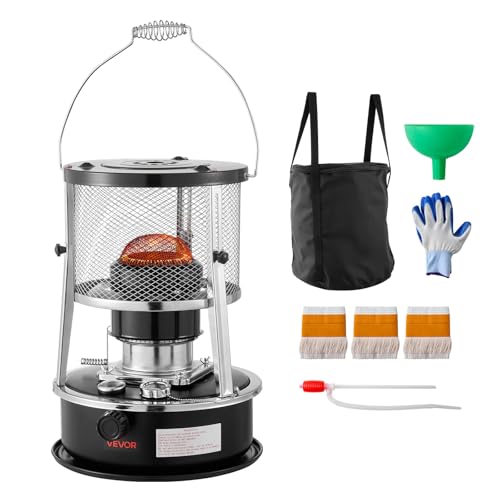
Best for Camping, hunting, or off-grid use where a single unit doubling as a stove is a genuine advantage
- 9,000 BTU output
- Combined heater and stove function
- Adjustable flame height
- Non-electric operation
Why buy it: This is the pick for buyers who want one piece of gear that does two jobs. Owners using it off-grid or while camping like that it heats a small space and can also warm food or water without a separate stove.
Full Comparison
All six picks side by side. "Best for" reflects the specific situation each heater is most consistently recommended for in owner reviews.
| Product | Best for | Buy |
|---|---|---|
| Sengoku HeatMate Portable Kerosene Heater, 10,000 BTU, Cordless | Best Overall for Indoor Use | Check Price |
| Comfort Glow Indoor Kerosene Convection Heater, 23,800 BTU | Best for a Larger Room | Check Price |
| Dyna-Glo RMC-95C6B Indoor Kerosene Convection Heater, 23,000 BTU | Best High-Output Convection Heater | Check Price |
| Kero World 10,000 BTU Kerosene Wick Heater | Best Compact Budget Pick | Check Price |
| Kero World Kerosene Convection Wick Heater, Lightweight Portable Compact | Best Lightweight Design | Check Price |
| VEVOR 9000 BTU Portable Kerosene Heater & Stove, 2-in-1 | Best Multi-Use Pick | Check Price |
Indoor Use, Ventilation, and Carbon Monoxide: Is a Kerosene Heater Actually Safe?
Many convection and wick-style kerosene heaters, including every pick above, are rated for indoor use. But "kerosene heater" isn’t automatically the same as "indoor-safe," any more than it is for propane. Always confirm the specific model’s indoor rating rather than assuming based on fuel type. Follow the manual’s ventilation guidance, even on an indoor-rated unit, and keep a battery-backed carbon monoxide detector in the room. Our dedicated kerosene heater indoor safety guide covers this in full depth.
BTU Sizing and Heat Coverage for Your Room’s Square Footage
Kerosene heaters follow similar BTU-per-square-foot math to propane heaters, though kerosene generally delivers more BTU per dollar of fuel spent. A 10,000 BTU unit like the Sengoku HeatMate or Kero World Wick Heater suits a room in roughly the 200–300 square foot range, using the same general 20–30 BTU-per-square-foot guidance used across this site. For a larger space, step up to a 23,000+ BTU convection unit like the Comfort Glow or Dyna-Glo pick, matching heat coverage to your actual square footage rather than buying the highest BTU number on the shelf. Our BTU sizing guide covers the general math if you want to run your own numbers.
Kerosene vs. Propane: Which Should You Actually Buy?
If you’re reading this on a propane-focused review site, it’s worth asking directly: should you buy kerosene at all? Kerosene generally wins on cost per BTU. It’s a reasonable pick where 1-K fuel is cheap and easy to find locally. Propane wins on model selection, fuel-supply standardization, and skipping wick maintenance entirely. Our propane vs. kerosene heater comparison and our is a kerosene heater worth it guide both dig into this decision in more depth than a roundup page can.
Wick Maintenance Is the Main Ongoing Cost
Every wick-style pick above needs periodic wick trimming and eventual replacement. That’s the single most common maintenance task specific to this category, and propane heaters simply don’t have it. Budget for a replacement wick every season or two of regular use. Always confirm compatibility with your exact model before buying one. Our wick replacement guide walks through the process and links to compatible wicks for the brands covered here.


Fuel: Always Use 1-K Kerosene for a Clean Burn, Without the Odor
Every heater on this list needs 1-K kerosene specifically. That’s a refined, low-sulfur grade, formulated for a clean burn, sold at most hardware stores and some gas stations. Using anything else, including off-road or lamp-oil-grade kerosene, can produce more soot, a stronger odor, and unsafe combustion byproducts. The burner is calibrated for 1-K’s specific properties. Confirm local availability before buying, since kerosene retailers aren’t as universally common as propane exchange points in many regions. Our finding kerosene near you guide covers where to look.
Convection Heater vs. Radiant Kerosene Heater: Why It Matters for These Picks
All six heaters above are convection-style. They warm the surrounding air and circulate it through the room, rather than radiating heat directionally at a single spot. This suits whole-room heating, the dominant use case for kerosene heaters sold for home supplemental heat. A radiant kerosene heater, which directs heat at a single spot instead of warming the whole room, is far less common on the market. If you specifically want directional radiant heat for warming yourself rather than a room, that need is more commonly met by propane radiant heaters, which this site covers extensively elsewhere.
Ignition: Match-Lit vs. Battery Ignition
The Sengoku HeatMate uses battery-powered electric ignition, lighting the wick at the push of a button. Some other wick heaters on this list use simpler match- or lighter-based manual ignition. Battery ignition is more convenient, but it adds a component that can fail independently. A dead battery can leave an otherwise fully fueled heater unable to light. Keep spare batteries on hand if you buy an electric-ignition model.
Fuel Tank Capacity, Run Time, and Reading the Fuel Gauge
Run time depends on both tank capacity and the BTU setting you run the heater at. A 1-gallon tank at a moderate setting commonly lasts 12 to 14 hours, though this varies by model. Always check the manufacturer’s published figures rather than assuming a generic number. Check the fuel gauge before a cold night rather than guessing how much is left. Removable-tank designs, like the Kero World Wick Heater, make mid-use refueling considerably easier than fixed internal tanks, which typically require the heater to cool first.
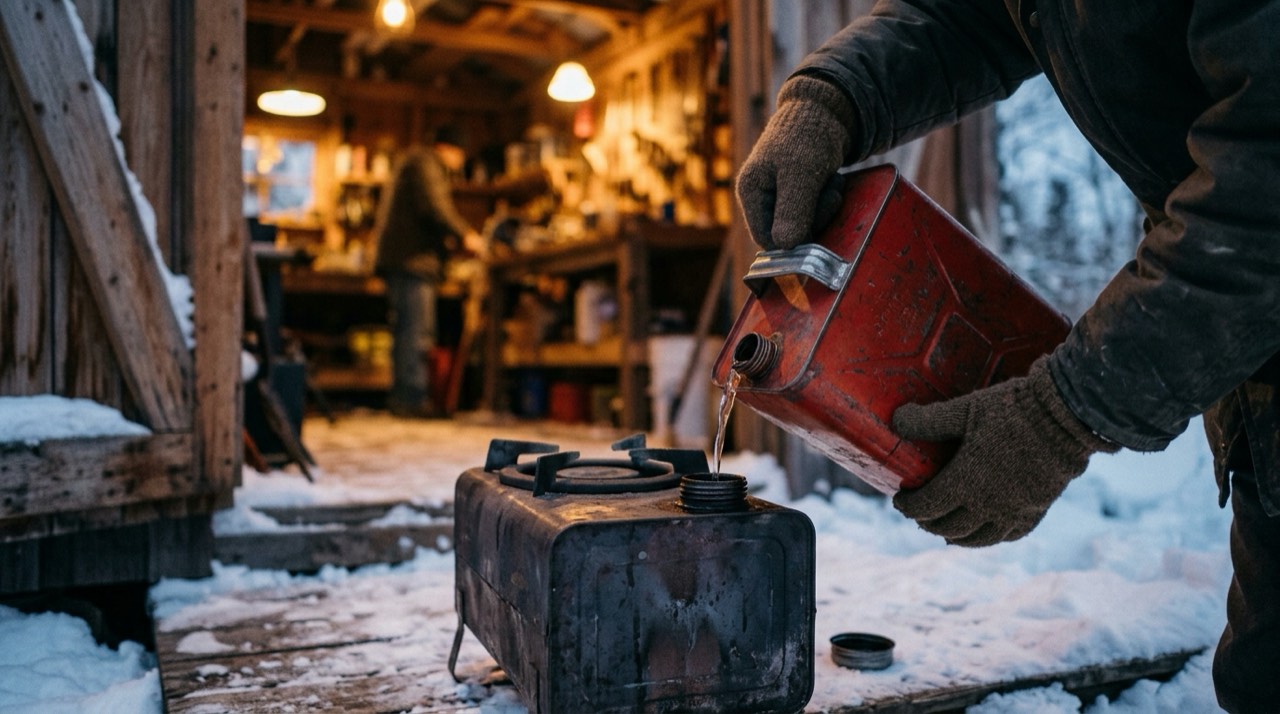
Refueling With a Siphon Pump, Not a Direct Pour
Fill from a dedicated kerosene container using a siphon pump rather than pouring directly. That cuts down on spills and odor around the fill cap.
Checking the Certification Label Before You Buy
Look for a visible UL or CSA safety certification label on the heater itself, confirming it’s been independently tested against a recognized standard for combustion and tip-over protection. This applies to every pick on this list, but it’s worth checking again on the actual unit you receive, not just the listing photos, since certification applies to the specific model, not the brand as a whole.
Cotton Wick vs. Fiberglass Wick: Tip-Over Shut-Off and Automatic Shut-Off
Replacement wicks come in either cotton wick or fiberglass wick material, depending on the model, and both types need the same periodic trimming. A battery ignition model, like the Sengoku HeatMate, lights the wick at the push of a button, while a match-lit model needs a long lighter or fireplace match instead. Every pick on this list includes a tip-over shut-off feature that cuts fuel or extinguishes the flame if the heater is knocked over, and most pair it with an automatic shut-off timer or low-fuel cutoff as a second layer of protection.
Dura Heat and Toyotomi: Other Kerosene Heater Brands Worth Knowing
Beyond the six picks above, Dura Heat and Toyotomi are two other long-established names in kerosene heaters, each with its own replacement-parts network. They're worth knowing if a specific model from the six picks above is ever out of stock.
What Owners Report Across These Six Picks
Across all six, the most common satisfaction driver is straightforward: heat output relative to price. The most common complaint traces back to skipped wick maintenance, not a design flaw. Owners who follow the manufacturer’s wick-care schedule report far fewer smoking and ignition issues than those who don’t. Buyers sensitive to odor should expect some smell during lighting and extinguishing regardless of which of these six they choose, since that’s a property of the fuel, not a specific unit.
Where These Heaters Fit in a Full Winter-Prep Kit
A kerosene heater rarely stands alone. Most owners pair one with a carbon monoxide detector, a supply of 1-K fuel, and a spare wick for the season. Buying these together, rather than realizing you need them the first cold night, saves a scramble later. None of the six picks above ship with a detector included, so budget for one separately if you don’t already own one.
Warranty and Return Policies Worth Checking
Warranty length varies across these six brands, and it’s worth checking before you buy rather than after something fails. A short warranty isn’t automatically a red flag, since kerosene heaters are simple mechanically and don’t fail often when maintained correctly. Still, test any new heater indoors at low output within the retailer’s return window, rather than waiting for the first real cold night to try it for the first time.
Seasonal Timing: When to Buy
Prices and stock on kerosene heaters tend to be best in late summer and early fall, before the first cold snap drives demand up. Waiting until the coldest week of winter to shop often means picking from whatever’s left in stock, at a higher price. Buying early also gives you time to test the heater under normal conditions and source your first tank of 1-K before you actually need the heat.
Buying Checklist
- Confirm the indoor rating on the specific model before assuming it’s safe for your room.
- Size to your actual square footage, not the biggest BTU number on the shelf.
- Confirm reliable local access to 1-K kerosene before committing to kerosene over propane.
- Budget for wick replacement as a recurring cost, not a one-time purchase.
- Install a battery-backed carbon monoxide detector in any room running a fuel-burning heater.
Cleaning and Off-Season Storage
Before storing any of these six heaters for the off-season, drain remaining fuel from the tank rather than leaving it to degrade over months. Wipe down the burner assembly to remove soot buildup, and store the wick separately if the manual recommends it. A heater brought out of storage clean and dry, with fresh fuel, consistently starts easier than one left with last season’s leftovers.
Wick Replacement Parts and Long-Term Support
Dyna-Glo, Kero World, and Sengoku all have established parts networks, which matters more than it might seem once a heater is a few years old. A wick, a fuel gauge, or an igniter battery cover can wear out well before the heater itself does. Checking that replacement parts are still easy to find for a specific model is worth a quick search before you buy, not just after something breaks.
A Final Word on Choosing a Kerosene Heater
The right kerosene heater matches your room size, your tolerance for wick maintenance, and your access to 1-K fuel. It isn’t about the biggest BTU number or the lowest price alone. The six picks above cover the realistic range of household needs, from a compact bedroom unit to a larger convection heater and a multi-use camping pick. Start with your actual room and use case. Confirm local fuel access. The rest of the decision gets straightforward from there.
Quick Recap of the Six Picks
The Sengoku HeatMate handles most bedrooms and dens with zero fuss. The Comfort Glow and Dyna-Glo convection heaters step up for larger rooms. The Kero World Wick Heater keeps things simple and affordable. The Kero World Lightweight model moves easily between rooms. The VEVOR 2-in-1 doubles as a stove for camping and off-grid use. Match one to your actual room and habits, and the choice gets easy fast.