
Affiliate disclosure: some links are affiliate links — as an Amazon Associate we earn from qualifying purchases, at no extra cost to you. Full disclosure.
A carbon monoxide alarm going off while a heater is running isn’t a troubleshooting puzzle to solve on the spot. It’s a safety event to respond to first. Get everyone to fresh air. Then come back to figure out the cause once you’re safe. This page covers both parts, in that order.
Step 1: Get to Fresh Air Immediately
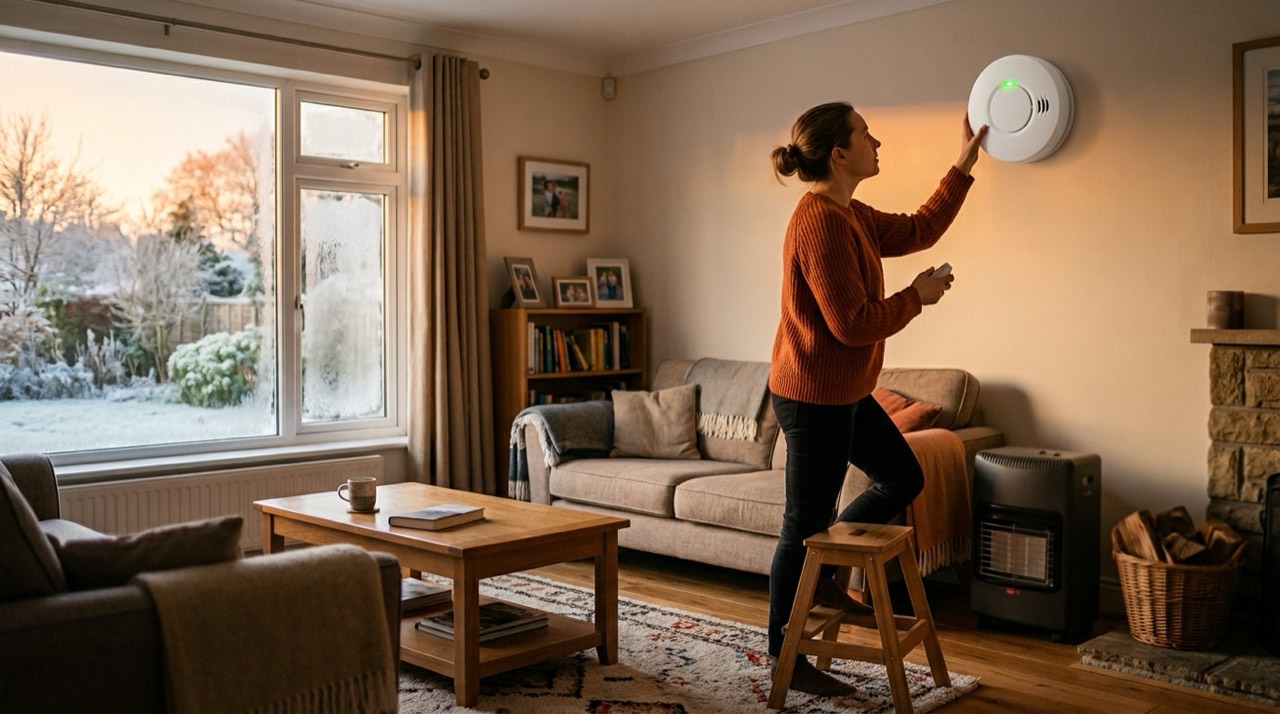
Turn the heater off if you can do so quickly and safely on your way out. Open doors and windows if that’s on your path outside. Move everyone, including pets, to fresh air right away. Don’t stop to investigate the cause first.
Step 2: Watch for Symptoms of CO Exposure
Headache, dizziness, nausea, confusion or shortness of breath can all signal carbon monoxide exposure. These symptoms are easy to dismiss as being tired or coming down with something. Does anyone show these signs? Call 911 or your local emergency number and mention possible carbon monoxide exposure specifically. Don’t wait to see if symptoms pass on their own.
Step 3: Don’t Go Back In Until It’s Safe
Ventilate the space fully. Open windows and doors. If it’s a vehicle, RV or tent, leave it open for a genuinely extended period, not just a couple of minutes, before returning. If your detector has a digital readout, wait until it reads zero before treating the space as clear. Not sure at all? Call your fire department’s non-emergency line before going back in. Many will send someone to check with a meter.
Step 4: Once Safe, Check the Heater’s Rating
Once everyone is safe and the space is ventilated, check whether the heater was actually rated for the space it was in. Many propane heaters are outdoor-only. They produce carbon monoxide at a rate that’s only safe with the open airflow of outdoor use. Running one indoors, in a garage, or in a tent is a leading cause of CO alarms that aren’t false alarms at all. Our indoor-safe vs. outdoor-only guide covers how to check this for your specific model.
Step 5: Check Ventilation, Even With an Indoor-Rated Heater
An indoor-safe heater can still trigger a CO alarm if the room doesn’t meet the manufacturer’s minimum ventilation requirement. Or if a vent that’s normally open — a window cracked, a door not fully sealed — was closed at the time. Confirm the space matched the manual’s guidance during the run that triggered the alarm.
Step 6: Rule Out an Actual False Alarm
Only once the heater’s rating and the room’s ventilation both check out should you consider a false alarm. Real causes of a false alarm include a detector nearing the end of its sensor life. Most CO detectors have a 5-to-7-year lifespan printed on the unit. A low battery can trigger an error chirp that sounds similar to a real alarm. A detector placed too close to the heater, within the manufacturer’s stated minimum distance, can pick up a brief, harmless puff of exhaust at startup too.
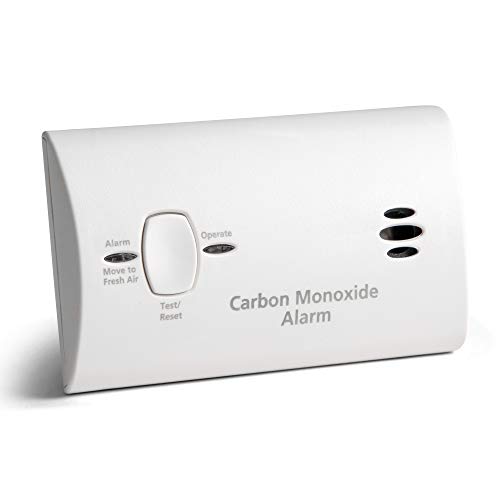
Best for Garages, tents, RVs or anywhere without a reliable outlet
- Battery-powered, no outlet needed
- 85 dB alarm
- LED status indicators

Best for One alarm covering both smoke and CO in a fixed room
- Combination smoke + CO sensing
- Battery powered
How to Tell a Real Alarm From a Low-Battery Chirp
Most CO detectors use a clearly different sound for a full alarm versus a low-battery or end-of-life warning. Typically it’s four beeps in a row for a real CO alarm, versus a single chirp every 30 to 60 seconds for a battery or sensor-life warning. Check your specific model’s manual for its exact pattern, since this varies by brand. Don’t assume a single periodic chirp is a lesser version of the full alarm. Treat any pattern you’re not certain about as the real alarm until you’ve confirmed otherwise.
Why a Detector Near the Heater Sometimes Chirps at Startup
Any fuel-burning heater makes a brief burst of higher CO output in the first few seconds of ignition, before combustion settles down. A detector placed too close — closer than the minimum distance in its own manual, commonly several feet — can pick up that brief puff and alarm even though the room overall is safe. This is a placement problem, not a heater problem. Fix it by moving the detector farther away, not by ignoring the alarm.
Detectors Do Expire — Check the Date
A carbon monoxide sensor’s accuracy fades over its rated life, typically 5 to 7 years depending on the model. After that, the manufacturer no longer guarantees it will alarm reliably at a dangerous CO level. Check the manufacture date printed on your unit, often on the back or inside the battery compartment. A detector past its rated life should be replaced outright, not just have its battery changed. The sensor itself, not the battery, is what’s degrading.
What a "Test" Button Does and Doesn’t Confirm
Pressing a detector’s test button confirms the alarm sound and electronics work. It does not confirm the CO sensor itself is still accurate. Most test buttons simulate the alarm circuit rather than exposing the sensor to actual gas. A unit that passes its test button check can still have a degraded sensor if it’s past its rated life. This is why the printed expiration date matters more than a passing test-button result.
If You’ve Ruled Everything Out and It Still Alarms
Does a detector alarm repeatedly even with a correctly rated heater, confirmed ventilation, a fresh battery and a sensor within its rated life? That should prompt a professional inspection of the heater itself, not repeated attempts to explain it away. A persistent, unexplained alarm is the one scenario where continuing to use the heater in that space isn’t a reasonable choice until it’s checked.
Keeping a Record After Any Real Alarm Event
After a confirmed CO event, jot down what heater was running, how long it had been on, and what the room and ventilation setup looked like at the time. This isn’t just for your own peace of mind. If a technician inspects the heater afterward, this record gives them a real starting point instead of a guess, and it helps you avoid recreating the same setup by accident next season.
Choosing a Detector for Use With a Heater
A battery-powered, portable detector works well for a garage, tent, RV or anywhere without a reliable outlet nearby, since it doesn’t depend on power at the exact spot you need it. A combination smoke-and-CO alarm covers both hazards in one fixed-location unit, a sensible choice for a room where a heater runs regularly. Whichever type you choose, place it per the manufacturer’s minimum-distance guidance from the heater to avoid the startup-puff false alarm described above.